
Step into any public restroom stall in Japan and you’re likely to be enveloped in a soundscape. No, not that kind. It’s the babble of running water, perhaps peppered with cheerful tweets and birdsong, and it’s meant to transform the space into an auditory simulacrum of nature, perfect for responding to its call.
In Japan, sound-generating devices that do the job of courtesy flushes are commonplace, and while they come in a variety of forms, they’re often called Otohime, or “Sound Princess”, made by Japanese toilet maker Toto Ltd. It’s a form of bathroom etiquette where noises that can be embarrassing are drowned out by the roar of a rushing river, perhaps flecked with other sounds from nature. Some older models simply emit the recorded sound of a toilet flushing.
These devices have been standard in Japanese ladies’ rooms for years, both for concealing unwanted sounds and conserving water: In 2016, a survey by the newspaper Nikkei found that women flushed an average of 2.3 times without a sound device, and 1.5 times with one.
Now they’re finding new audiences across the gender spectrum in offices, shopping centers and other public spaces across the country. And as they become more widespread, the noises they make are getting stranger, with exporters and hackers tailoring them to more niche audiences.
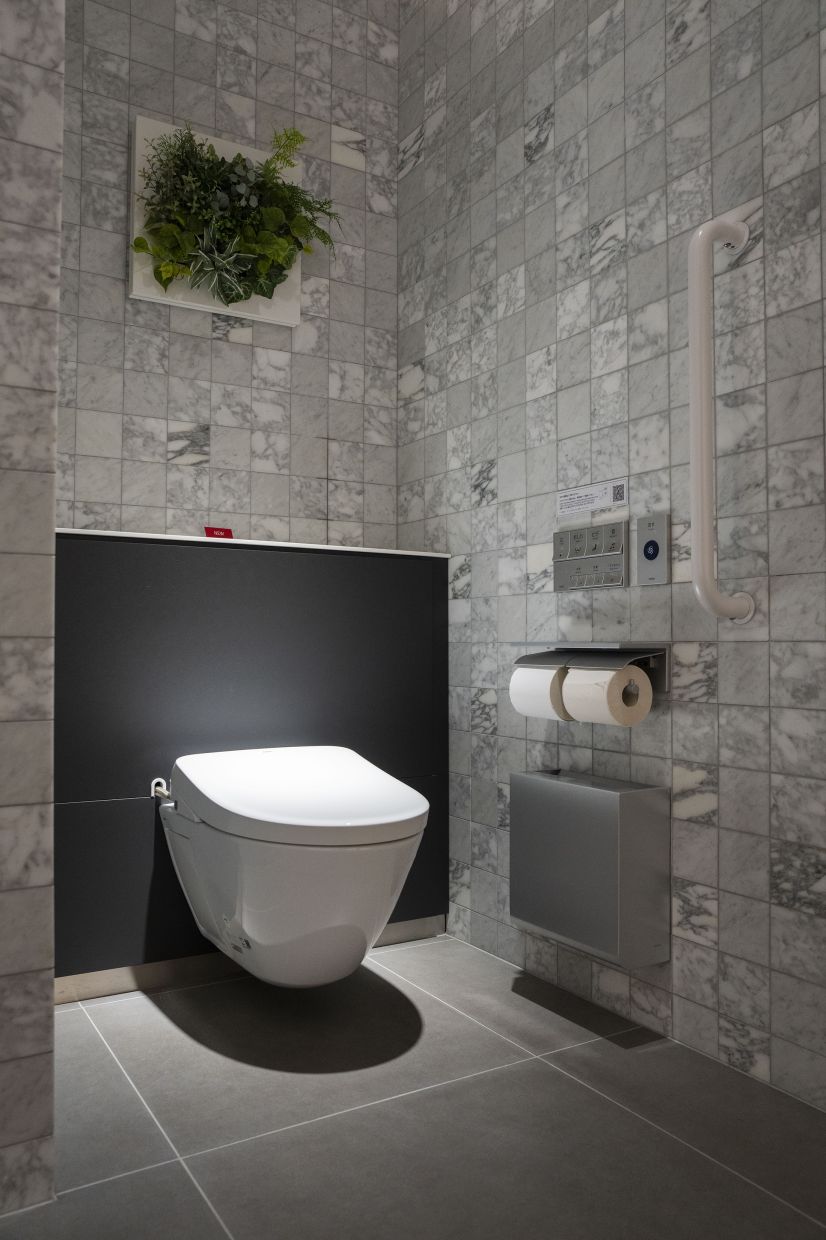
“It became a matter of course for women to use Otohime,” said Tsukasa Matsuyama, who works in Toto’s faucets and appliances division. “As younger men are more sensitive about toilet noise, it’s being installed in men’s rooms as well. There’s a growing movement to not distinguish between genders when designing public toilets.”
The features programmed into Japan’s famously futuristic commodes – heated seats, body sensors, bidets – were once dismissed overseas as silly extravagances. But they now count celebrities including Ali Wong, Drake and Jimmy Kimmel among their devotees, and Toto’s exports to North America have exploded in recent years. The next frontier is the sound-masking devices, which are also attracting new users among the transgender community in Japan. Toto, for one, has conducted surveys with transgender people about issues they face in public bathrooms and shared the findings with design companies, said Tomoe Hashitani, a Toto spokesperson.
“In a land marked by poor gender equality statistics, the toilet is perhaps where gender equality is advancing, ahead of society at large,” said Ken Mogi, a neuroscientist and author who often writes about the quest for “ikigai”, or finding one’s purpose in life. “Courtesy sound toilets are Japan’s answer to curbing toxic masculinity, at least in toilets.”
They’re also becoming a playground for rogue programmers, who are uploading all kinds of commotion into their toilets. During the pandemic, a hobbyist named Akifumi Kinoshita created a parody device called Sound Shogun that plays the rousing theme from the popular samurai TV drama The Unfettered Shogun at just the right moment. It went viral.
“I was very amused when I found a device called Otohime in a men’s room in a city hall, so I built one using mostly junk parts I had,” said Kinoshita, who built the Sound Shogun for more solitary enjoyment.
“Toilets are spaces for spending time alone,” he said. “Playing background music or other sounds would be a popular way to create a sense of solitude, apart from the original purpose of etiquette.”
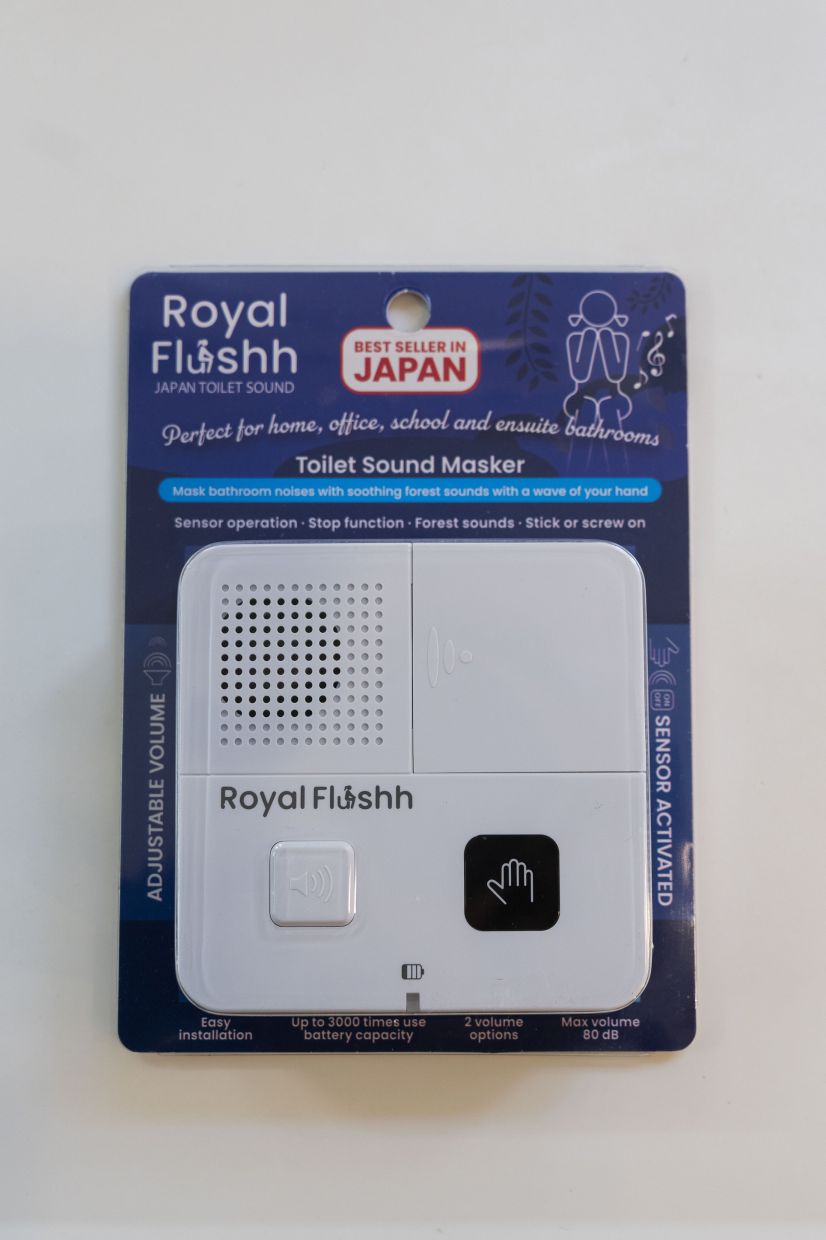
Donna Burke, a voice artist and entrepreneur based in Tokyo, is another superfan. Growing up in Australia, she said, she would often double-flush in her high school bathroom out of embarrassment. When she moved to Japan in 1996, she immediately embraced Sound Princess and couldn’t understand why it wasn’t sold overseas.
So last year, Burke partnered with a Japanese manufacturer on her own version, Royal Flushh, a wall-mounted device that emits the sound of a forest stream and birdsong with the wave of a hand. She markets it online, targeting shared houses and Airbnb lodgings, and plans to release a version with new customisable sounds, like classical music. And artillery fire.
“Once we make the basic model a hit, we will introduce the premium model,” said Burke, 60, who is heard by thousands of passengers every day as the voice of the Tokaido bullet train. “The new sounds will include the opening of Beethoven’s Fifth – ‘Da da da DAAAA!’ – and Rossini’s ‘William Tell Overture’.”
She also lends her voice to the popular video game Metal Gear Solid, which helps explain the artillery fire. “Because, ‘Bombs away!’ she said. “And it’s funny – a soundtrack of warfare to cover manly toilet bombs, and to appeal to my Metal Gear Solid fans.”
Toilet noise-masking technology may seem like a modern contrivance, but the concept goes back centuries. At Rendaiji, an ancient Buddhist temple in Okayama Prefecture, monks have preserved a bronze urn installed in 1799 near a toilet once used by feudal lords. The urn has a spout that splashes water onto a roof tile below, cloaking noises. The urns were used throughout Japan, including at Edo Castle, the seat of the shogun, Japan’s supreme warlord, according to Rendaiji’s official history.
The basic concept wasn’t updated until the 1970s, while Japan was struggling with nationwide water shortages – in part because massive volumes were being lost to courtesy flushes.
Amid an intense drought in Tokyo in 1979, Orihara Manufacturing, a local toilet distributor, debuted Etiquettone, Japan’s first electronic device for stifling toilet sounds. Aimed at women and doubling as a deodoriser, it was so popular that Tokyo’s City Council endorsed its use as an emergency water-saving innovation. But Orihara failed to secure a patent. Over the next decade, competitors such as Toto, Matsushita Electric (now Panasonic) and Inax (now Lixil) rushed to introduce their own versions.
“We found that women wanted not only masking effects but soothing sounds when using the toilet,” Matsuyama said. That set the stage for the evolution of Otohime.
At the Toto Museum, in the city of Kitakyushu in southwestern Japan, the original wall-mounted version from 1988 has a large button that activates a veritable roar of water lasting 25 seconds. As Otohime gained popularity, Toto gradually updated the audio, replacing the electronic simulation of running water with the organic gurgle of real water in the wild.
Around 2009, Matsuyama traveled across Japan in search of the perfect sound: ocean swells, waterfalls, caves, rivers, streams. He’d record them all and test them with focus groups. Finally, on the island of Kyushu, not far from Toto headquarters, he found what he was listening for in a stream and mixed it with the tweets of sparrows and nightingales.
Users have asked Toto to reveal the location of the river, but it’s a secret.
“We decided that the murmur of a stream was best, and of all of these murmurs, this particular stream had the greatest noise-reduction effect,” Matsuyama said. “We hope that with Otohime, users will enjoy exercising their imagination to discover the ‘secret’ of not specifying the location.”
Toto has also produced a few custom variations, including koto music for ladies’ toilets and a samurai conch shell blast for men at a rest stop in Gifu Prefecture.
To compete against Sound Princess, Toto rival Lixil developed a device in 2018 with electronic-instrument maker Roland to leverage its expertise in signal processing. The result was the Sound Decorator, a motion-activated wall unit. It also plays recordings of birdsong and a babbling stream, and it automatically adjusts the sound frequency to match the toilet sounds.
“This masking feature is like the cocktail party effect, where you can tune into one sound and ignore others,” said Satoshi Wakuda, a software development manager at Roland. “The algorithm boosts the frequencies that are needed and dampens ones that aren’t, effectively concealing the toilet sounds.”
Lixil has also released devices with updated sounds, including one that blares Formula One engine roars at a rest stop near the Suzuka Circuit racetrack.
As the noise-masking devices spread across Japan, enthusiasts such as Burke think it’s only a matter of time before the rest of the world catches on. “People just don’t know they need it until someone shows them,” she said. “One of our first sales was a woman who arrived back in Australia from Japan and her husband was peeing in the toilet really loudly. She bought two units as a marriage saver.” – ©2025 The New York Times Company
This article originally appeared in The New York Times.