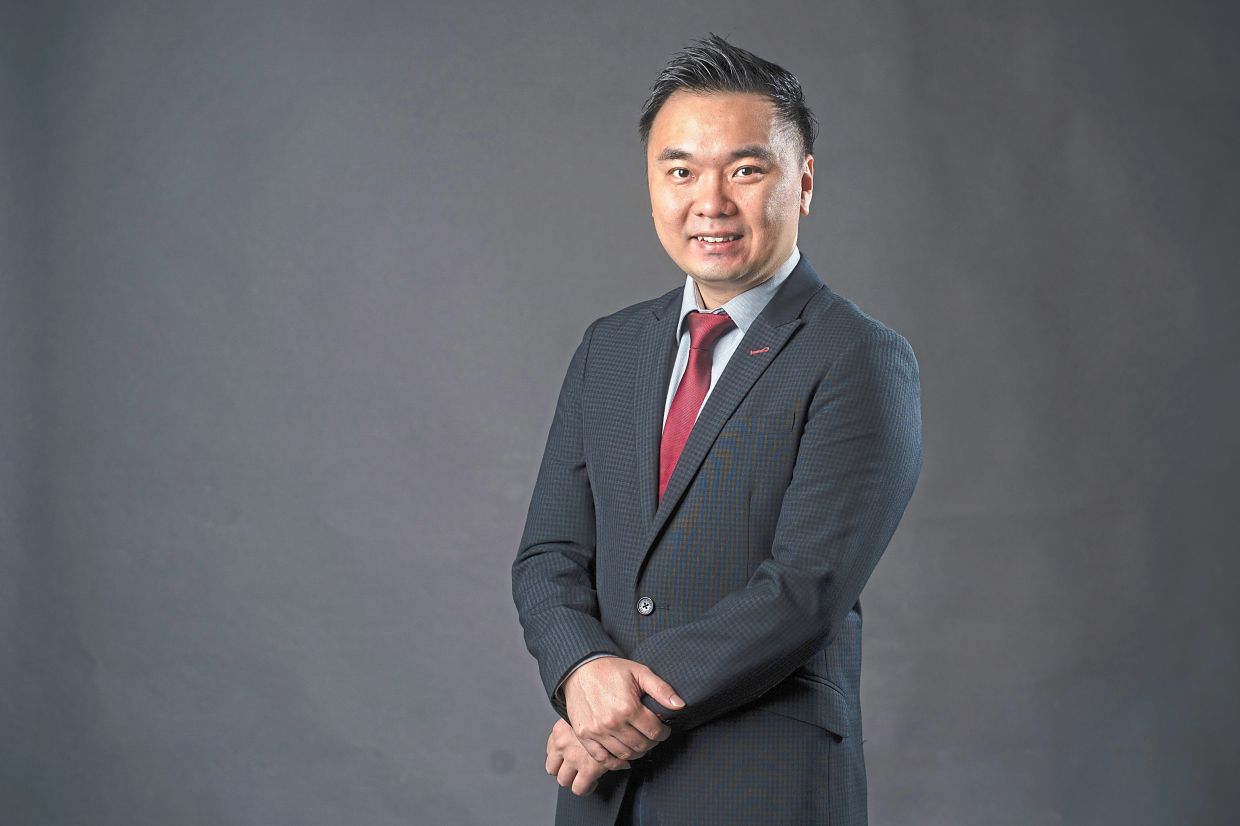
As a child, Dr Phang Swee King spent hours tinkering with his toys, interested in taking apart small gadgets just to see what’s inside. Over time, his curiosity grew into an interest in robotics. There was no such course during his time in university, so he enrolled in electrical and electronic engineering.
“Along the way, I became drawn to UAS (unmanned aerial systems), or drones, which I see as flying robots. Today, my work is really a continuation of that childhood curiosity – finding ways to make these systems more useful in everyday life,” says Phang, who is now the Programme Director of the Bachelor of Mechatronics Engineering with Honours at the School of Engineering, Faculty of Innovation and Technology in Taylor’s University.
At its core, Phang says a robot is a machine with sensors to detect its surroundings and is also equipped with actuators to act on that information.
“People often think of humanoids or drones when they hear the word robot, but robots do not always have to move around as many are stationary yet still serve important purposes. For example, a sorting machine in a factory is also a robot because it uses sensors and mechanisms to perform tasks for us,” he adds.
In the industrial field, robots were built to take on routine tasks such as lifting parts at an assembly line. Now with advances in AI, automation and IoT, Phang says modern robots can adapt to different situations and even connect with other machines.
He lists the smart home devices that can be controlled through mobile apps as one such example.
“Besides helping in factories, robotics has quietly entered many parts of our daily lives. At home, robotic vacuum cleaners save us time by cleaning floors on their own, and smart appliances such as air conditioners can decide when to switch on, adjust the temperature, and even connect with other devices in the house.
“Even our cars are becoming more robotic, with features such as parking assist, lane keeping, and automatic braking that use sensors to make driving safer and easier. These are all forms of robotics that many people use every day, often without realising it,” he adds.
Vision for Malaysia
In Malaysia, Phang sees flying robots or drones as the area with the biggest opportunity for growth in the next five to ten years. He says the application of drones can go beyond photography or recreational flying.
“Drones can be used to monitor road conditions and detect hazards such as potholes, assist during floods and landslides by providing real time information, and even help farmers by surveying crops to improve yields,” he says, adding that the solution has the potential to turn into a practical tool as the tech advances and become more affordable.
As Malaysia aims to expand its 5G coverage in populated, industrial and rural areas to 98% by 2030, Phang believes that the high-speed network can open up new possibilities for robotics. Currently, he says that most drones connect through radio or WiFi, hampering their operating distance and amount of data that can be transmitted.
With 5G, Phang notes, drones can fly farther while maintaining a stable, high-speed connection, enabling them to transmit high-resolution video and sensor data in real time.
“The data can also be processed immediately on the cloud before being sent to the ground station, allowing human operators to receive analysed information rather than just raw footage. This makes drones far more effective for road monitoring, agriculture, logistics, and even emergency response,” he adds.
According to Phang, 5G is more than just speed as it also delivers ultra-low latency and the ability to connect to multiple devices at the same time.
“This means drones can be operated safely beyond visual line of sight, with ground stations receiving live data almost instantly. Multiple drones can also be coordinated together through the same network, enabling swarm operations for tasks such as large scale mapping or search and rescue,” he says.
For other robots, Phang says 5G allows for cloud-based processing where heavy computation such as AI-powered image recognition can be done on powerful servers in real time.
“This creates a new level of capability that current WiFi or radio systems cannot provide,” he adds.
For technology like drones to reach its full potential in Malaysia, Phang says clearer and supportive policies that balance safety with the need and deploy new applications are essential.
“With the right framework, Malaysia can unlock many opportunities and even position itself as a regional leader in drone technologies.”
He also believes that ethical thinking will play a major role in how Malaysia adopts robotics and 5G in the years ahead. While 5G- powered drones can be used to assist in road safety or flood monitoring, the same system could also raise concerns about privacy. He says there is a need to consider various consequences before deploying technology.
“What this means for Malaysia is that we need to balance innovation with responsibility. The rollout of 5G will enable robotics to scale up in industries, factories, and even homes, but success will depend on whether we put people first,” he adds.