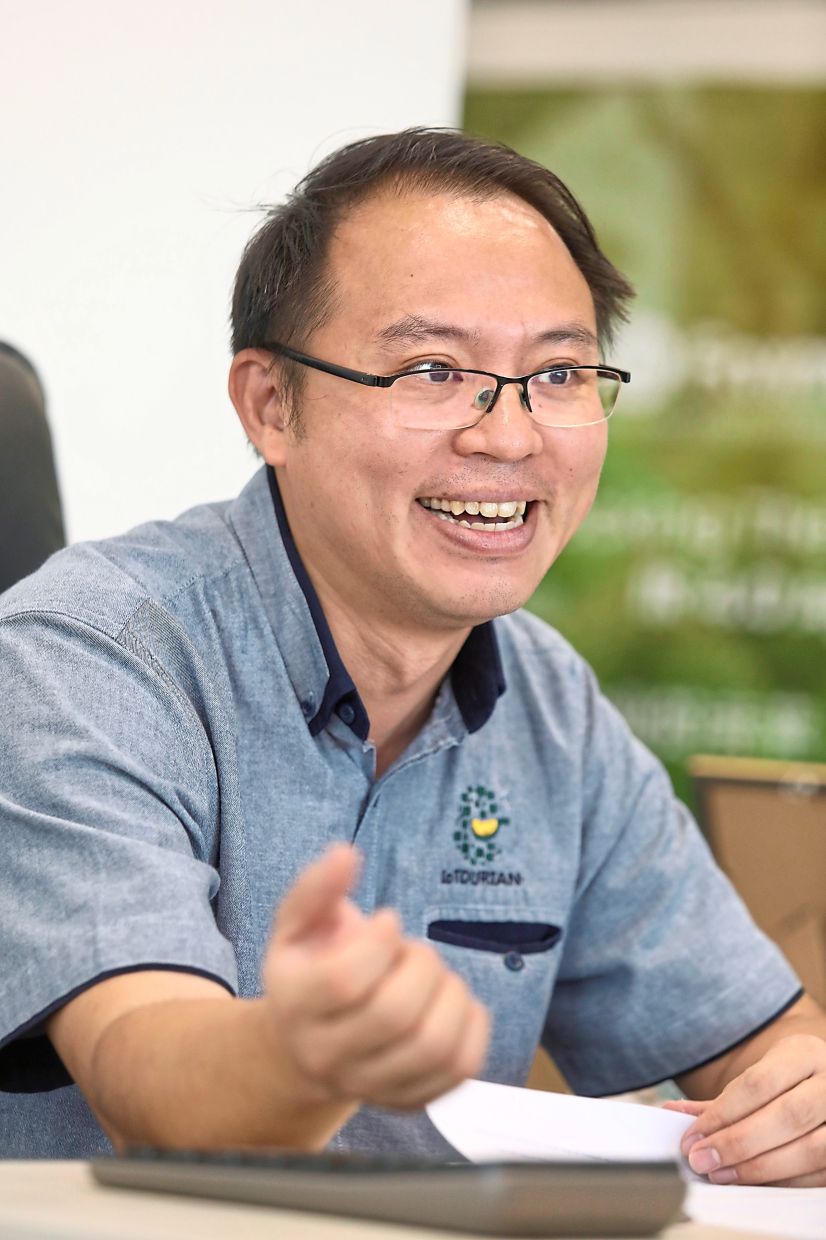
When Tan Han Wei set out to explore how technology could enhance durian farming in Malaysia, his motivation was simple: “I like to eat durian!”
A former R&D engineer, Tan went on to establish Sustainable Hrvest, a smart farming solutions provider based in Puchong, Selangor. He began by meeting durian farmers across Malaysia to understand their needs on the ground.
“They often ask why certain parts of their farm yield better results than others. What are the factors at play? And how can they improve less productive areas?” he says in an interview with LifestyleTech.
Typically, Tan says that farmers rely on experience or guesswork in their attempt to boost their trees’ yield.
“They will ask their farm workers to try watering more or add more fertiliser. There can be a lot of uncertainty,” he adds.
Tech talk
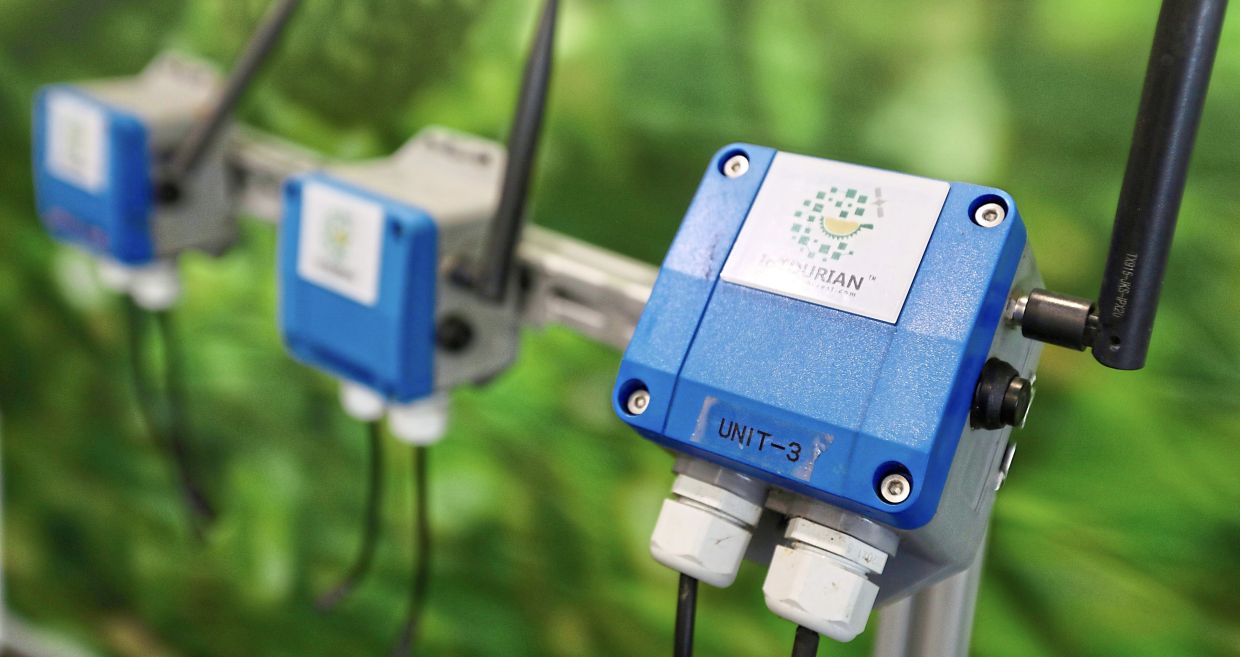
Tan suggested that the farmers experiment by planting sensors about 30 to 40cm deep into the ground near selected trees to measure key factors such as moisture, pH levels, and soil electrical conductivity (EC), an indicator of overall soil health. He says the sensors were developed locally and all data will be sent to a cloud.
After several months of collecting data, Tan says they identified potential issues that could be affecting the durian trees’ ability to bear fruit. For instance, sensors detected signs of waterlogging or excess moisture in certain areas of the soil.
“This is very bad for durian trees as it indicates poor nutrient absorption and signs of root rot. So we would advise reducing watering and focus on improving soil drainage instead,” he adds.
Tan says the sensors can also detect temperature changes. He has programmed the system to automatically activate the sprinklers when temperatures rise above 35°C, helping farmers to cool down the surrounding area and protect the trees from heat stress.
“The sprinklers will go on until the system detects that the temperature has gone down to the preferred level,” he adds.
By equipping farmers with data to support their daily decisions, Tan says they were able to optimise overall farm management by minimising unnecessary resource use, reducing waste and improving efficiency across operations.
“Trees are just like humans; they need to be understood first, and only then can they reach their full potential,” he adds.
After seeing how technology such as sensors and data analytics can help to improve their farming practices, Tan says more durian farmers in areas like Penang and Pahang are now eager to explore what else it can offer.
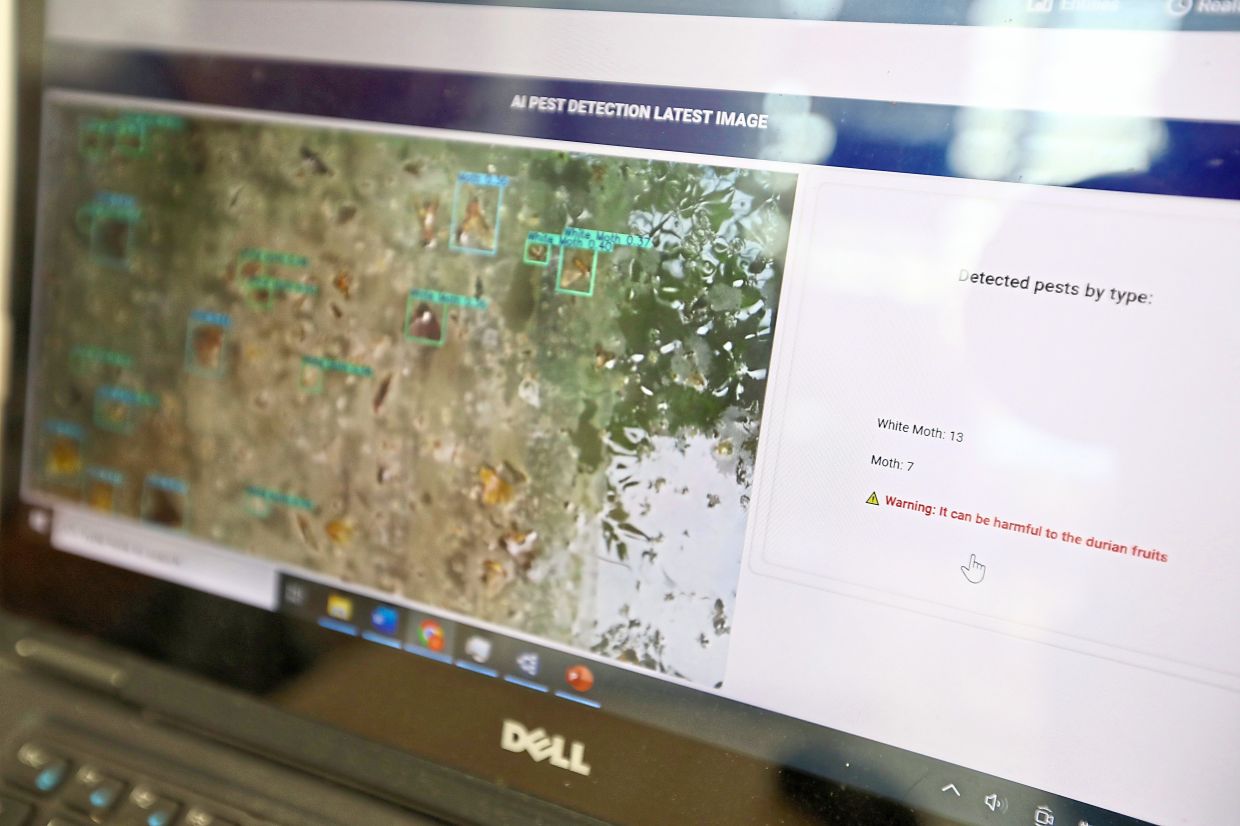
He is currently developing an AI-powered pest detection system that uses cameras to capture data from multiple farms. The system applies pattern recognition to identify early signs of pest outbreaks.
“It then runs a correlation analysis to link pest activity with disease patterns, taking into account weather and soil conditions. Farmers receive alerts along with recommended actions to help prevent yield losses. Right now, I’d say the system’s accuracy is around 70%,” he adds.
Level up with 5G
While current tools like sensors can provide valuable data, much of it remains underutilised due to limited connectivity. That’s why Tan believes the rollout of 5G could unlock new possibilities especially when it comes to real-time data, automation, and large-scale monitoring.
“At a recent 5G agritech showcase in KL, we shared the possibilities on how 5G-enabled robotic dogs could patrol the farm to capture real-time data on tree health and count fruit,” he says, which was a solution he proposed to farmers who wanted suggestions on how to monitor their harvest.
He is also excited about the concept of a ‘digital agronomist’ or experts who use AI to perform cloud-based analysis to remotely monitor and diagnose tree conditions.
“This allows experts to provide advice without having to physically visit the site, which saves time and resources, especially for farms located in remote areas,” he adds.
Fancy a virtual durian farm tour? Tan says this high-resolution real time video streaming could change the way farms engage with investors or buyers.
“Overall, I see 5G as a key enabler for scaling precision agriculture allowing for much larger and more complex operations to be monitored and managed remotely, in real time,” he says.
However, Tan says there are some challenges to be considered when integrating 5G into an actual farm environment.
“Connectivity in rural areas remains uneven with most in hilly or remote locations lacking stable 5G or even 4G connectivity. The cost of upgrading hardware to be 5G-ready can be a concern for smaller farms. We also face a people barrier with farmers not being familiar with 5G’s potential beyond faster Internet,” he says.
Tan says his team is preparing to embrace 5G.
“We’ve built our current IoT solutions to be modular where it is designed to run on 4G or LoRaWAN initially, with the flexibility to upgrade to 5G as soon as the infrastructure becomes available,” he adds.
Tan believes that more farmers are also now ready to adapt with technology and make the shift towards smarter farming practices.
“When farmers see that technology helps them solve real problems, they become more willing to adopt it. Also, rising costs, climate challenges, and labour shortages are pushing them to explore smarter solutions,” he concludes.