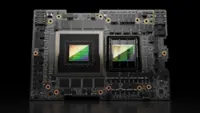
The US is exploring ways to equip chips with better location-tracking capabilities, a senior official said, underscoring Washington’s effort to curtail the flow of semiconductors made by the likes of Nvidia Corp to China.
Washington has espoused working with the industry to monitor the movements of the sensitive components, part of a broader plan to curtail smuggling and ensure American technology remains dominant. Last week, Beijing summoned Nvidia representatives to discuss US efforts around location-tracking and other alleged security risks related to its H20 chips.
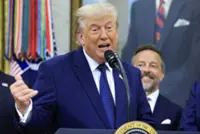
"There is discussion about potentially the types of software or physical changes you could make to the chips themselves to do better location-tracking,” said Michael Kratsios, one of the architects of a US AI action plan unveiled by Donald Trump last month.
"That is something we explicitly included in the plan,” the White House Office of Science and Technology Director told Bloomberg Television.
Trump’s blueprint has provoked a backlash in Beijing, which for years railed against alleged US surveillance and Washington’s efforts to curtail its tech sector. The Chinese government is particularly sensitive to semiconductor sanctions designed to counter Huawei Technologies Co or rising AI developers such as DeepSeek.
Trump officials recently pledged to lift export restrictions on the H20 to China as part of a trade deal they say will secure sales of rare-earth magnets to the US.
But Washington is also focused on curtailing the smuggling of chips. Kratsios said Tuesday he’s not had conversations "personally” with either Nvidia or Advanced Micro Devices Inc about exploring location-tracking technology. Last week, Nvidia said it does not have "backdoors” in its chips.
Kratsios, who was in South Korea to attend an APEC Digital Ministerial Meeting, took aim at China’s own AI action plan, which involves forming a global organisation to devise governance and technology standards.
"We believe each country should set their own destiny on how they think about regulating artificial intelligence,” he said. "The US model, which puts innovation first, will be the most attractive.” – Bloomberg