
Consumer electronics firm DreamSmart Group, owned by Chinese auto giant Zhejiang Geely Holding Group, will soon enable mobile payments via smart glasses, according to an executive, as the race to make eyewear powered by artificial intelligence (AI) more useful to the public heats up.
DreamSmart is working with fintech giant Ant International to allow AI smart glass users to make payments, a feature that will be made available on its StarV Air2 eyewear in the third quarter this year, according to Guo Peng, general manager of the company’s XR (extended reality) business unit.
Payment is an important use case as it is “closely tied to consumers’ daily behaviour and frequently used”, Guo said in an interview with the Post on Monday.
“I personally don’t believe that a single ‘killer app’ on AI glasses would make them popular overnight,” Guo said. “As a long-term goal, they should become a daily wearable device for most people ... and have many practical application scenarios.”
The mobile payments functionality reflects how proponents of AI glasses are expanding the use cases to help broaden the adoption of smart eyewear.
StarV Air2 users will be able to complete a payment by simply tapping a button on one of the temples – the arms connected to the frame of the eyeglasses that extend behind a user’s ears – and confirm the transaction via voice command, as shown to the Post by DreamSmart in a product demonstration on Monday.
DreamSmart’s AI glasses currently allow real-time translation and navigation, and features a teleprompter via its smart lens – common functions offered by smart glasses made by Chinese firms including Rokid and Even Realities.
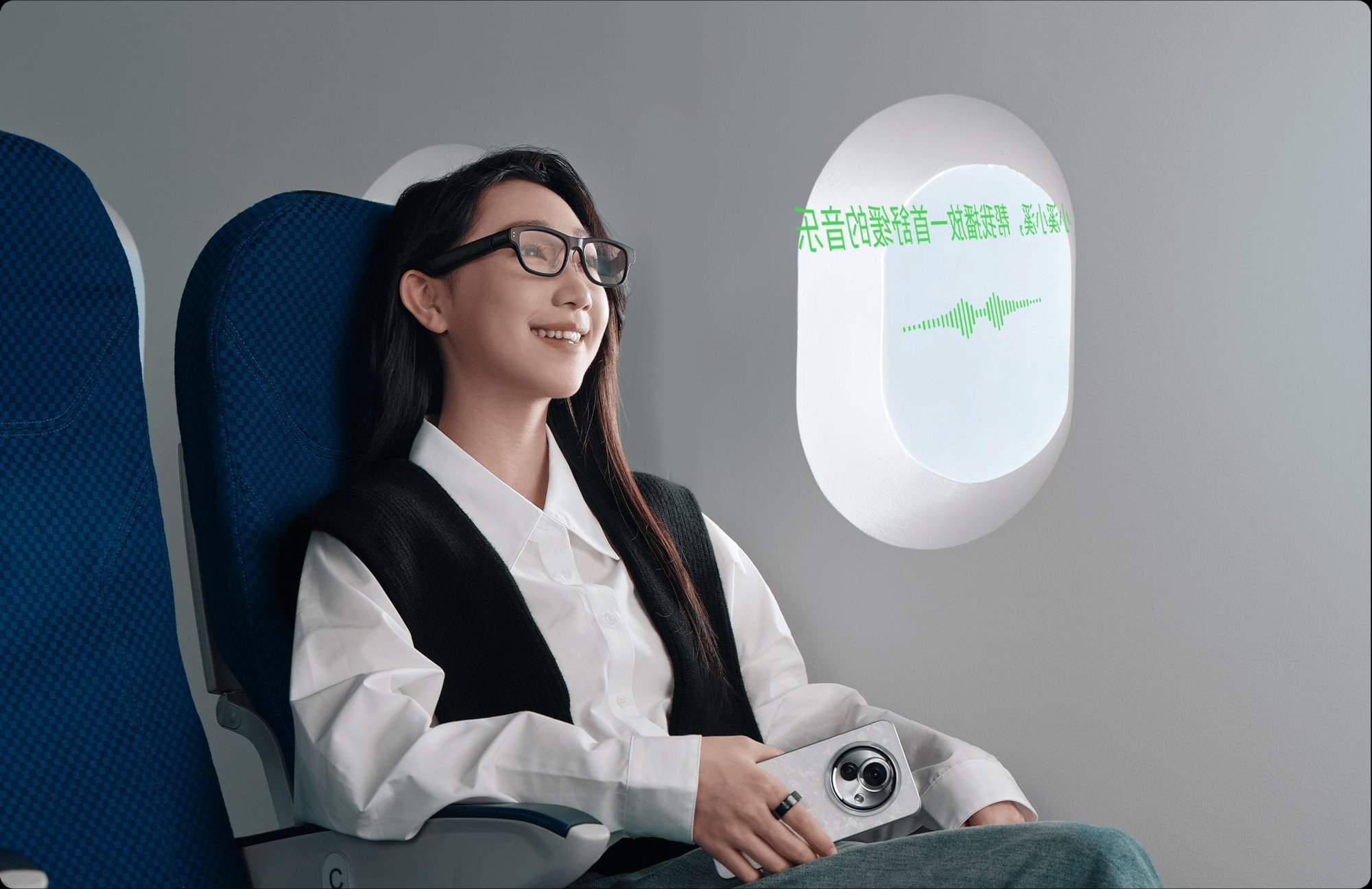
DreamSmart, known as Xingji Meizu in Chinese, was formed in 2022 after Geely subsidiary Hubei Xingji Shidai Technology bought a 79.09% stake in smartphone maker Meizu for an undisclosed sum.
Founded in 2007 as a maker of MP3 players, Meizu was once one of the most popular smartphone brands in mainland China. It has lost market share over the years amid cutthroat domestic competition against brands such as Honor, Oppo, Vivo, Xiaomi and Huawei Technologies.
DreamSmart’s strategy is focused on building its own product ecosystem across smartphones, XR devices and even smart electric vehicles under a partnership with Swedish carmaker Polestar.
The StarV Air2, DreamSmart’s most advanced XR glasses, is priced at 2,799 yuan (RM1,561 or US$384), and has sold more than 50,000 units, according to Guo. XR is an umbrella term for virtual reality and augmented reality technologies.
DreamSmart plans to launch a new model of AI glasses in the second half of the year that comes equipped with a camera. This would enable features such as AI object recognition or helping visually impaired users navigate certain daily tasks, Guo said.
The company is also gearing up to launch its AI glasses outside China this year, including in Southeast Asia, Europe and North America, along with Japan and South Korea, according to Guo.
Global shipments of smart glasses surged 210% in 2024 following the launch of Meta Platforms’ Ray-Ban AI glasses, according to a report by Counterpoint Research last month.
The research firm predicted the smart glass market this year would see increased competition among hundreds of vendors, including Xiaomi and Samsung Electronics. – South China Morning Post