
Would you trust merchants that use artificial intelligence-generated images to showcase their food? This issue has Malaysians on Reddit up in arms over vendors turning to generative AI tools for food photos displayed on delivery apps.
In a thread started earlier last month, one user described AI-generated images as a “monstrosity” and insisted that merchants should use real-life photos.
Others questioned if this practice could be considered false advertising, with some users declaring they would avoid ordering from restaurants that use AI images.
In another thread, a user expressed a preference for non-AI photos to set more realistic expectations for the food they plan to purchase.
AI-generated images have been popping up on listings by various merchants offering salad bowls, burgers and mamak food, leading to consumer concerns.
According to Nur Asyikin Aminuddin, chief operating officer of the Federation of Malaysian Consumer Associations (Fomca), they have received numerous complaints from consumers about the use of such images in food delivery apps.

“Consumers have every right to speak up about misleading ads, especially when AI-generated photos are involved,” she emphasises during an interview in Petaling Jaya, Selangor.
Nur Asyikin says Fomca started receiving more complaints last year, particularly during the festive season, and is now in the process of gathering more data.
“It’s concerning when users are misled, as it can lead to poor decision-making and frustration when their expectations are not met,” she says.
She says if more users fall into this trap, it could harm not only their trust in specific platforms or vendors but also affect the food delivery industry as a whole.
Taste for spending
Dr Ridoan Karim, a lecturer in business law and taxation at Monash University Malaysia, says food businesses have long used images that may not accurately represent their actual products.
“They could have used images taken from other sources, such as stock photo websites. But now, people have become more aware of the capabilities of generative AI tools and are becoming doubtful in some ways. It’s a valid concern,” he says, due to the sudden rise of generative AI.
According to Ridoan, building trust and addressing ethical concerns have always been challenging for online platforms, including e-commerce sites. He says the use of AI could lead to a rise in incidents that further erode consumer trust.
“AI tools can create visually appealing menus that set unrealistic expectations, as the images may be impossible to replicate in real life.
Although AI-generated images might not appeal to all consumers, Ridoan sees them as a valuable tool for merchants.

“AI can serve as a great equaliser, enabling smaller businesses to stand out in a competitive market. Newer businesses might rely on generative images because they lack the resources to produce professional-quality visuals that can compete with those of larger companies,” he explains.
He is also worried that AI-generated images might encourage more impulsive spending, not only on food delivery platforms but also across other online sites.
With e-commerce platforms making it easier to shop and browse, Ridoan believes consumers are increasingly prone to impulsive purchases without considering the sustainability or impact of their spending habits.
“We are likely to give in to our cravings. We see something that looks good, so we decide to purchase it right away,” he says.
Nur Asyikin is of the same opinion, saying that uncontrollable online spending could potentially lead consumers to accumulate debt.
She says an increasing number of users are turning to Buy Now, Pay Later (BNPL) services to spread their purchases into instalment plans.
In July, the Buy Now Pay Later Industry in Malaysia report revealed that the BNPL industry’s outstanding balance reached RM1.42bil in Q1 2024, marking a 34% increase from the end of 2023 and accounting for 0.07% of total household debt.
Published by the Consumer Credit Oversight Task Force, the report found that 2.8% of the total credit exposure was overdue, with the average overdue amount per customer at RM370.
According to the report, there are over 700,000 registered BNPL merchants operating locally, with a strong presence in three sectors: food and restaurant, retail, and transportation.
The Consumer Credit Oversight Task Force, an independent authority led by the Finance Ministry, Bank Negara Malaysia and the Securities Commission Malaysia, is working to drive the enactment of the Consumer Credit Act that will regulate credit providers and credit services.
AI and accuracy
When contacted by LifestyleTech for comments on their policies regarding the use of AI-generated food images on their delivery platforms, Grab and Foodpanda in Malaysia declined to provide a statement.
However, Grab Malaysia’s Terms of Service (TOS), last updated on Nov 19, 2024, contains a section titled “AI-Generated Menu Descriptions”.
The TOS states that Grab does not guarantee that AI- generated descriptions of food menu items will be error-free. These descriptions, produced by algorithms, may not always accurately reflect the actual ingredients, preparation process, dietary suitability, or other characteristics of the food items.
Although efforts are made to ensure the accuracy of these descriptions, Grab acknowledges they may not always be completely accurate or reliable.
It states that it is the responsibility of merchants to review and confirm the accuracy of AI-generated food descriptions before they are used, requiring them to correct any errors or inaccuracies as needed.
In 2023, Grab Singapore told The Straits Times that it was experimenting with AI-generated photos “to assess their suitability for merchants that do not have the resources to take their own food photos”.
The issue gained attention after users complained about such images on the platform, describing them as “unappetising” and “weird.”
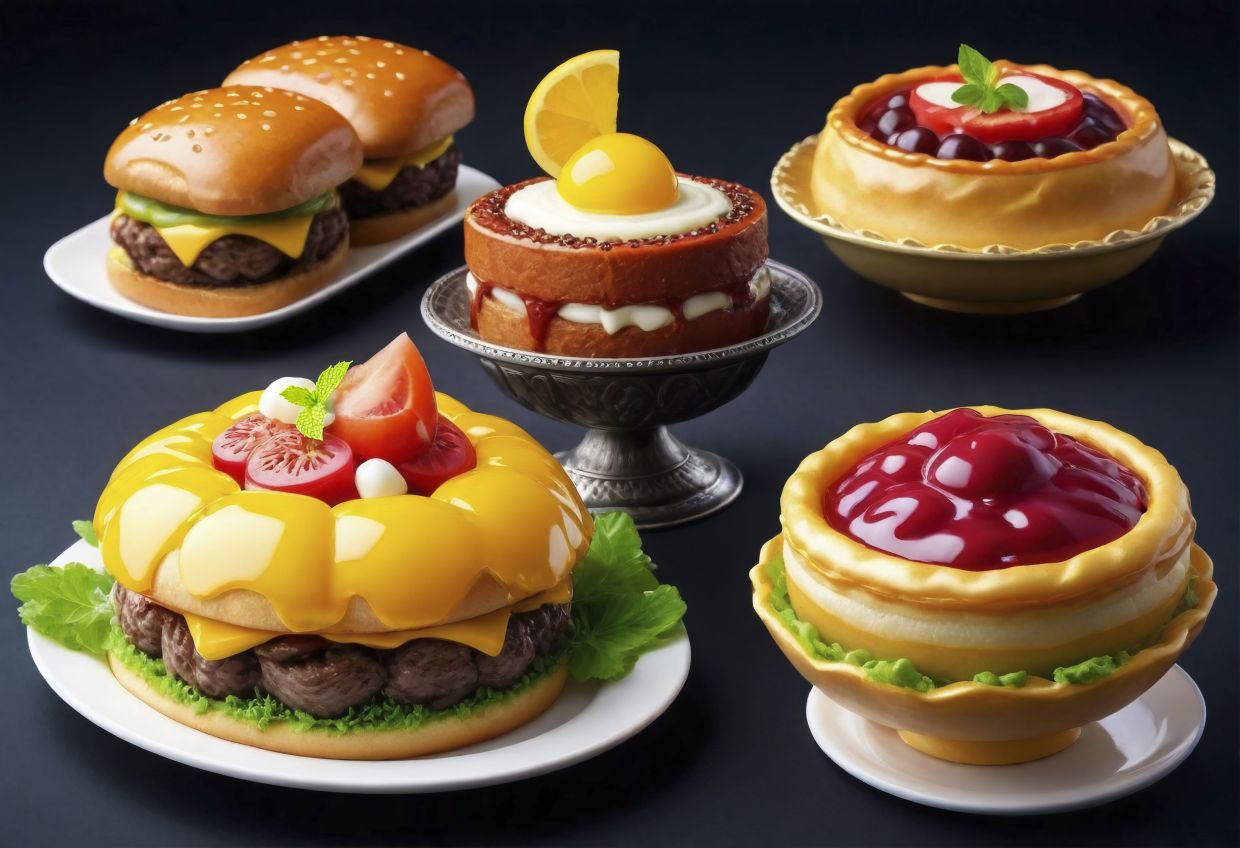
Companies facing similar criticism have taken measures to scrub AI-generated food images after receiving feedback.
Last August, Indian food delivery company Zomato announced that it would remove AI-generated food photos from its app following customer complaints.
“Customers say that this leads to a breach of trust, and it leads to higher complaints and refunds, and also, lower ratings,” CEO and founder Deepinder Goyal said on X.
Website Business Insider also reported that United States grocery delivery company Instacart removed AI-generated food photos from its site last year.
This action followed a previous report highlighting AI-generated images that depicted “physically impossible compositions”, such as a grilled chicken recipe photo featuring two chickens conjoined at the shoulder. Instacart informed the website that it may remove AI-generated content upon receiving such reports.
Ridoan says AI-generated images become a problem when platforms are not transparent about their use.
“There should be a standard guide or policy by the platform covering various aspects such as the level of acceptability on the use of generative AI. At the moment, I believe using AI-generated images with mandatory clear labelling is sufficient,” he says.
Checks by LifestyleTech found that some images shared by users on Reddit from GrabFood carried the label “for illustration purposes only”. This label appears when users click on the photo for more details.
Nur Asyikin recommends that merchants display realistic images of the actual dishes they offer.
“Businesses should be more creative by not using fake images like AI-generated photos to market their products,” she adds.
She also believes that there should be measures to regulate and prohibit the use of AI-generated food images for marketing purposes.
“This could encourage transparency and ensure consumers make informed decisions based on accurate representation of the product they plan to purchase. This can ultimately build trust between consumers and businesses, leading to better experiences overall,” she explains.
However, Ridoan says regulating the use of generative AI tools is not easy due to the ever-changing nature of the technology, which evolves rapidly with new capabilities.
“It has been a challenge for laws and policies to keep pace,” he adds.
Instead, he recommends additional measures like improving the review mechanism for consumers to submit their own food images so they can also help to inform other users on the platform. Platforms like Grab and Shopee Food allow users to upload their own photos when submitting reviews.
“For transparency’s sake, platforms shouldn’t delete negative reviews,” he adds.
Voicing out
Nur Asyikin hopes to see more consumers take a stand against misleading AI-generated food images by filing official complaints.
“Consumers must know their rights and voice their concerns to the platform through official channels. If that is not being addressed effectively, then they should file a complaint with the Tribunal for Consumer Claims Malaysia,” says Nur Asyikin.
However, Ridoan believes consumers are unlikely to take action and would simply avoid ordering from the same merchant again if they feel misled by generative AI images.
“Think about the amount people are spending here – most likely around RM15 to RM20 for food delivery. Most consumers would consider it a small amount and won’t feel compelled to take further action,” he says.
He feels platform holders should be responsible for enforcing policies, adding that consumers should have a clear path to reimbursement if they meet the minimum evidence requirements, with human oversight in place to review claims.
Ridoan also hopes consumers will push for more transparency about how AI is used on online platforms, beyond just AI-generated images.
He says AI can be used not only to generate content but also to monitor consumer behaviour and influence purchasing decisions, like sending notifications to encourage spending.
“AI shouldn’t be used to misguide consumers. Instead, we want to see technology making it easier for consumers to navigate sites with improved browsing experience and perhaps enhanced cybersecurity.
“Consumers should also play their part and develop this awareness where they shouldn’t resort to buying whatever they see online,” he says.