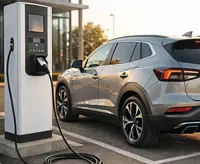
The morning after Hurricane Ian knocked out power at Westley and Sarah Ferguson’s home in Haines City, Florida, a suburb southwest of Orlando, Westley ran two extension cords into their house from the outlets on the couple’s Ford F-150 Lightning. He plugged the refrigerator into one and a power strip into the second, which was soon powering lamps, fans and a television.
The Fergusons’ setup was more rudimentary than the Lightning’s design allows – Ford’s top-of-the-line in-home charger will automatically start powering an entire house if the truck is plugged in during a blackout – but it was good enough for them to cook beef stew on an electric stovetop and, afterwards, to host another neighbourhood couple for an impromptu movie night. Cell and Internet service were also down, so they used a Blu-ray player to watch Casper and a turntable to spin big band jazz records.
Already a subscriber? Log in
Get 20% OFF The Star Digital Access
Cancel anytime. Ad-free. Unlimited access with perks.