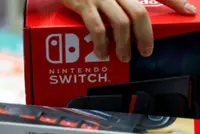
The fastest-selling game console of all time may not be enough to shelter Nintendo Co’s stock from growing investor fears about skyrocketing memory prices.
The Mario Kart creator is set to report third-quarter earnings next week, with many expecting knockout revenue from the Switch 2 after recent data showed strong holiday sales in the US. But a memory chip supply crunch, driven by insatiable demand for AI hardware, threatens to drive up the price of the new console – and derail Nintendo’s share recovery.
"The company appears to be looking at an absolute horror show on the cost of building a console, unless memory prices come down sharply,” said Pelham Smithers, a UK-based equity analyst who focuses on the gaming sector. Nintendo’s shares have already lost more than 30% from their August high, logging their worst monthly performance since 2008 in December.
Profit margins of manufacturers around the world are under threat from memory shortages – the result of ballooning investment in AI that’s siphoning production capacity away from memory for consumer electronics and other less lucrative applications. Smartphone makers are already slashing their 2026 shipment forecasts, according to market researchers.
For Nintendo, the memory chip crunch comes at a critical juncture, hitting a once-in-a-decade console debut that’s key for winning new users. Now, concern that costlier chips will force Nintendo to hike the price of the Switch 2 is denting the excitement that surrounded the flagship console’s record-smashing June launch.
Prices of dynamic random access memory and flash-storage modules used in Nintendo’s devices jumped dramatically in the December quarter, according to TrendForce data. And shortages are only projected to grow. For 2026, the average selling price of DRAM is expected to jump by 120%, while NAND prices may grow 90%, according to Citigroup analysts Peter Lee, Jayden Oh and Josh Yang.
The Kyoto-based company may have to raise the retail price of the Switch 2 by 15% to offset rising memory costs, according to an estimate by Bloomberg Intelligence analyst Nathan Naidu. Once Nintendo has exhausted its memory stockpile and any fixed-price contracts, the crunch "will put pressure on the Switch 2’s margin and hence the company’s profitability,” he said.
Priced at US$450 (RM2,488 locally) in the US, the Switch 2 is already Nintendo’s most expensive piece of hardware ever, so any increase could hit demand hard, said Nick McKay, a senior analyst at Freedom Capital Markets. "If they go above US$500 (RM1,970), it could be a decision they don’t look back on fondly,” he said.
Surging memory prices are bad news for rival consoles as well, hurting sentiment around PlayStation maker Sony Group Corp’s shares in recent weeks. But the fact the memory crunch is hitting so early in the Switch 2’s cycle leaves Nintendo uniquely vulnerable.
"The Switch 2 is brand new, so it’s basically sold at cost, and Nintendo might even lose money on it,” said Smithers. Sony has "more leeway” to absorb extra costs on its PlayStation 5, a more mature console that’s already generating solid margins, he said.
There are still some levers Nintendo can pull to offset additional memory costs, said Freedom’s McKay. The company could "shrink the size of the internal memory” on the Switch 2, "which pushes the cost onto consumers who are forced to buy external storage cards,” he said.
McKay is betting that Nintendo’s management will address memory concerns in their earnings comments next week, which could give a short-term boost to investor confidence. He maintains a buy rating on the stock while cautioning about memory-related "growing pains” for the Switch 2.
A recent decline in short interest on Nintendo’s stock suggests few are expecting negative news from the earnings report. It’s halved to around 1% of the free float from almost 2% in mid-August, according to S&P Global data.
Nintendo’s "short-term investment appeal” may rise if its quarterly results beat market predictions, wrote Citigroup analyst Tokiya Baba in a recent report. He’s expecting Nintendo to have sold seven million Switch 2s on a sell-in basis in the October-December period. The upcoming release of the Super Mario Galaxy Movie is another potential positive catalyst for shares, Baba added.
But longer term, a protracted memory crisis likely stands in the way of a rally for Nintendo, said Smithers. "They’re selling tons of consoles now – that’s not the problem,” he said. "This is a memory problem, and it’s only getting nastier with every dollar the price goes up.” – Bloomberg