STROKE is one of the leading causes of death and long-term disability in Malaysia. It occurs when blood supply to the brain is disrupted, either by a blockage (ischaemic stroke) or by bleeding (haemorrhagic stroke). Without oxygen and nutrients, brain cells begin to die within minutes, which is why early action is critical.
Sunway Medical Centre Penang consultant neurologist Dr Loo Lay Khoon explains, “During a stroke, every second counts. A blocked or ruptured blood vessel deprives brain tissue of oxygen, and the longer treatment is delayed, the more damage occurs. The faster a patient gets help, the better the outcome.”
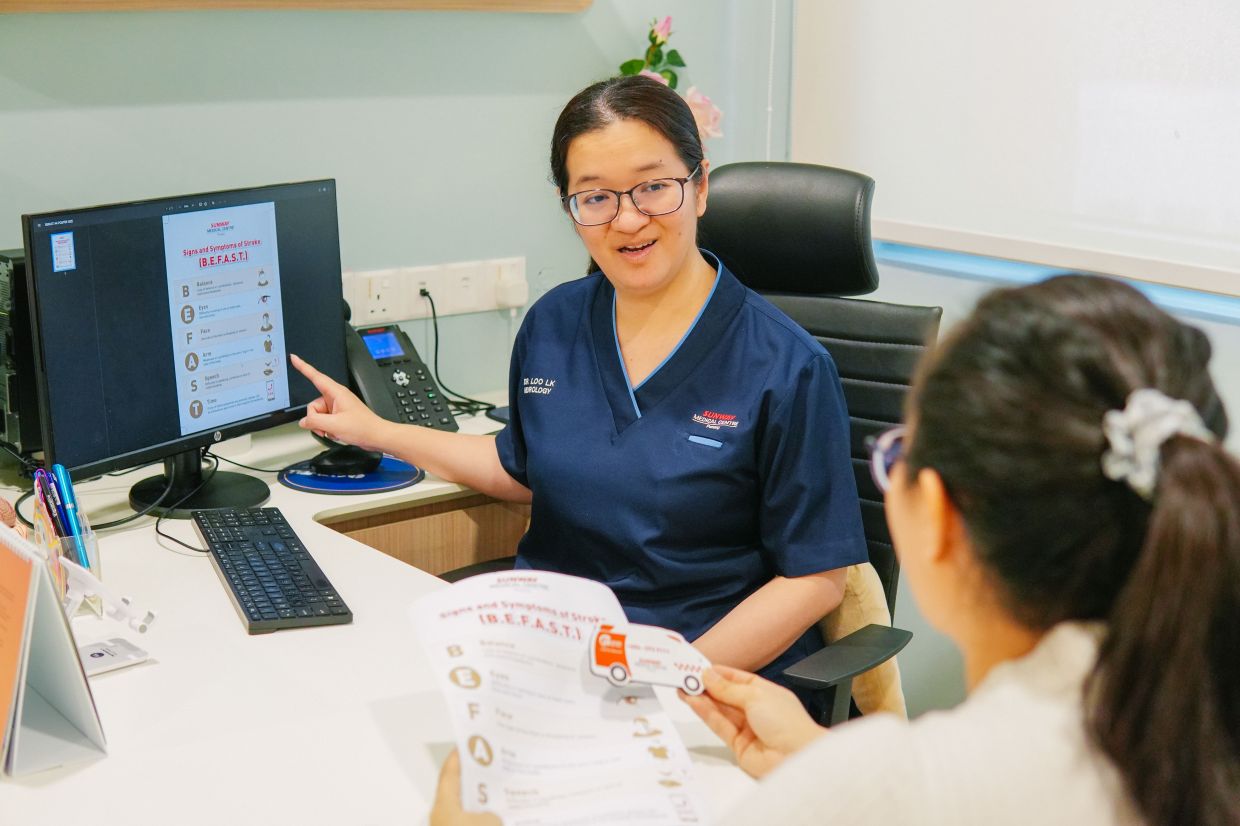
BEFAST to recognise stroke
“It is vital for everyone, not just doctors, to know how to spot a stroke,” says Dr Loo. “Recognising the signs early and getting help immediately can mean the difference between life, disability, and death.”
The warning signs can be remembered with BE FAST:
- Balance – Sudden loss of balance or dizziness
- Eyes – Blurred or double vision
- Face – Drooping on one side of the face
- Arms – Weakness or numbness in one arm
- Speech – Slurred or difficulty speaking
- Time – If you see these signs, call 999 immediately
Even if symptoms last only a few minutes, they should never be ignored. They may signal a transient ischaemic attack (TIA), often called a ‘mini-stroke’, which can be a warning of a larger stroke to come.
Time is brain
When doctors say “time is brain”, it means that during a stroke, brain cells die rapidly. Every minute without treatment can result in the loss of millions of brain cells, leading to greater disability or even death. The sooner treatment starts, the more brain tissue can be saved, and the better the chances for survival and recovery.
Dr Loo explains, “A stroke is like a fire in the brain — the longer it burns, the more damage it causes. Quick recognition and immediate medical attention are the keys to protecting brain function and quality of life.”
Treating stroke
If detected early, several treatments are available to restore blood flow and minimise brain damage:
- Thrombolysis – A ‘clot-busting’ medication given within the first few hours to dissolve the blockage in ischaemic strokes.
- Mechanical thrombectomy – A minimally invasive procedure where doctors remove the clot directly from the blocked blood vessel using specialised devices.
- Surgery for bleeding – In haemorrhagic strokes, surgery may be needed to repair blood vessels, remove a blood clot, or relieve pressure on the brain.
“These treatments are highly time-sensitive. The sooner patients reach a hospital equipped to handle stroke, the greater the chance of survival and recovery,” Dr Loo shares.
Life after stroke
Recovery does not end with emergency treatment. Many stroke survivors face challenges with movement, speech, memory, or emotions. Comprehensive rehabilitation can make a significant difference, including:
- Physiotherapy – To rebuild strength, balance, and mobility.
- Speech therapy – To help regain communication and swallowing skills.
- Occupational therapy – To relearn daily activities and adapt to changes.
- Nutritional guidance – To support recovery and manage risk factors such as high cholesterol or diabetes.
- Mental health support – To address depression, anxiety, or emotional struggles that often follow a stroke.
“Recovery after a stroke is a journey, not a single step,” says Dr Loo. “With the right rehabilitation, support, and determination, many patients can regain independence and return to meaningful activities.”
Prevention is key
High blood pressure, diabetes, smoking, high cholesterol, and inactivity all raise the risk of stroke. Regular health checks, a balanced diet, physical activity, and managing chronic conditions are essential steps in prevention.
“The best way to fight stroke is to prevent it before it happens,” says Dr Loo. “Controlling blood pressure, managing diabetes and cholesterol, staying active, and avoiding smoking can dramatically reduce your risk.”
Sunway Medical Centre Penang
3106, Lebuh Tenggiri 2, Pusat Bandar Seberang Jaya, 13700 Perai, Pulau Pinang
KKLIU 3395 / EXP 31.12.2027