




When I first stepped into the world of industrial policy and innovation, I realised one undeniable truth, transformation is never accidental.
It is driven by vision, anchored in policy and brought to life through collaboration. For the automotive industry, that guiding vision has long been the National Automotive Policy (NAP).
Since its inception, NAP has provided direction for Malaysia to grow from the assembler of vehicles into a recognised player in energy-efficient vehicles (EEVs), connected mobility and electric vehicles (EVs).
With NAP2020, we placed emphasis on Next-Generation Vehicles (NxGV), Industry 4.0 and Mobility-as-a-Service (MaaS).
These pillars are now more relevant than ever, especially as our nation undertakes a mid-term review of NAP 2020 to sharpen our focus on EVs, sustainability and future technologies.
But there is another technology ecosystem that must now be woven into this vision –semiconductors.
Malaysia is not a newcomer to semiconductors. We already command 13% of the global market in chip assembly, testing and packaging the backbone of the global supply chain.
Yet, as the world shifts towards electric and autonomous mobility, semiconductors are no longer optional, but they are the beating heart of the automotive future.
Every EV battery management system, every advanced driver-assist function, every connected service depends on microchips.
The automotive story and the semiconductor story are converging and Malaysia must stand at the intersection.
Our government has already signalled this ambition. In May this year, the Prime Minister announced that Malaysia is targeting over RM500bil in semiconductor investments, alongside a RM25bil incentive scheme and the creation of 60,000 skilled engineers.
Major players are responding, such as Intel is investing US$7bil to expand its
advanced packaging operations in Penang and Kulim, signalling confidence in Malaysia’s chip-ecosystem. These are not just numbers, but they are proof of Malaysia’s potential to move up the semiconductor value chain.
Still, we must be candid. Our strengths today are heavily concentrated in the back end, testing and packaging. To truly become a semiconductor powerhouse, we must expand into Integrated Circuit (IC) design, advanced packaging and eventually wafer fabrication.
Encouragingly, we are already seeing progress with IC design clusters emerging in Puchong and Cyberjaya, supported by Selangor state initiatives that aim to anchor Malaysia higher up the value chain.
That is why policy frameworks like NAP 2020 aligned with broader semiconductor incentives, are so critical. They provide scaffolding for local firms to scale capabilities, integrate with global R&D and develop the talent required to lead.
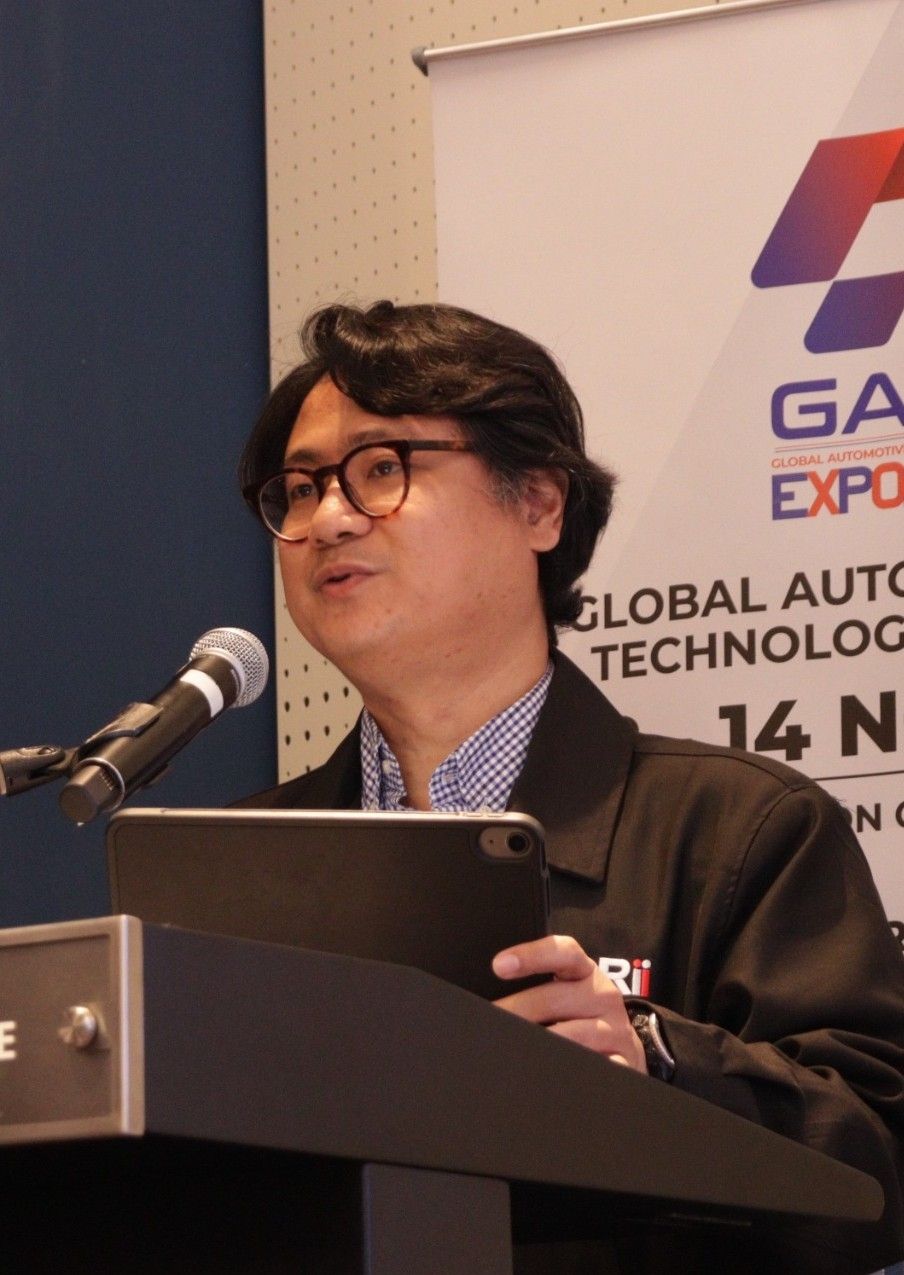
This is where Global Automotive and Technology Expo (GATE) 2025 becomes more than just an exhibition. With the strong backing of industry leaders such as Perodua and Proton as Platinum Partners, GWM as a Gold Partner and PricewaterhouseCoopers (PwC) as our Knowledge Partner, GATE 2025 is set to become a catalyst for growth.
The event is expected to attract 350 companies and 20,000 visitors and is expected to generate RM500mil in trade and investment opportunities.
For Malaysia’s semiconductor players, this is not merely a platform to showcase products, but a gateway to forge strategic partnerships with global OEMs, pitch chip solutions for electric vehicles (EVs) and strengthen their position in the automotive semiconductor nexus.
A highlight of this effort is GATE Connect is an OEM Vendors Automotive Exchange where manufacturers present sourcing priorities directly to local and Asean vendors unlocking access to regional and global supply chains.
Through this platform, it features strategic partners such as GWM, Jetour, SAIC and Volkswagen Malaysia, companies can explore collaborations that transcend borders. Imagine a local integrated circuit (IC) design house working with a global automaker to co-develop chips for autonomous driving or a Malaysian packaging firm signing a Memorandum of Understanding (MoU) with an international supplier to integrate EV-grade semiconductors.
Complementing these business opportunities is the GATE Conference, co-hosted with PwC Malaysia as our Knowledge Partner, which will spotlight themes vital to future mobility from rare earth applications in automotive and emerging energy technologies to semiconductors, hydrogen mobility, smart manufacturing and AI-driven vehicles systems.
Under the conference title ‘Will Mobility Technology Unleash the Next Economic Breakthrough?’, these discussions will help chart Malaysia’s role at the intersection of mobility and semiconductors.
Of course, success will demand more than enthusiasm. It will require resilience, adaptability and a mindset shift.
In my own journey, I have seen how industries rise when companies believe they belong on the world stage.
For our semiconductor firms, this means not only delivering on contracts but also continuously innovating, meeting global standards and building trust with international partners.
As Malaysia reviews its automotive policies and strengthens its semiconductor ambitions, I see a future where both ecosystems are not parallel tracks but intertwined engines of growth.
Automotive vendors will evolve into semiconductor innovators while chipmakers will become mobility enablers.
Through it all, events like GATE will serve as bridges to connect Malaysia’s capabilities to global demand.
The message is simple; the world is not waiting. The technologies shaping the future of mobility and microelectronics are advancing rapidly.
With the right policies, the right mindset and the right platforms, Malaysia can not only keep pace but also lead.
As we align our automotive and semiconductor ecosystems, our ambition must be clear, to transform Malaysia into a global E&E powerhouse where “Made in Malaysia” is not only a mark of assembly excellence but a symbol of innovation, resilience and world-class semiconductor capability. Built for the future and built for the world.
Azrul Reza Aziz is chief executive officer of Malaysia Automotive Robotics & IoT Institute (MARii).



