LIKE many other chronic conditions, patients with chronic kidney disease (CKD) are encouraged to adopt a specific diet that can support overall kidney well-being.
Experts are sharing insights on kidney-friendly diets, offering tips and tricks to support better eating habits for kidney wellness.
Protein balance
Diets are usually the first step most people take to gain control over their health.
It is common to hear that a healthy diet, in general, is one that is low in carbohydrates and fats, but high in protein.
“While a high-protein diet low in carbohydrates is beneficial for people with diabetes and obesity, this doesn’t stand true for those with CKD,” cautions consultant nephrologist and internal medicine physician Dr Wan Mohd Rasis Wan Ahmad Kamil.
“CKD patients need to have a reduced protein intake as compared to the general public.”
While protein is an integral part of maintaining the body’s function, metabolism of protein creates nitrogenous waste (urea) that needs to be eliminated by the kidneys.
In CKD, this function is compromised and excess consumption of protein can result in an accumulation uremic toxins in the blood.
Dietary management
Experts recommend that the average adult consumes 0.8-1.0g of protein per kg body weight per day.
However, a CKD patient should adopt a low protein diet (LPD) of approximately 0.6g of protein per kg body weight per day.
“Studies have shown that a LPD helps slow the progression of CKD,” explains consultant nephrologist and internal medicine physician Dr Wong Hoe Jiunn.
“Guidelines recommend that patients at CKD stage 3 begin the LPD to help preserve their kidney function.”
Diabetes is the leading cause of CKD in Malaysia. A diabetic diet is usually one that is low in
carbohydrates and high in protein to help balance their energy requirements.
“Diabetic CKD patients will need to adopt a moderately low-protein diet of approximately 0.6-0.8g of protein per kg body weight per day, combined with a moderate amount of carbohydrate, for optimal nutritional status,” Dr Rasis points out.
Consuming complex carbohydrates with a low glycaemic index helps to keep their blood sugar levels under control while providing adequate energy.
“CKD patients with diabetes should have a diet rich in vegetables and fruits. Their protein choices should also be one with high biological value,” adds Dr Wong.
Adopting a LPD can be manageable if done in a stepwise manner. By gradually adjusting protein portions — starting with one meal, then two and eventually all meals — patients may find it easier to adapt to dietary changes.
It is important to note that dietary assessment from a healthcare provider is essential before making any changes to one’s diet.
Protein source
The protein source in a CKD diet is important. Animal proteins are regarded as having high biological value, as they provide all the essential amino acids (EAAs) the body needs to function.
However, in CKD, a plant-dominant LPD is recommended.
“Animal proteins tend to produce more uremic toxins whilst plant proteins are associated with a lower acid and phosphate load making plant-based proteins preferable,” shares Dr Rasis.
CKD patients can still consume animal proteins, but Dr Rasis and Dr Wong recommend
picking white meats over red and putting more emphasis on plant-based proteins when possible.
A well-balanced plate for CKD patients should contain approximately half a plate of vegetables and fruits, a quarter plate of starch or whole grain carbohydrates and a quarter or less of protein.
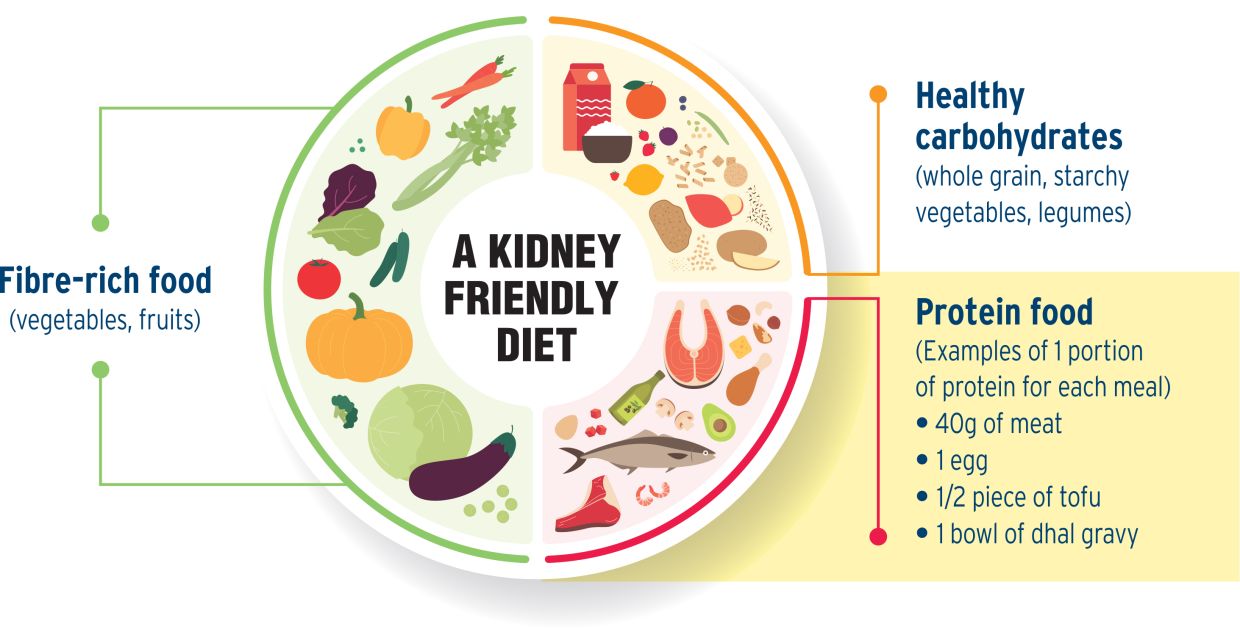
For an individual weighing 60kg, 1 portion of protein in each meal will be approximately a palm-sized cut of meat or a single egg or half a block of tofu (Figure 1).
One of the concerns when adopting a LPD is the risk of malnutrition. A dietician will guide CKD patients in their LPD journey, providing them properly tailored meal plans to ensure calorie intake is sufficient.
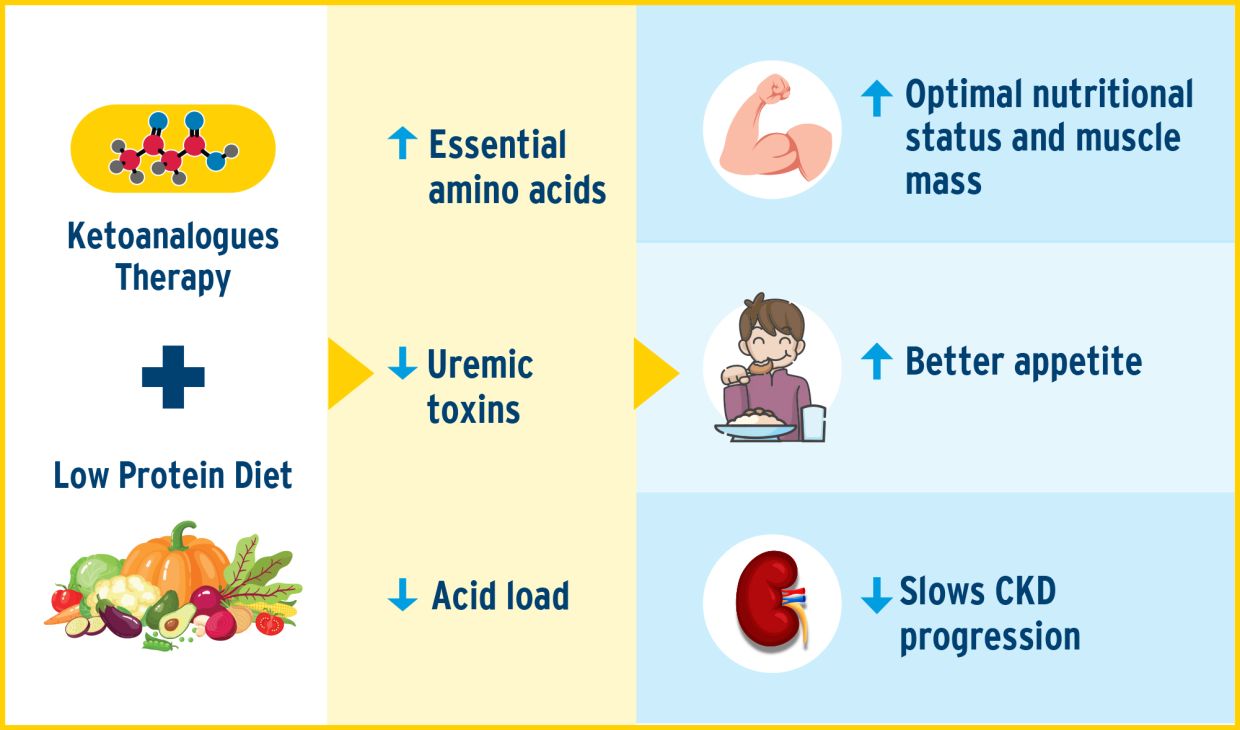
Addition of ketoanalogues to their treatment will also help provide EAAs.
Ketoanalogues therapy
Ketoanalogues (KAs) are modified amino acids devoid of the nitrogenous component. “When taken, KAs take up nitrogenous waste in the body to form EAAs,” Dr Wong states. Combining ketoanalogues therapy (KAT) and LPD reduces the burden on the kidneys, slows the progression of CKD and delays the onset of dialysis.
Expert insights
Dr Rasis outlines the following considerations:
- Regular check-ups that include a urine test and renal function test are important;
- Managing blood sugar levels and blood pressure plays a role in supporting kidney well-being;
- Exercise regularly, while staying hydrated;
- Adopting a kidney-friendly diet that emphasises low-protein intake, balanced with vegetables and fruits and reduced sodium.
Dr Wong shares these points:
- Early recognition and prevention are crucial. For those at increased risk of CKD, such as individuals with diabetes or hypertension, regular check-ups are especially important, as CKD is a silent disease and signs usually appear only in the later stages, close to dialysis;
- Adopting a low-protein diet can be easy and a dietitian can provide assistance;
- Be adherent to the lifestyle modifications recommended by your healthcare providers.
To learn more, visit https://www.chronic-kidney-disease.com/