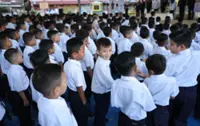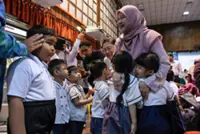
THE sudden reversal announcement on cancelling the “Special Diagnostic Test” requirement for six-year old children entering Year One, and replacing it with joint monitoring and decision making by teachers and parents alike, has not eased public concerns over Malaysia’s education policies.
Instead, this has highlighted the Education Ministry’s lack of preparedness in implementation strategies. With several reversals and cancellations under their belt, their actions have only heightened the confusion among the rakyat.
Recently, the government has been constantly changing its education policies and rushing implementation without a comprehensive support framework, leaving students, parents, and schools anxious and unsettled.
Prime Minister Datuk Seri Anwar Ibrahim has repeatedly made announcements on education matters without thorough research, resulting in public confusion and dissatisfaction.
We must not treat education policies as children’s games, and the recent announcements and subsequent reversals have only damaged government credibility.
Additionally, although Unesco data shows that 137 countries worldwide have implemented school entry at the age of six, the issue is not the policy itself, but whether Malaysia is fully prepared for this implementation, or whether it is being rushed simply to keep pace with global trends.
The government needs a longer transition period and proper preparatory work when implementing policy changes, otherwise children may face difficulties in physical and psychological adaptation.
Clarifications must also be made on whether the allocation of RM800 million to recruit 18,000 new teachers would be sufficient to address the surge in demand for teaching staff, given that teacher training takes at least two years.
Is it realistic to expect sufficient numbers of qualified teachers to be trained within just one year? Will teachers trained under such rushed conditions meet the required standards? While we’re on this topic, has the Education Ministry adequately prepared both the hardware and software aspects, including classroom space, teacher numbers, and administrative arrangements?
In terms of class arrangements, the Education Ministry has yet to provide clear answers on whether six and seven- year old students will be placed in the same class.
If mixed classes are implemented, will this lead to psychological comparison and academic pressure? Children’s psychological maturity and learning transition periods must be carefully assessed. Otherwise hasty decisions will only result in greater confusion.
The rakyat is not opposing the policy itself, but is concerned about its rushed implementation in the absence of proper planning and clear guidelines.
Therefore, before announcing any policy, the government should first prepare a comprehensive implementation plan and a frequently asked questions (FAQ) platform to address the concerns of students, parents, and schools.
It is worth repeating that education policies concern the future of the nation. Therefore, they must not be rushed for political purposes or publicity, or worse, treated as a game.
ONG CHEE SIANG
MCA Youth Education Consultative Committee Chairman