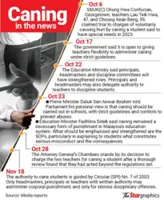
I FULLY support the Education Ministry’s (MOE) stand against the caning of students, as expressed by Education director-general Dr Mohd Azam Ahmad in an interview with a local Malay daily recently. “For now, our position is clear. We do not use caning as a tool in education,” he was quoted as saying.
It is time we move away from old ideas of discipline that rely on fear and physical pain. True discipline is not about punishment; it is about helping children to understand that every choice has a consequence.
There are some who are calling for the cane to return. But caning is not the answer. It may stop bad behaviour for a moment, but it does not help children understand why their actions are wrong.
It teaches fear, not responsibility. The pain fades quickly, but the lesson does not last.
In today’s world, children must learn that the real consequences of poor judgment are not just physical but social, emotional and professional as well. What they do now will one day affect their relationships, careers and reputation. If we only focus on physical punishment, we fail to prepare them for the real world.
Discipline works best when schools and parents stand together. Misconduct should never be handled in isolation. It takes shared understanding and cooperation between teachers and parents to guide a child towards reflection and change.
The consequences of bad behaviour must be painful enough to make an impact yet constructive enough to teach. It should involve losing something meaningful.
For most students today, nothing is more valuable than their digital life. So, instead of caning, I propose a strict digital timeout. When a student makes a serious mistake, the school and parents work together to set a period where the student is restricted from using non-essential digital devices such as social media, smartphones and gaming.
This approach works because it is tangible and relevant. Losing access to their digital world is a real consequence that affects their daily life and choices.
It mirrors real-world outcomes. In adulthood, poor decisions often lead to loss of trust, opportunity or privilege.
This approach also requires cooperation. Teachers identify the issue, but parents carry out and monitor the consequence at home. This shared responsibility reinforces accountability and ensures the child learns from it meaningfully.
We must stop viewing caning as a quick solution. The real work is harder as it involves communication, consistency and compassion.
It requires parents and schools walking side by side to teach children that choices matter, respect must be earned, and responsibility begins with understanding how our actions affect others.
Only then will discipline become not a punishment to fear but a lesson that helps children grow into thoughtful, accountable adults.
SCOTT J. WONG
Persatuan Kebajikan Rolf Schnyder Malaysia
Already a subscriber? Log in
Get 20% OFF The Star Digital Access
Cancel anytime. Ad-free. Unlimited access with perks.