Malaysia must invest in preventing bullying in schools


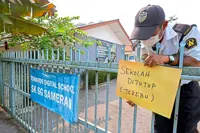
Photo posed by models/The Star

THE tragic death of 13-year-old Zara Qairina Mahathir, possibly linked to bullying, has ignited a nationwide dialogue on bullying in schools and spurred the government to seriously consider the problem. We hope this will not be limited to a “media cycle” but will bring concerted change that will reduce the huge problem of bullying in Malaysian schools and institutions of higher education.

We are concerned that current measures by the government are predominantly punitive. While an Anti-Bullying Act with a tribunal may be useful, it will not be effective in dealing with this endemic problem.

A quick look at the data makes it clear that a tribunal cannot be effective. Three in four children admitted to being bullied in the classroom (Children4Change survey, Unicef 2018); one in six were bullied in the last 30 days (National Health & Morbidity Survey survey 2017; we have not quoted the 2022 data as it was impaired by the Covid-19 pandemic). Our children worry more about bullying (seven out of 10) compared with children in Japan (three out of 10) or the United Kingdom (four out of 10) according to a World Children’s Day survey by Unicef in 2017.

The problem is huge and we have not given it adequate attention for years. And it is likely to be more severe in boarding schools and with cyberbullying. We also have not addressed the equally important and common problem of bullying by teachers and by those in authority in society.

Hence, rather than punitive reactions, our interest and focus is better served by working to prevent bullying in schools and society. Almost every Malaysian will have an opinion on what needs to be done; we can see this from social media posts. We are delighted that the Parliament Select Committee for Women, Children, and Community Development, chaired by Puchong MP Yeo Bee Yin, is looking at the issue. However, it is also critical that we listen to children and their views on this.

We would like to emphasise here that we are best off looking at the evidence and identifying what works from other nations and research, rather than putting in place measures that are untested. Effective bullying prevention programmes involve “multi-tiered systems of support” (MTSS). The components of most MTSS intervention programmes include the use of universal prevention strategies and selective or targeted prevention strategies. They involve children in collaborative problem-solving and have progress monitoring. They are continual and not a one-off activity, and are not static but have the capacity to change with the data/evidence.

At the universal prevention level (Tier 1), we need school-wide prevention efforts for all students, ie a whole-of-school approach. This includes:

> Anti-bullying policies and rules: Clearly defined rules against bullying with consistent consequences.

> Curriculum and classroom activities: Integrating social-emotional learning, empathy development, and conflict resolution skills into the curriculum.

> Teacher training: Equipping staff to recognise, respond to, and prevent bullying effectively.

> Parental involvement: Educating parents about bullying and encouraging their active participation in prevention efforts.

> Improved supervision: Increasing adult presence in areas where bullying is likely to occur.

> School-wide awareness campaigns: Activities to raise awareness about bullying and promote a positive school climate. With social-emotional learning programmes that focus on teaching students essential social and emotional skills that can help prevent bullying.

> Bystander intervention programmes: These programmes empower students who witness bullying to intervene safely and effectively. They promote a “caring majority”, where students actively support those being bullied.

At the selective prevention level (Tier 2), we have prevention efforts targeted at specific groups of students, those at higher risk of being involved in bullying (either as perpetrators or victims). This might include small group social skills training. This includes:

> Strategies for students who bully: empathy development activities, anger management and conflict resolution training, consequences for bullying behaviour, restorative justice approaches.

> Strategies for students who are victimised: assertiveness training, social skills training, relationship skills, building peer support networks.

At Tier 3 we focus on students who are chronically involved in bullying (bullies) or experiencing significant negative effects (victims). This will involve intensive, individualised support, including counselling and family support.

It is important to remember that, in order to tackle bullying, it is not sufficient to just look at the behaviour, it is necessary to address the underlying motive(s). Studies have shown many different motives for bullying which include: dominance, status, resources, revenge, justice, belonging, identity, wellbeing, and entertainment. A sizable proportion of bullies have experienced violence and bullying at home and hence are acting out in school. All bullies should be evaluated for abuse at home. Bullying is not just a school issue.

It's important to note that the most effective bullying prevention strategies often involve a combination of approaches, implemented consistently and with the active participation of the entire school community, including students, staff, parents, administrators, and society.

We appeal for an evidence-based and holistic approach to deal with the large problem of bullying in our schools, and to extend this to institutions of higher education. There is no quick fix and no simple solutions. We will have to invest in the hard work to reform our systems and society. Bullying in our society is not just a school problem but a responsibility for all of society to change and become more inclusive and accepting of diversity.

DATUK DR AMAR-SINGH HSS, consultant paediatrician, child-disability activist

CIKGU RAHAYU, child rights activist

ANISA AHMAD, House of Wisdom PLT

Johor Women's League (Jewel)

DR KHANISA MD KHALID, consultant paediatrician

DR JAMES NAYAGAM, consultant at Suriana Welfare Society, and former Human Rights Commissioner

Buku Jalanan Chow Kit

RUSNI TAJARI

Persatuan Kebajikan Rolf Schnyder

DR INTAN NOR CHAHAYA SHUKOR, consultant paediatrician

CRIB Foundation

Childline Foundation

DATUK YASMEEN SHARIFF

DR NURUL AIN NAIM, paediatric medical officer

Sarawak Women for Women Society

DR SHANGKITHA DEVI PALANIAPPAN general paediatrician

Pertubuhan Kebajikan Vivekananda Rembau NS

DR NOR SYARINA, consultant paediatrician

Family Frontiers

MARQUES JEEVAN MENON, Nation Building School

PROF DR KAMAL KENNY

DR SHEILA GOPAL KRISHNAN, consultant paediatrician and senior lecturer, MAHSA (Malaysian Allied Health Sciences Academy) University

DR AFIFAH ZEN, emergency physician

DR AGNES SUGANTHI THINAKARAN, consultant paediatrician

Persatuan Untuk Anak Kita

IVY JOSIAH, women’s rights advocate

DR SITI AISHAH SAIDIN, consultant paediatrician

World Vision Malaysia

CHUN WAH HOO, NGOhub

RODNEY LEO

DR NOR RAHIDAH A. RAHIM

DR NURULFAZIHA HAMIDON, family medicine specialist

ANDREW KHOO, advocate and solicitor

DR TAN MEI SEE, consultant paediatric and child health, Bagan Specialist Centre, Penang

PROF DATUK NOOR AZIAH MOHD AWAL, former Children’s Commissioner

HERNANDO BETITA III, World Vision Malaysia

Women's Centre for Change Penang

WONG HUI MIN, president, National Early Childhood Intervention Council

MANDIRI, youth-driven organisation

SUWITI ABDUL RANEE, PurpleLily Social Organisation

HAYAT, human rights organisation

Protect and Save the Children

CHIN SAW SIAN, consultant paediatrician

End CSEC (Commercial Sexual Exploitation of Children) Network


Get 20% OFF The Star Digital Access

Monthly Plan

RM 13.90/month

RM 11.12/month

Billed as RM 11.12 for the 1st month, RM 13.90 thereafter.

Best Value

Annual Plan

RM 12.33/month

RM 9.87/month

Billed as RM 118.40 for the 1st year, RM 148 thereafter.

Follow us on our official WhatsApp channel for breaking news alerts and key updates!

Next In Letters

Commuter woes after closure of�Pekeliling Bus Station
Our schools need more than just teachers and counsellors�
Understanding the problem of homelessness
Homestay villages are ready for the rail chapter��
Healthy ageing begins long before old age
Turning data into road safety action
When our frontline health warriors are crying for help, Malaysia must listen
�10 years cut to 3: TAR UMT students pay the price for government's tax exemption U-turn
Include earthquake mitigation in building design�
When schools become crime scenes

Others Also Read