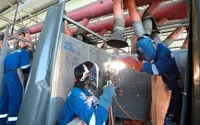
AS technology continues to shape our economy, the need for skilled labour becomes critical. The Madani government has been prioritising the growth of technical and vocational education and training (TVET) to build future-ready skilled technicians. Historically, vocational education has been undervalued, overshadowed by the emphasis on academic pathways.
With a relatively competitive labour market and favourable business climate, Malaysia is poised to be a key destination for international manufacturers, notably from China. The Chinese see Malaysia as a perfect location for economic pursuits given our multiracial composition and also our geopolitical advantage. Malaysia is home to about 7.5 million Malaysian Chinese whose culture and cuisine would make it amenable for mainland Chinese nationals to co-exist.
However, as investments pour into the country, the question arises whether Malaysia has enough skilled technical labour to meet future demand. At this point of time, the blunt answer is no.
Nonetheless, with the concerted efforts of the Madani government and relevant organisations such as the Malaysia-China Institute and Belia Mahir (a skilled youth project under the National Skilled Workers Association), the goal of meeting future industry demands for a skilled technical workforce could be achieved.
Presently, the nation’s TVET agenda is driven by the Malay-sian TVET Council chaired by the Rural and Regional Development Minister. According to the latest statistics, there are 1,345 TVET institutions nationwide; 669 are run by the government and 652 by the private sector. There are another 24 which are state owned. These TVET institutions offer a variety of vocational courses such as automotive, ICT, welding, culinary, oil & gas, fire protection systems, graphic design, and many more.
To escalate the TVET industry, enforcement bodies and local councils should implement by-laws whereby only certified TVET graduates would be given licenses to operate businesses that require vocational skills. This is to mirror medical clinics and legal and engineering firms where licenses are issued only if practitioners have the recognised qualifications to practice.
For instance, those keen to operate an automotive workshop, bakery, hair salon, spa or airconditioning service must hold a certified qualification from an approved TVET institution before a business license can be granted. This will help boost the TVET industry as well as ensure quality standards are met.
One concerning example is in the fire protection system industry. Currently, workers who install or service fire protection equipment in buildings are not required to have qualifications from a TVET institution. The workers are trained by the fire equipment contractors themselves, and this could lead to abuse. There have been cases where irresponsible contractors use cheap and untrained foreign labour to install the equipment, thus undermining fire safety standards.
Should workers undergo proper training at TVET institutions, they will be taught about compliance and safety measures in the installation and maintenance of fire-fighting equipment. This issue can be addressed if government authorities impose mandatory requirements for workers – both local or foreign – to undergo prior training from TVET institutions specialising in fire safety and protection systems.
Looking ahead, TVET institutions play a significant role in producing qualified and skilled labour to meet the country’s growing needs. The government of the day must do its best to support TVET institutions as they serve as a bastion for vocational training and development.
AZZLAN ISMAIL
Asian Institute of Technology
Already a subscriber? Log in
Get 20% OFF The Star Digital Access
Cancel anytime. Ad-free. Unlimited access with perks.