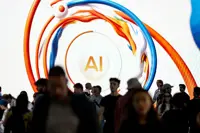
ARTIFICIAL intelligence (AI) is no longer a distant concept confined to tech labs as it is steadily reshaping how we work, live, and importantly, how we stay safe at work.
In Malaysia, AI is emerging as a powerful tool in the field of occupational safety and health (OSH), offering smart, proactive solutions to reduce workplace risks and enhance employee wellbeing.
Yet, the road to full-scale adoption is still in its early stages, with many organisations cautiously exploring its possibilities amid concerns over cost, data security, and workforce readiness.
Malaysia’s journey into AI-driven safety initiatives reflects its broader ambition under the Industry 4.0 umbrella.
As highlighted in the National Artificial Intelligence Roadmap (2021–2025), AI is earmarked as a key enabler in high-risk sectors such as oil and gas, construction, and manufacturing.
While some industries have taken pioneering steps, the country’s overall adoption still lags behind regional and global front runners like Singapore and the United States.
Some local giants are already leading the charge. In the oil and gas industry, PETRONAS has begun using AI-powered predictive maintenance systems to monitor equipment conditions in real time.
These tools help detect faults before they escalate, allowing timely repairs that save costs and protect lives.
In construction, AI-driven drones and computer vision technologies are being tested to spot unsafe structures or risky worker behaviours such as pushing safety monitoring to new heights.
Multinational manufacturers in Malaysia have also started embedding AI into their safety procedures, with wearable tech that tracks worker fatigue and environmental hazards.
However, small and medium enterprises (SMEs), which form the backbone of Malaysia’s economy have faced tougher challenges.
Limited budgets and lack of awareness have slowed their adoption of AI despite its long-term benefits.
Value of AI and immersive training and personalised learning
AI’s greatest strength lies in its ability to make sense of large volumes of data and predict dangers before they happen.
Traditional safety practices often respond to incidents after the fact.
AI flips that approach like enabling a proactive stance that saves time, money, and most importantly, lives.
In offshore drilling, for instance, AI systems can detect early signs of equipment failure, allowing interventions long before an accident occurs.
Likewise, AI-powered drones in construction sites are now able to flag workers not wearing proper protective equipment (PPE) or identify unstable scaffolding before tragedy strikes.
Training and education are also being revolutionised. Gone are the days of monotonous lectures and slide shows.
AI now powers immersive virtual reality simulations that let workers interact with digital replicas of real-world hazards.
Construction crews can virtually explore a high-rise site and practice spotting potential dangers, while oil rig staff can rehearse emergency scenarios without stepping foot on an actual platform.
These interactive methods can boost engagement, while significantly improving knowledge retention and reducing training costs.
AI also personalises learning. Instead of offering the same module to every worker, it can assess individual strengths and weaknesses to tailor safety content accordingly.
This ensures workers receive training that directly addresses their gaps, which is an approach already proving effective in high-precision environments like manufacturing.
Risk and ethical considerations
However, this promising technology is not without its pitfalls. Data privacy is a major concern.
AI systems depend on extensive data, often including sensitive worker health information.
It’is critical for companies to ensure compliance with Malaysia’s Personal Data Protection Act (PDPA) and implement stringent cybersecurity measures to safeguard this data.
There is also the matter of algorithmic bias. If AI is trained on unbalanced or non-representative data and, say, data primarily from male workers, it may miss safety issues specific to women or minority groups.
To address this, organisations must use inclusive datasets and conduct regular audits to ensure fairness and accuracy in AI-generated insights.
Moreover, AI should not be seen as a replacement for human expertise.
While machines can process and analyse data at incredible speed, they lack the human intuition and context that safety professionals bring to the table.
A balanced approach, where AI augments human decision-making, is essential.
AI can highlight a potential risk, but a trained safety and health officer (SHO) must assess its severity and decide on the necessary action.
Industry voices: Balancing AI with human expertise
While the integration of AI into safety management offers promising efficiencies, safety professionals urge a balanced approach that does not sideline human judgment.
Turner International environmental, health and safety manager Muhammad Assrull Shahrom cautions against over reliance on AI tools for tasks such as risk assessment or accident investigation.
“There is a real risk that safety personnel may become too dependent on AI-based software or applications.
“This can lead to a decline in critical thinking skills, which are essential for effective decision-making in dynamic environments.
“Eventually, employers may begin to question the need for hiring Safety and Health Officers if they believe AI tools can replace them entirely,” he noted.
Similarly, Samsung C&T Corporation UEM Construction JV safety and health officer Mohd Faizal Mohd Rosli emphasised AI’s practical value for system-based safety management, especially in fast-paced sectors like construction.
“Construction projects move quickly, and maintaining comprehensive safety documentation can be a burden.
“With multiple ISO standards to adhere to, AI can streamline repetitive and tedious tasks such as updating safety manuals and environment plans.
“This frees up time for safety officers to focus on more critical areas like investigations and real-time hazard control,” he explained.
For Malaysia to fully embrace AI in workplace safety, a coordinated national effort is needed. Government-industry partnerships can play a key role.
Pilot projects led by agencies like Social Security Organisation (Perkeso) and the National Institute of Occupational Safety and Health (NIOSH) can provide real-world evidence of what works, informing policies and standards.
Clear regulations and ethical guidelines are also essential to govern AI use responsibly in the workplace. Upskilling the workforce is equally important.
As AI becomes more integrated into daily operations, workers and SHOs alike must learn to interpret AI insights and apply them effectively.
Training in digital literacy and AI fundamentals should be part of future workforce development plans.
Financial support is crucial, especially for SMEs. Grants, subsidies, and incentives can help smaller firms invest in AI tools that might otherwise be out of reach.
Public campaigns can also raise awareness of the long-term cost savings and safety benefits, helping more businesses take the first step toward smarter safety systems.
Under the leadership of Department of Occupational Safety and Health (DOSH) director-general Mohd Hatta Zakaria, the department has been a vocal advocate for embracing Industry 4.0 technologies including AI, to modernise Malaysia’s workplace safety framework.
In a 2023 statement, DOSH highlighted that "advanced technologies like predictive analytics and automation are critical to achieving Malaysia’s Vision Zero workplace accidents”.
In conclusion, AI holds transformative potential for Malaysia’s OSH landscape.
From predictive analytics to immersive training, it promises a future where workplace hazards are not just managed, but anticipated and prevented.
With the right mix of investment, regulation, and education, Malaysia can lead the region in building safer, smarter, and more resilient workplaces in the digital age.
ASHRAF JALALUDIN, NURUL FARHANIM MOHD FADZIL
Lecturer
Faculty of Health and Life Sciences
Management and Science University (MSU)