ABOUT two months ago, I bought my first car and started driving to work.
I finally got to experience Klang Valley traffic from behind the wheel and sometimes I ask myself: “Is driving to work the right decision?”
Though I was mentally prepared for traffic congestion, the magnitude of the gridlock on some roads still blows my mind.
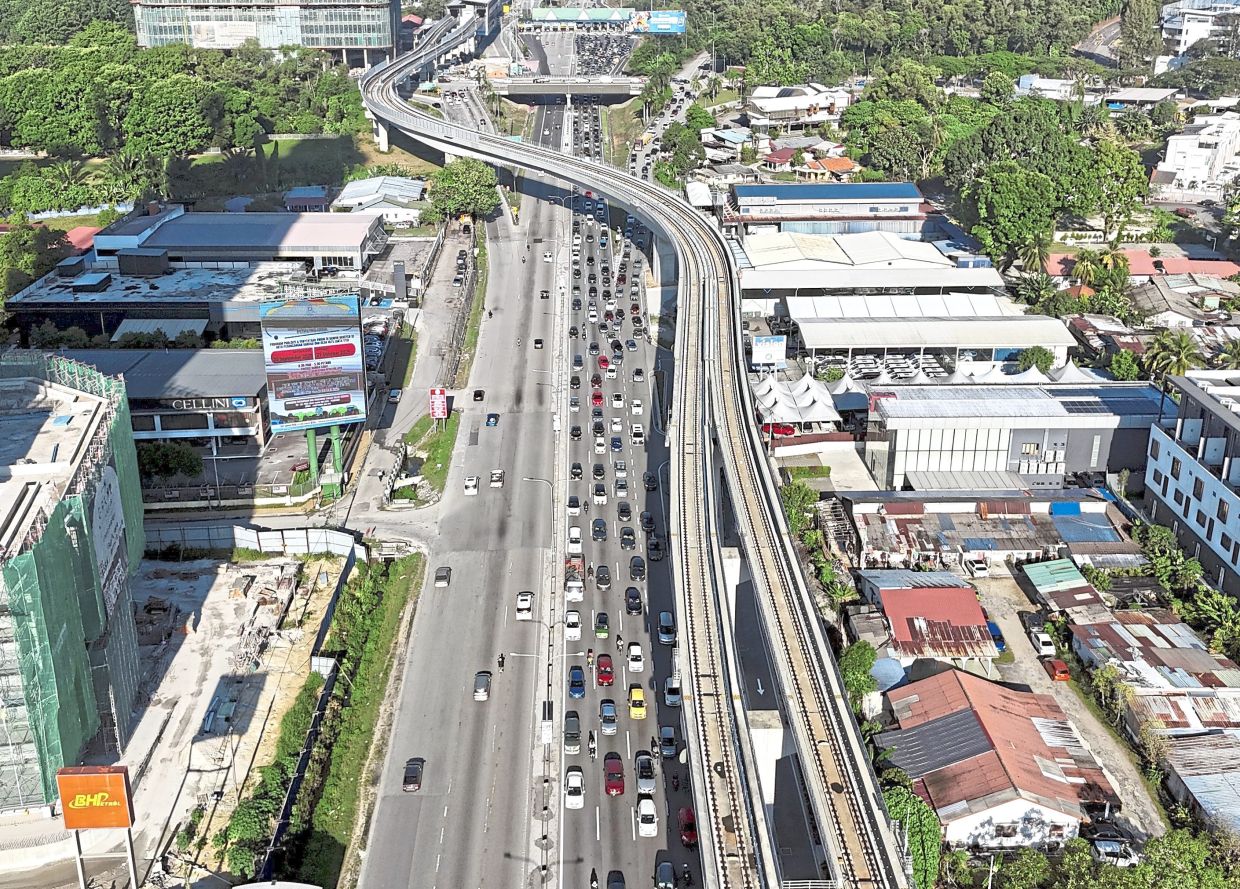
One of the jams I regularly endure is a stretch on Sprint Highway (Sprint) between Bandar Utama and SS20 in Petaling Jaya, Selangor, which is my route to the office.
During rush hour, my commute is lengthy as I crawl through this stretch, minding vehicles weaving across different lanes to either stay on Sprint or exit to places such as Damansara Jaya and SS20.
This severely depletes my energy.
There are two ongoing development projects along the 1.6km stretch – a mixed development with more than 1,000 units and an apartment with 88 units.
Bandar Utama residents I spoke to, who share the same daily experience on the stretch, are worried about possible worsening gridlock on Sprint as the two new buildings will attract more cars into the area.
Overdevelopment is one of the topics I write about most frequently.
Many Klang Valley residents have complained about how new projects could bring more cars into their neighbourhoods, disrupting the present traffic dynamics.
This concern is totally valid, but can we actually stop developing our cities?
As of 2020, 75.1% of the Malaysian population or 24.3 million people were staying in cities, according to the Statistics Department.
This is an increase of about five million from the 19.5 million urban population recorded in 2010.
As more people move to cities, it is inevitable that more residential and commercial developments are needed to accommodate their needs.
According to some public transport users in my circle, many of those who object to new projects have failed to consider public transport as a viable option, jumping to the conclusion that more development means more cars.
Taking the Sprint case as an example: the Bandar Utama LRT station, which is part of the upcoming LRT3 line, is located along the highway (Shah Alam-bound).
In theory, it should be able to help reduce the traffic volume on Sprint.
However, the reality is never that simple.
Having covered mobility and public transport extensively, I have realised that a lot of places in the Klang Valley, though branded as transit-oriented developments (TOD), have poor connectivity to transit stations.
One can hardly walk or cycle safely on some of those stretches.
Taking the bus, on the other hand, can be too confusing and time consuming for those who do not fully understand the system, while using the e-hailing service may be too costly.
As such, at the end of the day, maybe the real problem is not the pace of development, but how inclusive the projects are in terms of meeting the needs of all groups of road users, including pedestrians, cyclists, motorists and public transport users.