
THE two-hour parking limit was introduced in Selangor with one goal – to make parking easier for motorists in crowded, commercial areas.
By capping street parking at two hours, motorists would be deterred from occupying bays all day, freeing up space for those only needing a short stop.
The policy was meant to improve turnover in “hot zones” such as town centres, business districts and popular retail areas where motorists would often spend more time circling for parking than running their quick errand.
The plan took off between 2022 and 2023 with most major local authorities – Subang Jaya, Petaling Jaya, Shah Alam, Kajang, Klang, Selayang and Ampang Jaya – introducing it in selected commercial zones.
Throughout Subang Jaya, about 2,300 bays were marked for two-hour parking.
Petaling Jaya followed suit, enforcing the rule in Section 52, Section 14, Dataran Sunway and Damansara Uptown with 1,156 bays.
Shah Alam launched a smaller pilot project covering 67 bays, while Kajang and Selayang each implemented it in fewer than 200 bays.
Early feedback was positive as business operators reported quicker parking turnover and more customer traffic, while councils saw higher rotation of vehicles in busy zones.
Selayang Municipal Council recorded up to four different vehicles using the same bay daily, compared with one before the system began.
But the momentum appears to have slowed.
Most councils that introduced the system have stopped expanding it. Selayang, Shah Alam, Kajang and Subang Jaya have maintained their existing two-hour zone areas, but there have been no major additions since late 2023.
Petaling Jaya is an exception as it has announced plans to extend the scheme in 2026 to areas including Section 1, Section 3, SS20, SS22 and SS2.
The city council had also issued more than 50,000 compounds for time-limit violations in 2024.
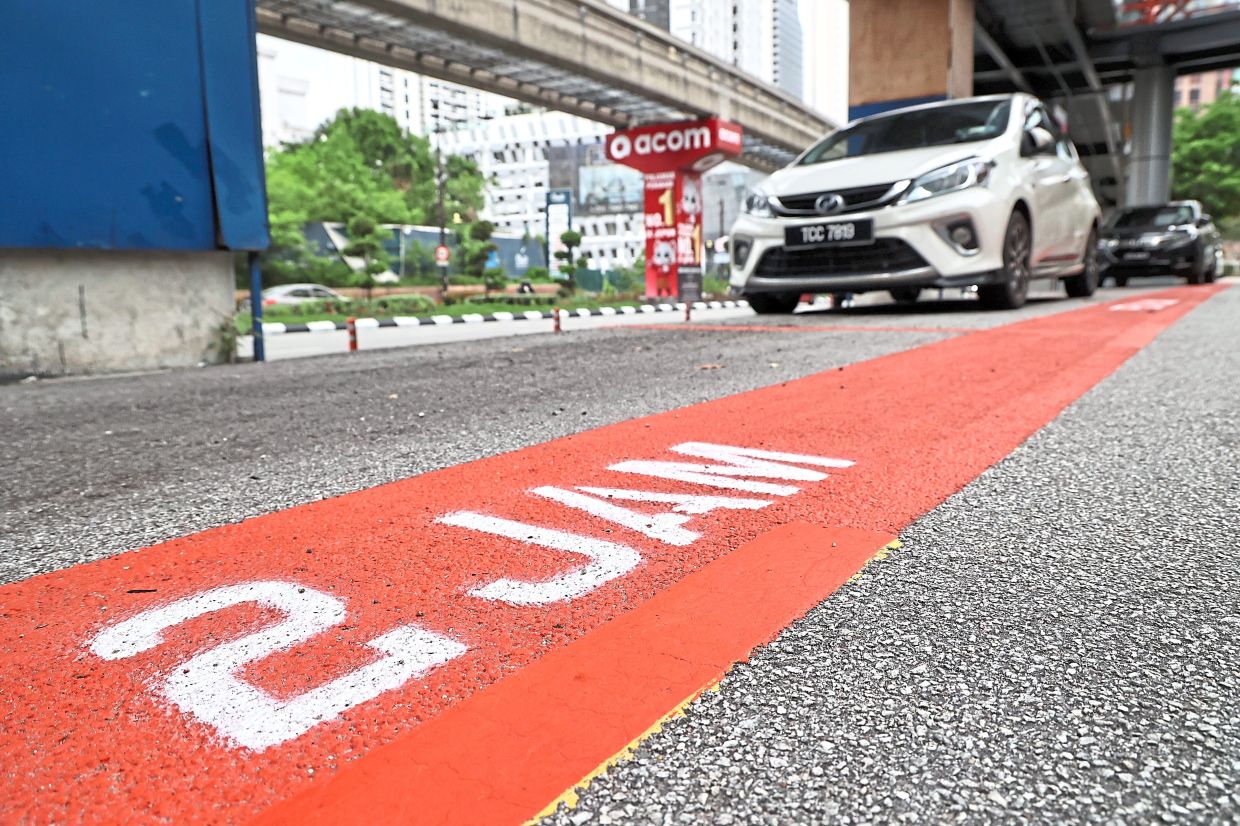
Meanwhile Ampang Jaya, which introduced the system near Ampang Point in 2023, later cancelled it, citing enforcement challenges and unsuitability in office-heavy areas.
Instead, there is now gated parking that allows longer stays but at higher rates.
Enforcement was another hurdle for the policy as councils rely on manual enforcement patrols to monitor such zones – a process that requires significant manpower.
Despite the setbacks, the system shows value where it is well implemented.
The concept has also gained traction outside Selangor as Kuala Lumpur City Hall (DBKL) began imposing two-hour limits in streets such as Medan Tuanku and Jalan Ipoh Kecil this year.
DBKL’s adoption shows that the idea still holds value, while progress within Selangor has slowed.
It would be good to see renewed drive among local authorities in Selangor to revisit and expand the system where it makes sense. Councils could take a more data-driven approach in identifying suitable areas, focusing on high-demand stretches where parking turnover is crucial.
Digital enforcement tools such as number plate recognition software and app-based timers or alerts could also help reduce strain on manpower while ensuring compliance.
The two-hour rule has proven that a simple measure can make a big difference in easing congestion and improving access in busy town centres.
It should be treated as part of a broader parking strategy rather than a standalone rule.
The success seen in Petaling Jaya and parts of Subang Jaya shows that when properly enforced, it benefits both motorists and businesses.