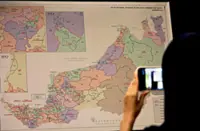
THE Sarawak Legislative Assembly, the largest by far in the country with 82 elected representatives, is set to expand.
During a special one-day sitting on July 7, the legislature passed Dewan Undangan Negeri (Composition of Membership) Bill 2025 to increase its members to 99.
Sarawak Tourism, Creative Industry and Performing Arts Minister Datuk Seri Abdul Karim Rahman Hamzah, who tabled the Bill, said more seats were necessary in view of Sarawak’s growing population and number of voters, especially after the voting age was lowered to 18.
The increase would also address Sarawak’s vast geographical size and extensive areas rural assemblymen had to cover, he said, adding that the proposal was in line with Article 113(2)(ii) of the Federal Constitution, which allows a review of electoral boundaries after an interval of not less than eight years.
The last redelineation exercise in Sarawak was in 2015, creating 11 new state constituencies, after Dewan Undangan Negeri (Composition of Membership) Bill was passed in November 2014.
It is now up to the Election Commission (EC) to delineate the 17 new seats following the passing of the latest Bill.
The redelineation’s key focus should be to ensure fair representation as far as possible.
According to civil society organisation Persatuan Pemangkin Daya Masyarakat (ROSE), Sarawak currently has 2,017,772 registered voters.
Exact equal representation would mean 20,381 voters in each of the 99 state seats.
Clearly, it is not feasible to achieve equal numbers of voters across every constituency, given that urban centres are densely populated while small rural populations are scattered across large areas.
Neither, though, should voter size across constituencies vary widely.
The Federal Constitution’s 13th Schedule stipulates that the number of voters in each state constituency should be “approximately equal” except in rural areas that face disadvantages such as difficult access, where “a measure of weightage” should be given.
The Constitution originally provided for a difference of 15% in voter size in constituencies within a state.
This limit was eventually removed, resulting in some urban constituencies having four to five times more voters than the smallest rural seats.
This is far from ideal. Rural weightage has to be reasonable and give due consideration to fair representation, so that the voting process closely reflects the “one person, one vote” ideal.
As Balingian assemblyman Abdul Yakub Arbi pointed out, the disparity between urban constituencies with tens of thousands of voters and rural constituencies with a fraction of that distorts the democratic process and goes against the fundamental principle of “one person, one vote, one value”.
“Through this Bill, we aim to realign our state constituencies to ensure more equitable representation and uphold the democratic rights of all Sarawak citizens,” he said when debating the Bill.
The EC should follow through by reducing voter size disparity in its redelineation exercise to create the new state seats, particularly in urban areas where voter numbers are significantly higher.
If the purpose of increasing the seats were to ensure fairer and more effective representation, unequal voter size has to be addressed so that the votes of large constituencies do not become unfairly diluted.
ROSE estimates that having 17 new assemblymen would involve additional annual expenditure of up to RM140mil in salaries and development funds.
Assemblymen should provide better services to justify the extra cost.
And state assembly sittings should be extended from the current 16 days a year.
More time should also be allocated to debate and scrutinise laws and policies.
The implications of the seat increase should be carefully considered to ensure the Legislative Assembly is an effective and accountable legislature to serve the people.