Jan 26 (Reuters) - U.S. officials helping to safeguard Americans at next month's Winter Olympics are stepping up planning for potential drone disruptions from illicit filming over venues to worst-case scenarios involving explosive payloads.
The threat of drone attacks has drawn growing attention since the war in Ukraine demonstrated their lethal capabilities, and the U.S. government has recently ramped up spending on anti-drone technology.
Drones have also disrupted airspace across Europe in recent months, while low-cost unmanned aircraft have become an everyday challenge for major sporting events.
"Our authorities are constantly on the lookout," Tim Ayers, Director of the U.S. State Department's Diplomatic Security Service (DSS), said in an interview.
Ayers described drones as "a massive issue" that host nations and visiting security teams now treat as a standing threat category.
MONITORING OUTDOOR MOUNTAIN VENUES
Italian police and their military counterparts are preparing restrictions and monitoring systems around outdoor mountain venues for the Milano Cortina Games, where drones are harder to control and easier to conceal, U.S. officials said.
Legitimate drone use - such as television broadcasts - can be approved under a credentialing system, but security planners expect fans to attempt flights regardless.
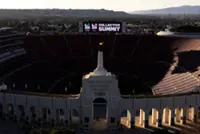
As part of preparations, U.S. officials recently convened a high-level drone symposium in Italy, bringing American specialists to brief their Italian counterparts and establish direct communication channels for rapid problem-solving during the Games.
"The Italians have primacy, it's their country," Ayers said. "We're there as a backstop to share information and expertise as needed."
Security officials pointed to the Paris Olympics as a recent case study. While authorities planned for the possibility of drones being used to deliver harmful devices, the more common incidents involved spectators trying to capture unauthorised footage or conduct activity that could resemble surveillance.
In those cases, officials said, host-nation forces focus on identifying and apprehending operators, enforcing no-drone zones and deploying counter-unmanned aircraft systems to force drones down, take control of them or block them electronically.
ADVANCED PLANNING
The American effort is coordinated by DSS through an interagency body that plans security support for major events outside the United States, officials said.
The group draws support from the FBI, the Department of Homeland Security, the Department of Defense, the Department of Energy and the intelligence community, among others.
U.S. officials said planning for an Olympics typically begins years in advance, with agents embedded on the ground.
Becky McKnight, a DSS special agent based in Milan for nearly two years, said her day-to-day work has focused on relationship-building with Italian law enforcement and venue security managers and repeatedly visiting Olympic clusters across northern Italy to understand terrain, travel choke points and command structures.
"Some of these venues, when we first went out there two years ago, most of them hadn't been built," she said.
CYBER CONCERNS
Beyond drones, officials cited cyber incidents as a major concern, including scenarios in which payment systems or ticketing access could be disrupted.
Officials also anticipate protests - both issue-driven demonstrations and routine anti-Olympics activity - as well as opportunistic crime targeting tourists.
Organisers have said they are taking every precaution to deliver a safe Games for athletes and fans.
For U.S. citizens traveling to Italy, officials urged enrollment in the State Department's Smart Traveler Enrollment Program (STEP) for safety messages about significant disruptions such as protests or transit issues.
They also advised avoiding flashy jewelry, staying aware of surroundings and expecting delays.
"Patience is going to be required," Ayers said.
(Reporting by Rory Carroll in Los Angeles; Editing by Ken Ferris)