




WHILE most of the world waits for a single jolly man in a red suit to slide down their chimneys on Christmas Eve, Icelandic children are said experience something quite different during the festive season.
Instead of one generous gift-giver, they are apparently visited by 13 mischievous characters who arrive one by one over the 13 nights leading up to Christmas, each with their own peculiar personality and penchant for pranks.
Does Iceland really have 13 "Santas"?
Verdict:

TRUE
Iceland does indeed have 13 Santa-like figures, though they are not technically related to Santa Clause but they play a similar cultural role in Icelandic Christmas traditions.
The Yule Lads, known in Icelandic as Jolasveinar, are 13 brothers who descend from the mountains one by one starting on Dec 12, with the last arriving on Christmas Eve. Each night, Icelandic children place a shoe on their windowsill, hoping to wake up to small gifts or treats left by whichever Yule Lad has come to visit.
Naughty children, however, receive something far less pleasant: a rotten potato.
Unlike the kindly Santa Claus of Western tradition, the Yule Lads were not always such benevolent characters. Their origins are far more sinister, rooted in centuries-old folklore designed to frighten children into good behaviour during harsh winter months.
The earliest mentions appear in 17th-century poems, though their characteristics and numbers varied wildly by region. Some tales spoke of nine brothers, others mentioned different numbers entirely, and in eastern Iceland, folklore even described them as originating from the ocean rather than mountains.
Everything changed in 1932 when Icelandic poet Johannes ur Kotlum published his poem "Yule Lads" in the popular Christmas book "Christmas is Coming". This single work transformed scattered folklore into a cohesive tradition, establishing the canonical 13 brothers with their now-famous names and distinct personalities.
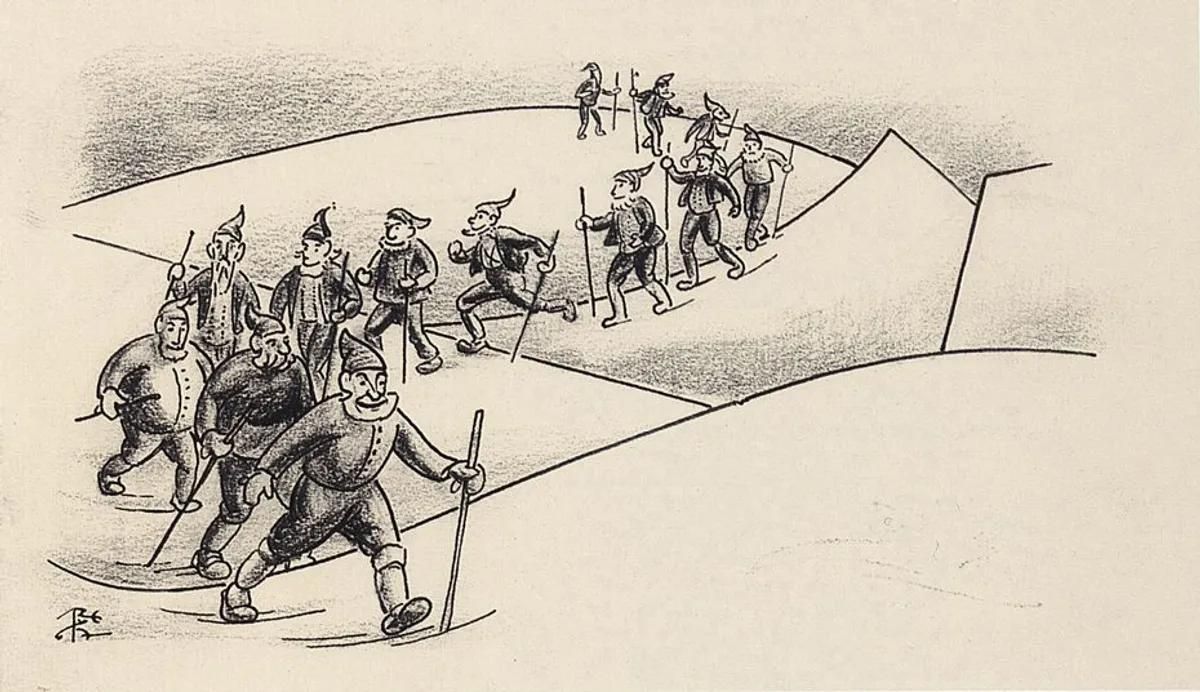
Johannes ur Kotlum essentially created the modern image that Icelanders know and love today, standardising what had been chaotic regional variations into a unified national tradition.
The transformation from terrifying kidnappers to gift-givers reflects how Iceland itself changed over centuries.
In 1746, the situation had gotten so out of hand that the King of Denmark actually banned parents from using the Yule Lads to frighten children too severely. By the early 20th century, they had adopted gift-giving habits whilst keeping their distinctive personalities.
Each of the 13 Yule Lads has a brilliantly descriptive name that tells you exactly what kind of trouble he causes.
The first to arrive is Stekkjastaur, or Sheep-Cote Clod, who harasses sheep. Then comes Giljagaur (Gully Gawk), Stufur (Stubby), Thvorusleikir (Spoon-Licker), Pottasleikir (Pot-Licker), Askasleikir (Bowl-Licker), Hurdaskellir (Door-Slammer), Skyrgamur (Skyr-Gobbler), Bjugnakraekir (Sausage-Swiper), Gluggagaegir (Window-Peeper), Gattathefur (Doorway-Sniffer), Ketkrokur (Meat-Hook), and finally Kertasnikir (Candle-Stealer).
These wonderfully specific names reflect harsh realities of Icelandic life centuries ago. Food was desperately scarce during long, dark winters, and the brothers' obsession with stealing milk, meat and preserved foods served as stern reminders to guard precious stores carefully.
But here is where things get properly terrifying. The Yule Lads do not travel alone.
Their mother is Gryla (not gorilla), a monstrous ogress whose appetite for naughty children is absolutely insatiable. Her origins stretch back to the 13th century, appearing in medieval texts such as the Prose Edda by Snorri Sturluson, though she was not explicitly connected to Christmas until the 17th century.
Described as enormous, hideous and utterly terrifying, Gryla possesses the magical ability to detect misbehaving children all year round.
When Christmas approaches, she descends from her mountain cave, collects naughty children in a large sack, and drags them back to her lair where she cooks them in a massive pot to make stew. This is not a metaphor. In traditional tales, Gryla literally eats disobedient children, preferably in a hearty broth.
Then there is Leppalludi, the lazy father who largely stays at home doing absolutely nothing besides annoying his domineering wife. Leppalludi is actually Gryla's third husband, which should tell you something about his survival instincts. She killed and ate her first husband, Gustur, and murdered her second, Boli. Perhaps wisely, Leppalludi has chosen to remain passive and avoid his wife's wrath.
The family also includes the Yule Cat, or Jolakotturinn. This is not some cuddly Christmas kitten but a huge and vicious feline that prowls the Icelandic countryside hunting for people who have not received any new clothes before Christmas Eve. Those unfortunate souls lacking new garments become the cat's dinner.
This tradition likely arose from customs encouraging productivity during weaving season and the practice of farmers giving workers new clothes as payment.
The Yule Lads are believed to live in the otherworldly lava formations of Dimmuborgir in the Myvatn area of north Iceland, though some tales place them in unidentified mountainous regions.
Today, the image has been considerably sanitised for modern audiences. They often wear traditional red and white clothing similar to Santa Claus, sport fluffy white beards and wide smiles, and are depicted as playful pranksters rather than genuinely terrifying trolls.
Holographic images are projected around Reykjavik during the festive season, and statues can be found at popular spots like Keflavik Airport.
Despite their transformation into family-friendly figures, the Yule Lads remain deeply rooted in Icelandic culture. They are as much a part of Christmas tradition as the famous Icelandic Christmas Book Flood (where everyone exchanges books on Christmas Eve and spends the night reading) and eating hangikjot (smoked lamb). Songs about them are instantly recognisable to every Icelander from childhood.
Modern viewing habits are gradually changing the tradition. With streaming services and catch-up TV, fewer families follow the nightly ritual of checking shoes for gifts, though the Yule Lads remain beloved cultural icons.
So yes, Iceland truly does have 13 Santas, though they are far more interesting and frankly more terrifying than the single jolly fellow known to the rest of the Western world. The Yule Lads, along with their child-eating mother Gryla, their useless father Leppalludi and the menacing Yule Cat, represent a unique blend of horror and festivity that makes Icelandic Christmas unlike any other celebration on Earth.


