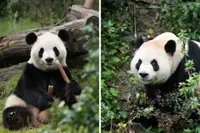
ADORABLE and cute, giant pandas are beloved by many people who are drawn to their infant-like behaviours and perceived vulnerability.
Apart from being a symbol of environmental conservation, these animals have also made their way into popular culture and the entertainment industry.
Many early scientists believed giant pandas are related to raccoons, as the two species shared nearly similar facial markings and forelimb dexterity.
Is this true?
VERDICT:

FALSE
Modern genetic studies have confirmed that giant pandas are true bears.
They are classified as such due to their genetic, anatomical, and evolutionary traits, which have a closer relationship to other types of bears.
As explained by the University of California Santa Barbara’s UCSB ScienceLine website, both pandas and racoons are from entirely different families in the animal kingdom.
“Bears are split into the Family Ursidae and raccoons into the Family Procyonidae. Pandas are in the Family Ursidae, and are considered true bears,” said UCSB.
“There seems to be some misinformation floating around the web that pandas are more closely related to raccoons than bears. Although scientists first thought this was the case, it is not considered true anymore,” it added.
And when it comes to the giant panda, their population has reportedly increased from 1,100 in 1980 to 1,900 last year, leading wildlife authorities to upgrade their conservation status from Endangered to Vulnerable.
Giant pandas play an important role in their ecosystem by promoting forest regeneration through seed dispersal.
References:
1. https://www.bbc.com/news/
3. https://floofmania.com/
4. https://asianews.network/wild-
5. https://www.wwf.org.uk/learn/