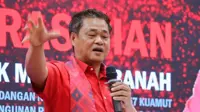
KOTA KINABALU: Datuk Seri Hajiji Noor says Sabah should secure fair economic value for carrying a major share of Malaysia’s environmental responsibility.
Conservation is a moral duty but it also incurs real costs and revenue losses, he noted.
"If Sabah continues to carry (such heavy) responsibility for the nation, how does it receive fair economic value from that contribution?" he said at the World Green and Sustainability Summit (WGSS) 2026 here on Monday (May 25).
The theme this year is "Powering Green Growth: Sabah and Malaysia in the Age of Sustainability" and the focus is on the state's blue and green economy.
"This is not a selfish question. It is a fair question," the Chief Minister continued.
"Conservation is often spoken of as a moral duty... and (one) we take seriously. But it also has an economic cost. When land is preserved, there is an opportunity cost. When forests are protected, there is revenue forgone.
"When ecosystems absorb carbon and support biodiversity, the value created does not benefit Sabah alone. It benefits Malaysia. It benefits the region. It benefits the world.
"Therefore, the new sustainability conversation must also be about fairness: fair value, fair recognition, fair investment, and fair participation.
"Sabah cannot continue to be seen only as a place that contributes natural capital, it must also become a place that benefits from natural capital," he said.
He added that Sabah can prove that a developing state does not need to choose between protecting nature and improving livelihoods.
"We can do both, but we in a way that is right for Sabah," he said.
Hajiji assured that the state government would continue to be a responsible custodian of the environment, while remaining firm in defending its people's economic future.
"This is the balance Sabah seeks. This is the future Sabah is building," he said.
Hajiji said energy is not just an environmental issue but also an economic one and a matter of long-term security for Sabah.
"Renewable energy is clearly part of our future. Solar, hydro, biomass, biogas and other clean technologies must continue to expand as part of Sabah’s long-term energy roadmap.
"The Sabah Energy Roadmap and Master Plan 2040 emphasises reliable, accessible affordable and sustainable energy including improved generation reserve margin, a better generation mix, and increased renewable contribution," he said.