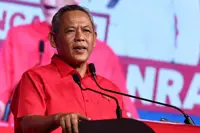
SEREMBAN: State government departments and government-linked companies (GLCs) have been told to reduce costs and be prudent in their spending to mitigate the impact of the ongoing Middle East conflict, says Datuk Seri Aminuddin Harun.
The Mentri Besar said the state civil service has been instructed to carry out these austerity measures immediately.
"Among the belt-tightening measures include reducing fuel usage for government vehicles as well as the use of electricity in offices.
"Meetings with their counterparts in the respective districts should also be carried out online to cut travelling and related costs," he told reporters after chairing the state exco meeting on Wednesday (April 15).
Aminuddin said travelling abroad should only be allowed if it was absolutely necessary and directly benefited the state economy.
"Travels abroad should only be permitted if they will have a positive impact. We want investors to continue to come in but at the same time we need to be prudent," he said.
Aminuddin added that the state civil service has been told to avoid large-scale programmes for now. Other events should be reviewed and held only if necessary.
He said these measures were vital as the public is already feeling the impact of the Middle East crisis. Citing the construction sector as an example, he noted the rise in building material costs due to the war.
"This can also indirectly affect the state government's revenue," he said, adding that the recent decision to allow over 3,000 state employees to work from home (WFH) twice a week starting today was also part of efforts to strengthen preparedness in facing the global energy crisis.
Under the WFH policy, staff commuting more than 8km one way can work remotely on Tuesdays, Wednesdays or Thursdays, subject to department head approval and electronic monitoring.