PETALING JAYA: The 100 year-old Bacillus Calmette-Guerin (BCG) vaccine is still the world’s only defence against one of its deadliest infectious diseases – tuberculosis.
But sadly, experts say the vaccine given at infancy is generally not recommended for adults.
In 2023, the World Health Organisation (WHO) announced the establishment of the TB vaccine accelerator council to facilitate the development, testing, authorisation and use of new TB vaccines, following the experience from the Covid-19 pandemic.
Prof Dr Zamberi Sekawi, Consultant Clinical Microbiologist at Universiti Putra Malaysia said currently BCG is the only TB vaccine in routine use worldwide and it is mainly given to infants to protect them from severe forms of TB.
“The BCG vaccine does not give lifetime protection. Its main role is to protect young children from severe and life-threatening TB, such as TB meningitis. Protection can reduce over time,” he said.
He said one should seek medical attention early if they have a persistent cough lasting more than two to three weeks.
“They must also complete TB treatment fully if diagnosed, and avoid close contact with untreated TB patients, ensure good ventilation in homes and workplaces and maintain good general health,” he said.
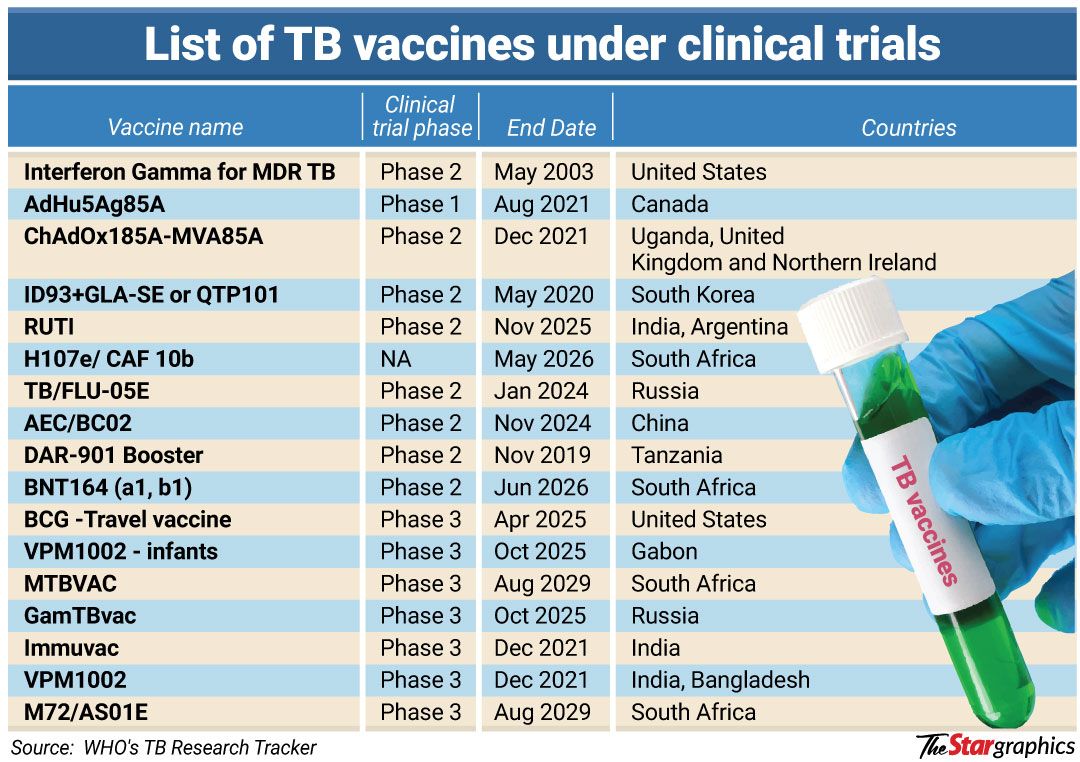
Retired Health Ministry director Datuk Dr Zainal Ariffin Omar said several new TB vaccines are in development such as the M72/AS01E (M72) developed by GSK Vaccines and sponsored by the Gates Medical Research Institute, as well as the MTBVAC developed by Spain’s University of Zaragoza, however none have been licensed for use.
“TB Vaccines are generally not recommended for adults. BCG is ineffective in adults, and revaccination is not routinely advised,” he said.
“For children, BCG protection wanes over time, typically within five to 15 years. It is not sufficient for a lifetime protection,” he added.
He said protecting oneself from TB through examination of close contracts, leading a healthy lifestyle and mandating BCG vaccination for infants in high risk areas are the only way to go for the time being.
Federation of Private Medical Practitioners’ Associations Malaysia President Dr Shanmuganathan TV Ganeson said the several new TB vaccines which are in development, including those for adults, are still undergoing clinical trials and are not yet available for public use.
“If successful, they may become available later this decade, possibly around 2030,” he said.
“Currently, there is no recommendation for routine TB vaccination in adults in Malaysia. BCG is primarily given in infancy because it offers protection against severe forms of TB in children (such as TB meningitis and disseminated TB),” he said.
In practice, when Malaysians are preparing for travel, they are more likely to request for the influenza vaccine, Covid-19 booster, Hepatitis A and B, Typhoid vaccine, Tetanus-diphtheria- pertussis (Tdap) booster, Meningococcal vaccine, Japanese Encephalitis, and yellow fever vaccines, he said.
“TB risk during travel is usually addressed through risk assessment and early medical evaluation if symptoms develop, rather than vaccination,” he said.
Occasionally, some individuals working long-term in high-TB-burden settings such as healthcare or humanitarian work may ask about TB prevention, but current practice focuses more on screening rather than adult vaccination,” he added.
The Health Ministry said a total of 503 new TB cases were detected nationwide as of the fifth epidemiological week of this year, bringing the cumulative total to 2,571 cases.