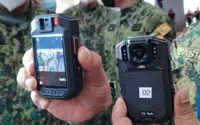
PETALING JAYA: Bukit Aman’s widening use of body-worn cameras by its frontliners will lead to better action against any wrongdoings but its implementation must be backed by proper protocols, says criminologist Datuk Dr P. Sundramoorthy.
He said the roll-out of the devices, which began in October 2024 and now extended throughout the country, marked a “significant” turning point and represented a shift to greater transparency and professional conduct.
“In many ways, this initiative reflects an acknowledgement that public trust is a central pillar of effective policing, and that modern societies increasingly expect law enforcement to operate under visible and verifiable standards.
“These body cameras are seen as instruments that reshape the dynamics of police-citizen encounters. Research grounded in procedural justice theory suggests that when people perceive authority figures as fair, respectful and accountable, they are more likely to comply with the law and cooperate with enforcement agencies,” said Sundramoorthy of Universiti Sains Malaysia.
He said that body-worn cameras serve as a constant reminder to both officers and civilians that their actions are being recorded.
“This often produces what scholars refer to as a ‘civilising effect’ where the presence of recording devices moderates behaviour, reduces aggression and encourages more professional interactions. In this sense, they function not only as tools of surveillance input but also as mechanisms of behavioural regulation,” he said.
However, he cautioned that its implementation alone was not enough, as there must be rules and protocols governing its usage.
“Its success will depend on the policies governing its use than on the number of devices distributed. If officers are given excessive discretion to decide when to turn cameras on or off, the deterrent and evidentiary value of the technology is weakened.
“Clear policies must therefore require mandatory activation during all public encounters, arrests, traffic stops, searches and any situation that could potentially escalate into conflict,” he said.
Sundramoorthy said data governance is another matter that should be addressed as footages must be saved properly to ensure its validity as digital evidence.
“Questions surrounding who controls the footage, how long it is retained, and under what circumstances it can be released are central to maintaining public confidence.
“Without transparent and accountable data management systems, the introduction of cameras alone may not convince sceptical public that meaningful reform has taken place.
“Equally important is the establishment of a transparent and accessible review mechanism. One of the strongest justifications for the use of these cameras is the potential to resolve disputes between the police and the public,” he added.
For this to work, Sundramoorthy said there must be a credible process through which complaints can be lodged and relevant footage reviewed.
“If access to the recordings is perceived as selective, delayed or controlled solely by the police, the legitimacy of the entire initiative may be undermined,” he said.
Retired Senior Police Officers Association president Datuk Meor Chek Hussien Mahayuddin said the roll-out is a “win-win” scenario for the police and the public.
“Both sides will benefit. The evidence (of any misconduct) is there to be seen by all.
“All sides will also be careful since it is all being recorded. The cameras will not only bring a better image to the police but the country in general as we have to move with the times and be more modern in our policing,” he said.