KOTA TINGGI: Johor has set an ambitious target to record zero polluted rivers by 2030 as part of its broader push to strengthen environmental protection and sustainability, says Datuk Onn Hafiz Ghazi.
The Mentri Besar said the state government was committed to intensifying enforcement, improving waste management infrastructure and working closely with industry players to ensure that environmental protection keeps pace with economic growth.
“In 2023, there were 14 rivers categorised as polluted in Johor. This figure dropped to nine in 2024, and this year, we expect the number to fall further to six,” he said, expressing confidence that the state could achieve zero polluted rivers by the end of the decade.
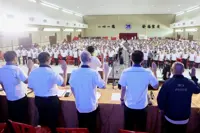
Onn Hafiz was speaking at the ground-breaking ceremony of the Johor Integrated Scheduled Waste Hub (JISWH), a RM310mil project aimed at strengthening the state’s capacity to manage, treat and dispose of scheduled waste here on Friday (Feb 6).
He said the facility would be the first of its kind in Johor and would address a long-standing gap, as many factories in the state previously had to transport chemical waste to facilities in Negri Sembilan.
“With existing scheduled waste hubs outside Johor nearing full capacity, this project is timely and critical. We do not want irresponsible parties dumping chemical waste into our rivers, as what happened in the past,” he said, referring to incidents such as the Sungai Kim Kim pollution incident.
Onn Hafiz said the JISWH would play a key role in preventing environmental contamination while supporting Johor’s industrial ecosystem in a responsible and sustainable manner.
He added that the project, developed with the involvement of international partners, including China-based companies, was expected to be completed by the end of the year.
“This project is not just about generating new revenue streams. More importantly, it ensures that Johor grows not only in terms of infrastructure and economy, but also as a liveable and sustainable state for its people,” he said.
Onn Hafiz stressed that sustainability was a core agenda under the Johor Green Deal, which is spearheaded by the Johor Sustainability Centre.
He said achieving the zero polluted rivers target would require extraordinary efforts and a departure from “business as usual”, citing the transformation of China’s Shenzhen from a fishing village into a global economic hub as an example.
The Mentri Besar also called on enforcement agencies, particularly the Department of Environment (DOE), to take firm action against polluters.
Under the Environmental Quality Act 1974, offenders who illegally dispose of scheduled waste can be fined up to RM500,000, jailed for up to five years, or both.
“We must enforce the law seriously. Johor will declare war on companies that continue to pollute our environment,” he said.
Onn Hafiz added that environmental protection was increasingly critical in the face of climate change, rising temperatures and water scarcity.
“We must do our part to protect the environment, for the future of Johor and its people,” he said.