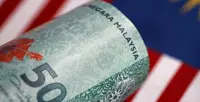
KUALA LUMPUR: The ringgit has strengthened to its highest level in nearly eight years on the back of stronger investor confidence, rising investment inflows and firmer economic fundamentals, says Finance Minister II Datuk Seri Amir Hamzah Azizan.
He told the Dewan Rakyat that the local currency had appreciated to RM3.92 against the US dollar as at Jan 28, 2026, making it one of the better performers in the region.
Amir Hamzah said demand for the ringgit rose in tandem with higher capital inflows and a pick-up in approved investments, which have reached record levels in recent years.
He stressed that the ringgit’s gains were not driven solely by lower interest rates in the United States, but also reflected confidence in Malaysia’s policy direction and reform efforts.
“These figures are not just for display,” he said, adding that the key question was how these gains translated into real benefits for ordinary Malaysians.
He said the Government’s Madani economic agenda was beginning to show results, particularly in the labour market and incomes.
The unemployment rate fell to 2.9% in November 2025, the lowest in 11 years, alongside stronger growth and higher investments.
The minimum wage has been raised to RM1,700 from RM1,500 a month, while government-linked investment companies (GLICs) and government-linked companies (GLCs) have adopted a living wage benchmark of RM3,100, covering about 169,000 workers.
He also highlighted broader market indicators, noting that the FBM KLCI climbed to 1,771 points on Jan 27, 2026 – its highest level in seven years – while Malaysia jumped 11 spots to 23rd in the IMD World Competitiveness Ranking. Total trade surpassed RM3 trillion, setting a new record.
On fiscal management, he said Putrajaya was on track to narrow the deficit while still supporting growth.
The fiscal deficit has been reduced from 6.4% of gross domestic product (GDP) in 2021 to 5.5% in 2022, 5.0% in 2023 and 4.1% in 2024.
It is expected to ease further to 3.8% in 2025 and 3.5% this year, based on Budget 2026.
He said the improvement was driven by a broader tax base, including refinements to the sales and service tax (SST), and subsidy rationalisation, particularly for electricity, diesel and RON95 petrol.
The retargeting of subsidies has freed up RM15.5bil to be channelled into cash assistance and public facilities.
Approved investments for the first nine months of 2025 reached RM285.2bil, up 13.2% compared with the same period in 2024, after Malaysia posted record approvals of RM329.5bil in 2023 and RM384.4bil in 2024.
Amir Hamzah said Malaysia’s fiscal consolidation and structural reforms have gained international recognition, with the International Monetary Fund acknowledging the country’s efforts in its December 2025 report.