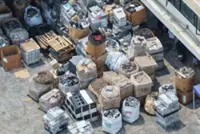
PETALING JAYA: Recent instances of illegally imported e-waste reflect an urgent need to enact legislation banning such imports and tightening enforcement in Malaysia, say stakeholders.
Basel Action Network researcher Wong Pui Yi said the potential damage of such waste imports far outweighs any perceived benefits.
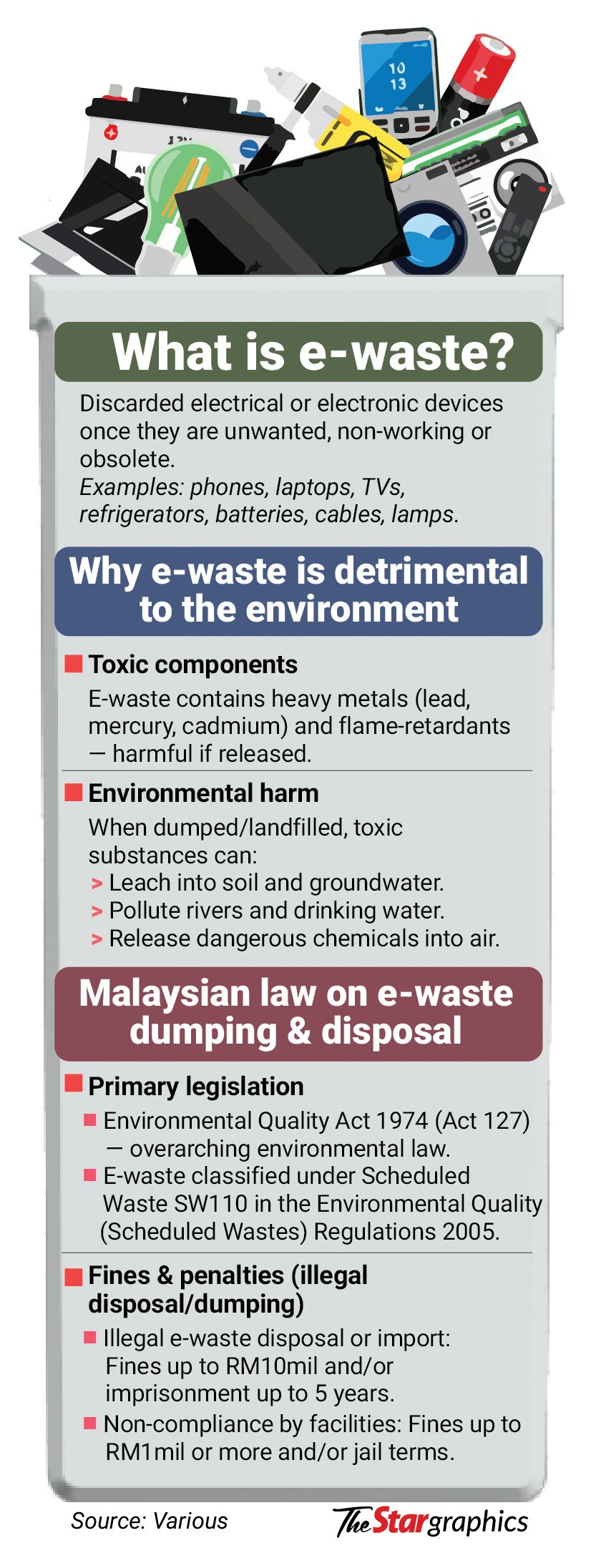
“Much of the e-waste trafficked into the country violates international and local laws. They are often sent here to avoid the high waste processing costs in their countries of origin.
“The recycling of e-waste can be extremely toxic and containing the pollution from it is expensive,” she said.
E-waste and plastic waste recycling, she said, is also limited where only a fraction of the imported material can be economically recovered.
“The rest is abandoned, dumped or burned, causing long-term harm to our soil, water, air and health,” she said.
ALSO READ: 158 tonnes of e-waste seized at Port Klang
Wong is pushing for legislation requiring transporters of illegally imported waste to bear the cost of returning it to the exporting country.
“The exporting country must be notified beforehand to ensure the return-to-sender process does not quietly divert to other developing countries,” she said.
According to Wong, Malaysia can make a complaint to the Basel secretariat against countries party to the Basel Convention if elements of fraud persist.
Malaysia has been a party to the Basel Convention on the Control of Transboundary Movements of Hazardous Wastes and Their Disposal since Oct 8, 1993.
The Convention aims to curb the dumping of toxic or hazardous waste from developed countries on developing countries.
The Department of Environment (DOE) is the designated Competent Authority of the Basel Convention in Malaysia.
Wong stressed that existing Basel Convention rules must be strictly enforced, noting that no e-waste of any kind is allowed to enter Malaysia from the European Union (EU) and the United States. This is due to the EU’s own Waste Shipments Regulation and because the United States is not party to the Basel Convention.
“For imports from other countries, Malaysia must first be notified and must give its consent before any e-waste can be shipped here.
“However, Malaysia’s policy on e-waste imports goes beyond the Basel Convention. Malaysia prohibits e-waste imports completely. Perhaps it’s time to make that policy into law,” she said.
She also cautioned against placing sole blame on the DOE, noting how illegally trafficked e-waste passes through multiple checkpoints before reaching processing facilities.
“The entire chain involves violations of numerous laws enforced by multiple government agencies across different levels of government,” she said, urging for greater transparency and accountability.
Centre for Environment, Technology and Development, Malaysia adviser and veteran environmentalist Gurmit Singh echoed calls to impose a total ban on e-waste imports.
He said political will and consistency in enforcement against syndicates behind illegal e-waste importation and recycling are crucial in effectively resolving this.
“We should stick to only recycling the e-waste produced within Malaysia and put an end to bringing in waste from other countries.
“Plastics and electronic components are chemical hazards and can leach into nearby water sources when disposed of indiscriminately at landfills,” he said.
Gurmit also described the recent arrest of senior DOE leadership as “shocking”.
“The arrests suggest there may have been collusion between the DOE and parties responsible for importing e-waste from overseas.
“It appears that the relevant enforcement agencies entrusted with ensuring the wellbeing of the environment have not been carrying out their responsibilities.
“This is our weakness – we have all sorts of laws to conserve the environment but enforcement is lax. This has to stop before extensive damage is done to our environment,” he said.
Sahabat Alam Malaysia honorary secretary S. Mageswari cited a United Nations Office on Drugs and Crime report showing how criminal actors exploit regulatory loopholes and environmental vulnerabilities for financial gain.
“The waste sector is also reported to be highly vulnerable to corruption as criminals see opportunities to bribe officials to issue permits, falsify documents, overlook violations and obstruct inspections,” she said.
On Jan 26, the Malaysian Border Control and Protection Agency intercepted five shipping containers carrying illegal e-waste, scheduled waste and commercial refuse at Port Klang.
The containers were among 10 inspected during an operation, with the total weight of seized cargo exceeding 125 tonnes.
In an integrated enforcement operation at Port Klang on Jan 30, six containers were found to be carrying 158 tonnes of illegal e-waste and copper materials.
Last year, e-waste worth about half a billion ringgit was seized in Ops Hazard 2.0 raids on 57 premises in nine states.
More recently, the DOE director-general, his deputy and an officer were remanded for seven days until next Thursday to assist investigations into alleged irregularities involving e-waste.