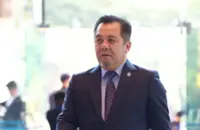
KOTA KINABALU: Individual opinions about the Malaysia Agreement 1963 (MA63) should not enter into the picture during ongoing discussions on its implementation, says Sabah Chief Minister Datuk Seri Hajiji Noor.
"We are now in the process of (realising the terms of) MA63," he said Friday (Jan 30) when asked about recent issues that had surfaced.
Minister in the Prime Minister's Department (Law and Institutional Reform) Datuk Seri Azalina Othman Said had commented that the MA63 does not contain any provision covering the ownership or regulation of oil and gas resources.
Azalina said this in Parliament in response to Saratok MP Ali Biju, who asked for an update on negotiations to avoid overlapping functions between PETRONAS and Sarawak-owned Petros.
"That is her own opinion. We are in the midst of discussions," Hajiji stressed.
Earlier in the day, he unveiled the Sabah Maju Jaya (SMJ) 2.0 development plan and delivered his keynote address to civil servants here.
In unveiling SMJ 2.0, he named human capital development, the people’s well-being, infrastructure, and green sustainability as the core tenets of this development roadmap.
Hajiji placed human capital development as top priority, with an allocation of RM164.01mil including the expansion of scholarships, educational assistance, TVET, STEM, agricultural training, and artificial intelligence (AI) literacy.
According to the Chief Minister, SMJ 2.0 will continue providing 14 types of educational aid worth RM203.4mil.
He said the State Government Scholarship (BKNS) has seen a significant increase, from RM55mil in 2021 to RM145mil for 2025.
A total of 480,000 students have benefitted from government educational assistance, which includes the recognition of the Unified Examination Certificate (UEC) for scholarship applications and entry into the civil service, Hajiji added.
He said other programmes such as the Rumah Mesra SMJ housing programme, Sentuhan Kasih Rakyat (Syukur) to complement federal assistance such as Rahmah Basic Aid, has and would continue to benefit targeted groups.
He said that under the Infrastructure and Green Sustainability thrust, RM6.8bil has been allocated under the 13th Malaysia Plan (13MP) for the development of infrastructure, utilities and sustainable energy.
This includes strategic projects such as the Pan Borneo Highway, the construction and upgrading of water treatment plants, the strengthening of the electricity grid, and projects involving Ocean Thermal Energy Conversion (OTEC), hydroelectricity, and blue energy generation, said Hajiji.
The government is also expanding digital infrastructure through e-Desa centres, VSAT, and Starlink, in line with an AI-driven digital government agenda, he added.
On green sustainability, RM672.05mil million has been allocated for biodiversity protection, environmental conservation, and climate change response, with a target of achieving 30% Totally Protected Areas (TPA) by 2030.
The Blue Economy has been designated as a strategic driver of SMJ 2.0, encompassing the development of marine biotechnology, smart fisheries, modern mariculture, logistics and sustainable tourism, as well as utilising rivers as economic lifelines for rural areas, Hajiji added.
He stressed that the success of SMJ 2.0 depended on civil servants, who serve as the heart of policy implementation.
He said that efficiency, integrity and discipline will determine the extent to which development is translated into tangible results for the people and therefore, Sabah will not return to old approaches for the long-term interest of the state.