PETALING JAYA: The new Base Medical and Health Insurance/Takaful (MHIT) will only protect consumers if it works in practice, not just on paper, with stakeholders warning that both sales conduct and affordability for seniors could determine whether the plan reaches those it is meant to help.
Federation of Malaysian Consumers Associations (Fomca) vice-president Datuk Indrani Thuraisingham said the central risk is that Base MHIT, intended as a socially protective, essential hospitalisation and medical product, may be quietly sidelined because it is not a profit-maximising plan.
“Insurers and takaful operators are commercial entities. Naturally, products with higher premiums, riders, exclusions and complex coverage structures are more profitable and therefore more aggressively marketed,” she said in an interview.
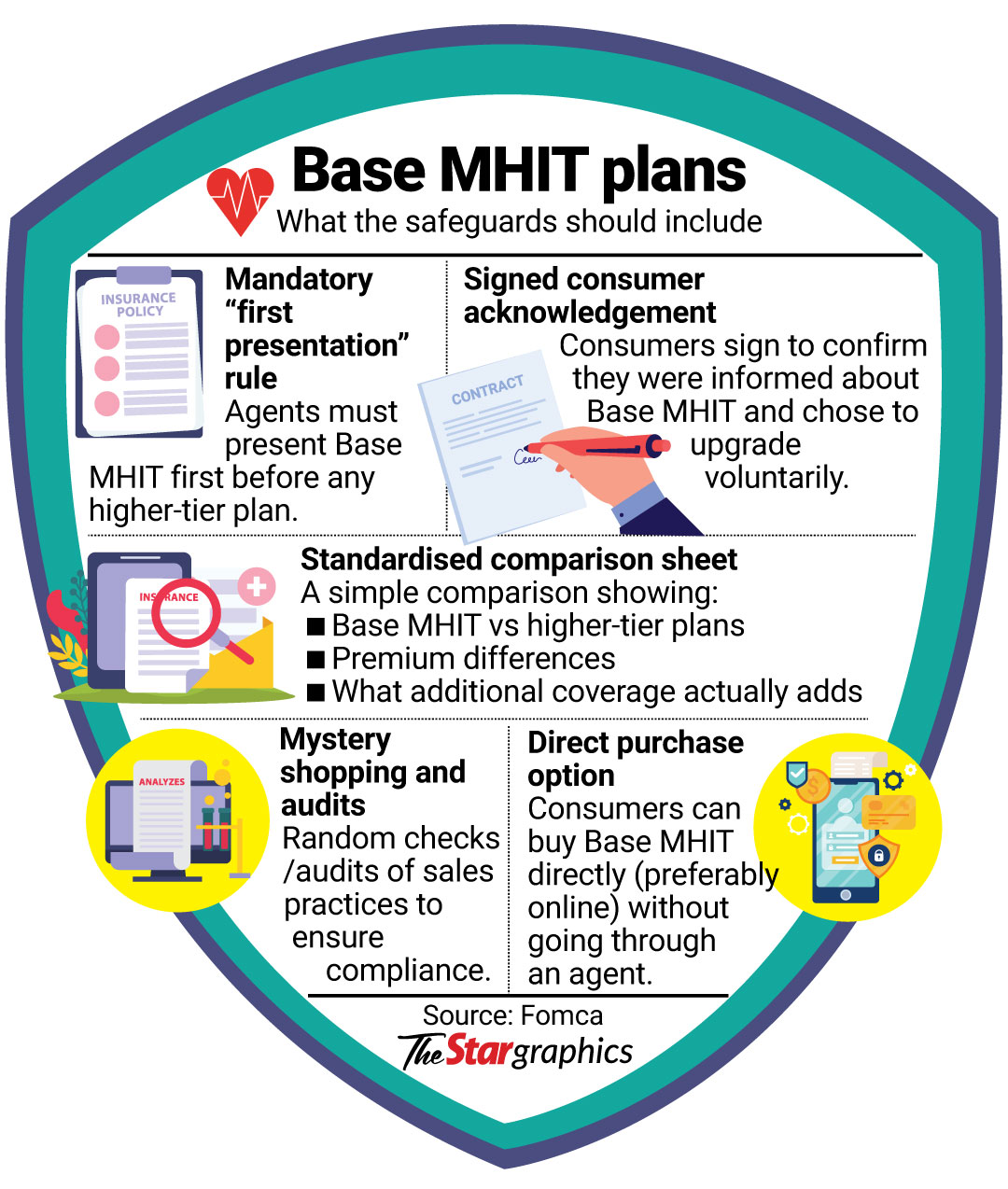
Without regulatory oversight of sales conduct and disclosure, Indrani cautioned that Base MHIT could become “available if you ask for it” rather than “actively offered as the first option”, leaving intended beneficiaries unaware of the plan if agents focus on higher-tier products.
She added that Base MHIT could help reset Malaysia’s “just in case” insurance culture – often shaped by fear-based selling and complex policies consumers may not fully understand – but only if it is positioned as the default starting point and supported by clear comparison tools so upgrades are presented as optional, not necessary.
Separately, Malaysia Coalition on Ageing chairman Cheah Tuck Wing said senior citizens and low-income groups could remain vulnerable if affordability and coverage gaps are not addressed, noting that funding details remain unclear and retirees may struggle to pay even modest premiums.
“Those who cannot afford it are the ones piling up in public hospitals now,” he said, warning that age-based pricing could make premiums prohibitively expensive for older adults.
Cheah also urged the base plan to include preventive care, long-term care, and essential geriatric services, such as support for daily activities, cognitive care for dementia, rehabilitation, palliative care, as well as dental, optical and hearing aids.
“These are basic essentials to maintain quality of life for seniors,” he said.
Both Indrani and Cheah called for stronger oversight and clearer communication from insurers.
“Fomca believes regulators must go beyond product approval and examine sales conduct and disclosure rules. Safeguards are needed to prevent consumers being steered away from Base MHIT,” said Indrani.
On the consumer side, an accountant who wanted to be known only as Vivian, 51, said the key value of Base MHIT is easing pressure on middle-aged breadwinners.
“People in their 40s and 50s are often the main source of income for their elderly parents or young children. This is the age category where they choose to give up their own premiums,” she said.