




AS Malaysia advances its energy transition under the National Energy Transition Roadmap (NETR), the challenge facing policymakers is no longer about ambition alone.
Instead, it is about execution: how to decarbonise the power sector while meeting rapidly rising electricity demand and keeping the lights on for homes, industries and businesses.
Across Asean, countries are grappling with the same dilemma of scaling renewable energy without compromising grid reliability or affordability.
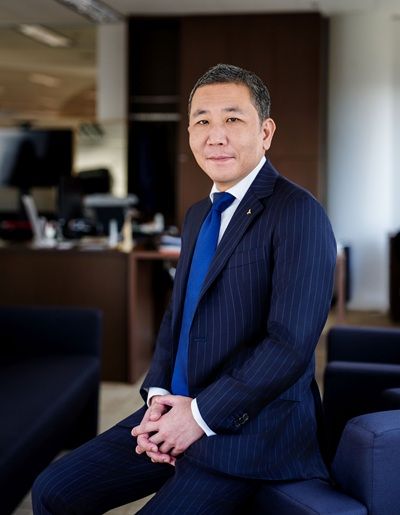
According to Mitsubishi Power Asia Pacific managing director and chief executive officer Akihiro Ondo, Malaysia has taken a notably pragmatic approach to this balancing act.
“What stands out most is that the country has not only set ambitious goals through the NETR but it is also building a clear framework under the roadmap with defined priorities and phased implementation aimed at aligning sustainability with economic growth,” he said.
From an industry perspective, Ondo noted that Malaysia’s progress is underpinned by a stable power system, openness to new technologies and a growing strategic role within the region.
These strengths, he said, help position the country as a reference point for other Asean economies navigating similar transitions.
Rising demand, growing pressure
One of the most pressing challenges for Malaysia’s energy transition is the sharp increase in electricity demand, driven in part by digitalisation and the expansion of data centres.
Citing global trends, Ondo added that global data centre electricity demand is expected to double by 2030.
In Malaysia’s case, data centres are projected to require 19.5GW of power generation capacity by 2035, rising from about 2% to 52% of Peninsular Malaysia’s electricity use.
“To address this growing electricity use, Malaysia is expected to require an additional 6 to 8GW of power capacity – which underscores the need for flexible, scalable generation solutions,” he said.
This reality makes reliability a non-negotiable consideration in the transition, even as the country accelerates renewable energy deployment.
The realist’s roadmap
While the energy transition will span decades, Ondo emphasised that the industry cannot afford to delay action while waiting for perfect solutions.
“Decarbonisation is a long-term journey, but meaningful progress begins with steps that can be implemented today,” he said.
From Mitsubishi Power’s perspective, this means diversifying the energy mix by expanding renewables while modernising existing gas and steam assets with higher-efficiency systems and cleaner fuels.
Gas turbines, he added, will increasingly play a dual role, serving both baseload needs and flexible intermediate loads when renewable output fluctuates.
“This approach is already being applied in neighbouring markets such as Singapore, where we are enabling four hydrogen-ready power projects to transition to future hydrogen blending while they operate on natural gas today.”
Similar strategies are being deployed in Thailand and Vietnam, where high-efficiency combined-cycle plants support grid stability alongside renewable energy growth.
These projects demonstrate how modern gas technologies can complement renewables while ensuring grid resilience, he said.
For Malaysia, Ondo said, adopting hydrogen-ready combined-cycle plants offers a practical pathway to reduce emissions without compromising energy security.
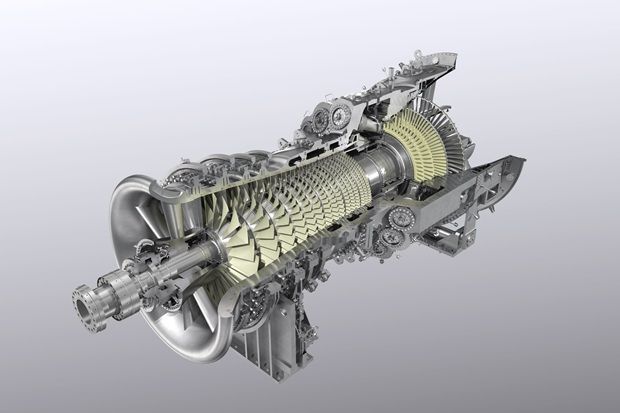
“Malaysia can take similar steps by accelerating the adoption of hydrogen-ready combined-cycle plants, such as the 500 MW Sarawak project, which will deploy our M701F turbine capable of up to 30% hydrogen co-firing.
“This ensures lower emissions today while preparing the infrastructure for cleaner fuels tomorrow,” he said.
Gas as a bridge fuel
While renewable energy remains central to Malaysia’s long-term decarbonisation plans, Ondo stressed that natural gas will continue to play a critical role in the near- to medium-term.
“Natural gas will remain a crucial bridge fuel for Malaysia and the broader Asean region. It provides immediate reductions in emissions compared to coal while ensuring consistent power,” he said.
Malaysia’s existing gas-based infrastructure, he added, provides a strong foundation for transition, offering both stability and scalability.
With targeted investments, these assets can evolve into the backbone of a lower-carbon energy system.
Mitsubishi Power’s J-Series Air-Cooled (JAC) gas turbines, with industry-leading 64% efficiency, can reduce CO2 emissions by up to 65% compared to aged coal-fired thermal plants, according to Ondo.
The technology is designed to co-fire up to 30% hydrogen, with full hydrogen combustion targeted in the next decade, he noted.
“As renewables and hydrogen mature, Malaysia’s gas-based infrastructure will evolve accordingly,” he said.
“With continued modernisation and investment, the country can leverage this proven foundation to ensure energy security and decarbonisation advance in tandem.”
A national case study
Ondo pointed to Sarawak’s hydrogen-ready combined-cycle project as a milestone for Malaysia’s energy transition. The 500MW-class facility is equipped with Mitsubishi Power’s M701F gas turbine, capable of co-firing 30% hydrogen from the outset, with future scalability as infrastructure develops.
“This project demonstrates how Malaysia can achieve measurable decarbonisation while safeguarding reliability,” he said.
“By combining proven combined-cycle efficiency with readiness for next-generation fuels, Malaysia is ensuring its energy transition is both practical and future-proof.”
Sarawak’s broader push to develop a hydrogen economy, anchored by its Hydrogen Economy Roadmap, could also provide lessons for nationwide adoption.
Power in partnerships
Beyond technology, Ondo emphasised the importance of collaboration across government, utilities and industry players. Partnerships are essential for translating policy ambition into workable solutions.
“Our Memorandum of Understanding with TNB Genco focuses on joint studies for hydrogen and ammonia co-firing, carbon capture and the optimisation of existing gas assets,” he said.
“This collaboration combines Mitsubishi Power’s global R&D expertise with TNB Genco’s deep operational knowledge.”
Such partnerships also support skills development, ensuring that Malaysian engineers and operators are equipped to manage next-generation energy systems.
“Decarbonisation can be achieved when it is shared through public and private sectors, and when international and local players work toward a common goal,” Ondo said.
Eyes on 2050
Looking ahead, Malaysia’s opportunity lies in translating the NETR’s strategic direction into system-wide progress: modernising infrastructure, diversifying fuels and strengthening technical capabilities.
“At Mitsubishi Power, we see Malaysia as a regional leader with the potential to demonstrate how emerging economies can decarbonise while sustaining economic growth,” he said.
Ultimately, the energy transition is less about speed than consistency.
“In Asean, every country is starting from a different point, with unique fuel mixes, policy priorities and economic needs.
“The key is not how fast you move, but how consistently you build the systems and skills that ensure lasting impact,” he said.
For Malaysia, that consistency may prove decisive as it navigates the complex task of meeting rising demands while charting a credible path towards its 2050 carbon-neutral goal.


