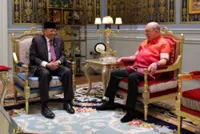
PETALING JAYA: Tan Sri Muhyiddin Yassin's resignation as Perikatan Nasional chairman was driven by increasing pressure from PAS leaders and MPs, says his former principal private secretary, Datuk Dr Marzuki Mohamad.
Marzuki stated that the pressure peaked on the evening of Dec 29, 2025, when several PAS MPs openly demanded Muhyiddin's resignation during discussions in the Perikatan MPs’ WhatsApp group.
“In the WhatsApp group, there were calls from PAS MPs for Muhyiddin to step down as chairman,” he shared in a post on his Facebook page on Monday (Jan 12).
He noted that the Pagoh MP initially indicated he was willing to resign but insisted that it be done in accordance with the coalition's constitution, which mandates that the appointment and resignation of the chairman be determined by the coalition's supreme council.
However, Marzuki explained that several PAS MPs were unsatisfied with this response and continued to insist on an immediate resignation, bypassing the need for supreme council approval.
Ultimately, Muhyiddin notified the group that he would resign, effective Jan 1, 2026.
Marzuki stated that he was instructed shortly after midnight to prepare Muhyiddin’s resignation letter, to be sent to the presidents of the Perikatan component parties the following day, along with a brief media statement.
PAS information chief Ahmad Fadhli Shaari announced this resignation earlier. At the time, Muhyiddin was in London undergoing follow-up medical treatment.
Marzuki remarked that Muhyiddin’s decision to resign was a personal and rational choice, made after acknowledging the heavy burden he bore as Perikatan chairman.
“Resigning was Muhyiddin’s right, and that right should be respected,” he emphasised.
He also questioned a provision in the Perikatan constitution that requires the chairman’s resignation to be approved by the supreme council, suggesting it denies the chairman the ability to step down voluntarily.
Looking ahead, Marzuki stated that PAS is the most suitable party to lead the opposition coalition for stability, as it is currently the coalition's strongest component party.
“If PAS leads Perikatan, it will mark the first time in Malaysia’s political history that an Islamist party heads a national coalition,” he noted, describing this as a new political experiment that is bound to attract scrutiny and criticism.
“Whether this experiment succeeds or fails remains to be seen,” he added.