



PETALING JAYA: She was on a hunt for a job and messages kept coming from a job networking and recruitment site.
Some of these offers featured lucrative remuneration packages.
“Given your experience, I thought you’d be a fantastic fit, though let me know if I am wrong,” said one message from a so-called recruiter who had a profile photo in a professional avatar.
Anya (name changed), 37, decided to do a search online on the company.
“I was surprised to find that this company was flagged as a scam overseas. Yet, they kept sending me follow-up messages every now and then.
“To the unsuspecting, it looks legitimate and convincing. The woman who was trying to recruit me appeared professional. The message was written in good English,” said Anya.
According to job networking and career development platform LinkedIn’s Community Report, over 116 million scam and spam content was removed from the platform between January and June last year.
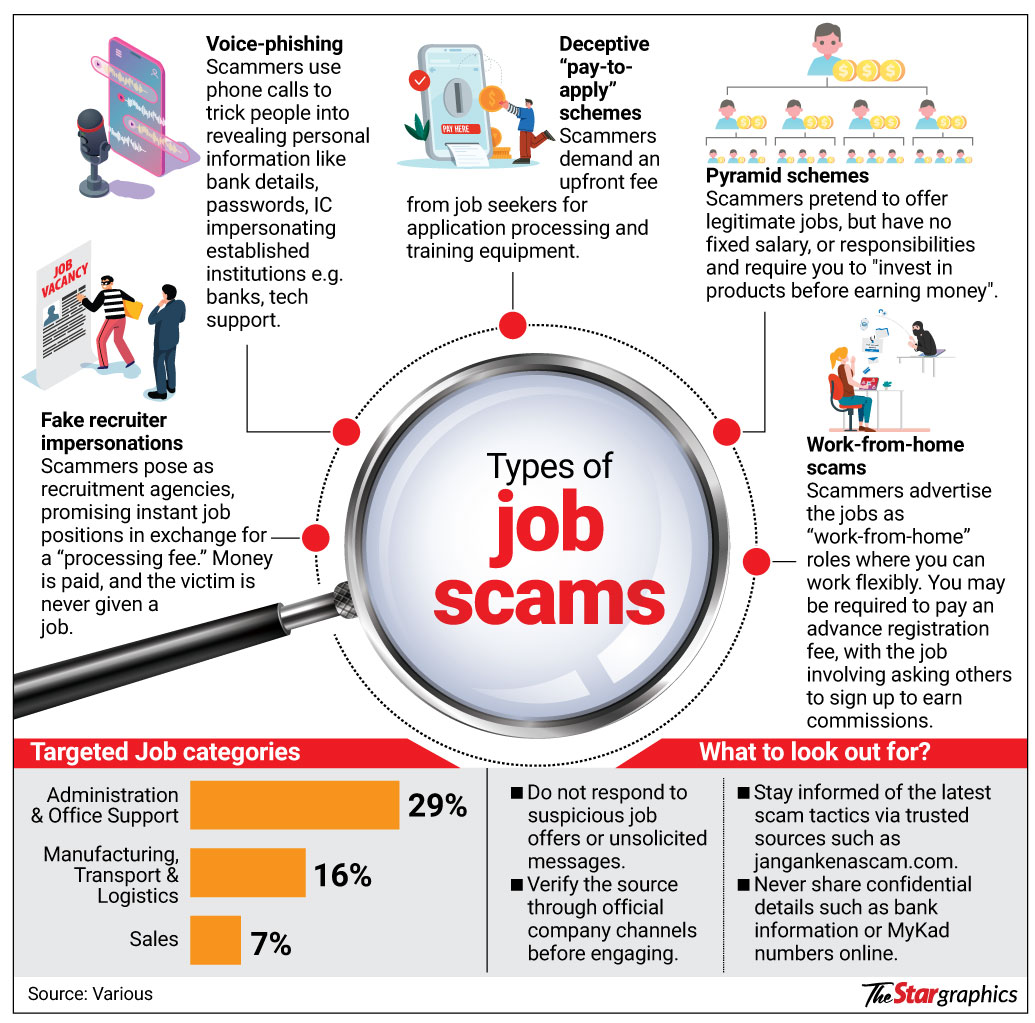
“By far, the most common type of inappropriate content we take action on is spam or scam content, which includes inappropriate commercial activity and repetitive communications or invitations, often meant for financial gain,” it said in the report which detailed the violation of Professional Community Policies and User Agreement during the six-month period between Jan 1 and June 30, 2025.
About 61.2 million fake accounts were taken down at the registration stage while 22.2 million were removed before members reported about them. Another 385,900 were restricted after reports from members.
Crime analyst Kamal Affandi Hashim said job scams manifest rampantly in the digital era.
“With one click, it may reach hundreds or thousands randomly rather than a lone victim.
“The economy of scale versus effort makes it tempting for criminals.”
He said a fake job offer is a goldmine to those who are attempting to make money in the shortest time.
“At the other end of the scale, it attracts those who are desperate to get a job,” he said.
He said scams driven by artificial intelligence (AI) such as voice cloning, deepfake material or live video impersonation will continue to emerge this year.
Two months ago, Jobstreet by SEEK, an employment platform, said that scammers would make use of messaging apps such as WhatsApp and Telegram.
“From fake investment opportunities and phishing to phone scams and even love scams, it is increasingly common for Malaysians to encounter malicious parties trying to access their personal data or receive funds.
“This includes fake job offers where victims are promised high-paying remote work and asked to pay for ‘training’ or ‘registration’ fees. Then, the scammer disappears when they receive the payment,” it said.
Jobstreet by SEEK has cautioned that AI-driven fraud is also on the rise where deepfake videos and voice imitation blurs the line between genuine and fake communications.
Between July 2024 and June 2025, Jobstreet by SEEK prevented about 3,600 hirers who failed the onboarding process from entering its platforms.
When contacted, Jobstreet by SEEK in Malaysia operations director Ashwin Jeyapalasingam said the company takes a proactive role in protecting jobseekers as scam tactics continue to evolve.
“By strengthening our fraud detection systems and continuously educating candidates, we are committed to ensuring Malaysians can pursue job opportunities with confidence and peace of mind,” he added.
