PETALING JAYA: A new species of fairy lantern has been discovered by local researchers in Taman Eko Rimba Sungai Congkak in Selangor.
The fairy lantern, or Thismia selangorensis, is a distinct mitriform species of the mycoheterotrophic genus Thismia and was first discovered in a tree hole near a riverbank.
With fewer than 20 plants of the species identified so far, it might be considered critically endangered.
According to PhytoKey, a scientific journal published on a peer-reviewed and open access journal site, co-author and naturalist Tan Gim Siew discovered the species in November 2023.
Currently, there are 120 species of fairy lanterns known across the world.
Tan found the newly-identified species growing by the roots of a riverside tree near Taman Eko Rimba, which is a popular picnic area.
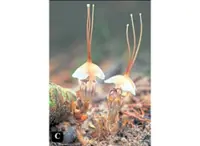
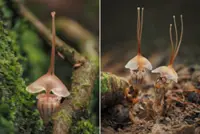
The plants, which were roughly 10cm tall, had flowers popping out of the ground that formed what looked like peach-coloured umbrellas – structures called mitres.
It was also shared that the plant had three antennae-like appendages with clubbed ends stuck straight up from the middle of each mitre.
In an interview with The New York Times, Tan shared that her photos of the then newly-discovered plants on citizen science platform iNaturalist caught the attention of study co-author Siti Munirah Mat Yunoh, who is a botanist at the Forest Research Institute Malaysia.
Siti Munirah, who is also a researcher, said that the species was officially undocumented.
“This discovery shows that significant scientific finds are not limited to remote jungles; they can also be made in ordinary environments where constant human activity leaves little room for expectation,” she was quoted as telling The New York Times.
After teaming up together, Tan and Siti Munirah found fewer than 20 units of the species located near trees and riverbanks, distinguished by the unique flowers, coral-shaped roots and other features.
The species was named T. selangorensis as it was found in Selangor.
The new plant is also deemed a “monster” in the biology world, as they steal nutrients from subterranean fungi.
This is due to the lack of green chlorophyll needed to make their own food.
As so few units of the species have been found along the Sungai Congkak bank, the plant is also listed under the International Union for Conservation of Nature (IUCN) Red List as provisionally; critically endangered.