
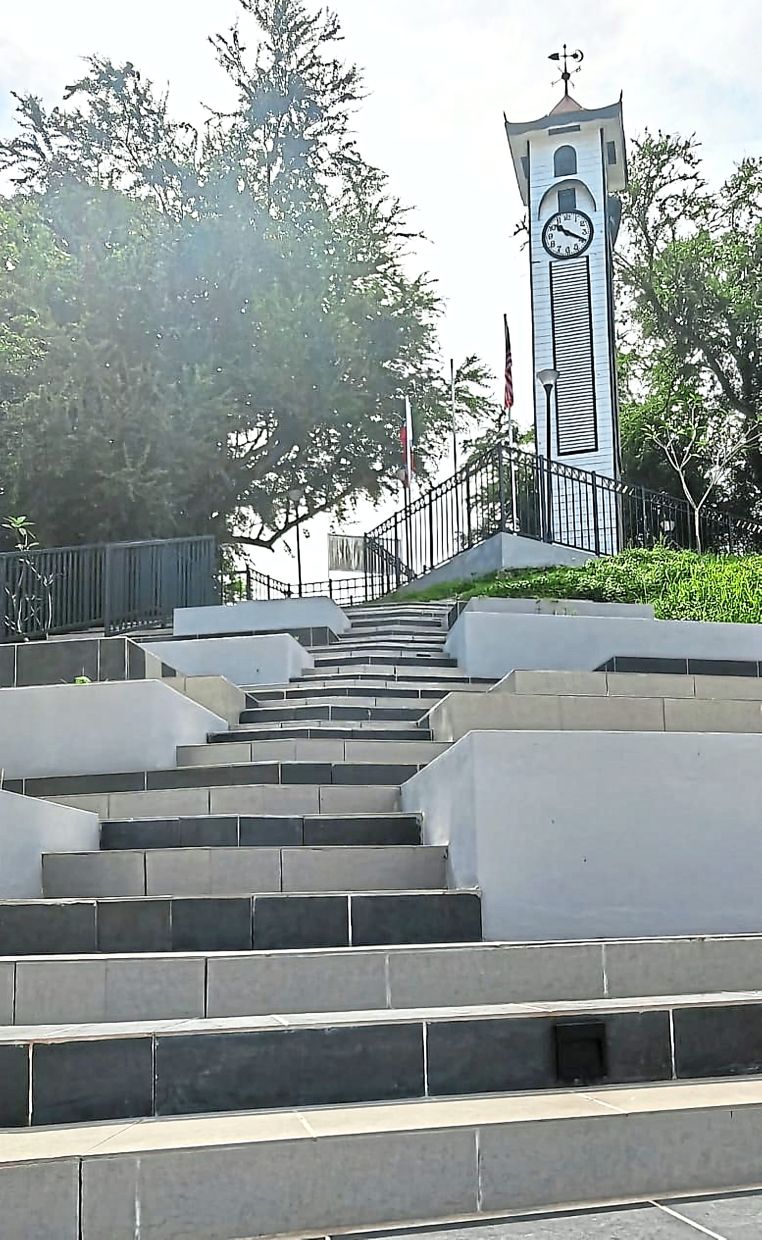
STANDING quietly on the slopes of Signal Hill in Kota Kinabalu, the Atkinson Clock Tower has long felt like a familiar old neighbour – always there, always watching, rarely demanding attention.
Yet this modest wooden structure, now more than 120 years old, carries the weight of the city’s early history, having survived disasters, war and sweeping urban change.
Following a multimillion-ringgit facelift completed late last year, Kota Kinabalu’s oldest landmark is once again pulling in visitors, researchers and heritage enthusiasts.
Once a lone sentinel above Gaya Bay, it has re-emerged as the anchor of a refreshed attraction that blends conservation with tourism, complete with a 500m treetop walkway linking the tower to the Signal Hill Observatory.
With Visit Malaysia 2026 on the horizon, the revitalised precinct signals a renewed effort to put heritage at the centre of Kota Kinabalu’s identity – a city that has itself carried several names over the decades, from Jesselton to Api-Api before becoming today’s KK.
The Atkinson Clock Tower was built in 1905 in memory of Francis George Atkinson, Jesselton’s first district officer.
When he died of malaria at just 28, his mother, Mary Edith Atkinson, commissioned a clock and asked that it be housed in a tower overlooking the young town he served.
Constructed entirely of local merbau timber using traditional joinery techniques – without the use of modern nails – the tower reflects both colonial craftsmanship and the practicality of local materials.
Merbau’s durability made it a sound choice for the coastal location, where salt-laden winds, heavy rain and humidity could easily weaken lesser timber.
What the Atkinson family could not have known was that this simple memorial would outlast almost every building around it.
When Allied bombing flattened most of Jesselton during the Second World War, the wooden tower somehow remained standing.
Locals still speak of its “miracle survival”, a symbol of resilience in a city repeatedly forced to rebuild, first after the great fire of 1897, then after the war.
The clock itself did not escape unscathed. Damaged by shrapnel, its internal mechanism had to be repaired in 1946 by local watchmakers.
Their descendants kept the tradition alive for decades, winding the clock manually every six days – a little-known legacy that kept the tower ticking long after its maritime role faded.
Today, the tower is among the few pre-war structures left in the city.
The estimated RM11.96mil upgrade went far beyond cosmetic work.
Kota Kinabalu City Hall (DBKK) said its goal was to transform the area into a “living heritage site” that blends history, public recreation and tourism.
Key works included slope stabilisation, improved drainage, new retaining walls, upgraded seating areas and modern lighting designed to illuminate the tower at night without overwhelming its character.
Accessibility was also a priority, ensuring families, senior citizens and visitors with disabilities can navigate the grounds comfortably.
The treetop walkway has quickly become one of the precinct’s standout features.
Elevated among mature trees, it offers a shaded, scenic route between the tower and Signal Hill, encouraging visitors to explore in a slower, more immersive way.
But, as with any modernisation project, the revitalised site has drawn some criticism.
Within weeks of its reopening, visitors reported slippery tiles along the walkway, particularly after rain.
DBKK responded by applying a non-slip coating with grit and adding temporary anti-slip tape during wet conditions.
The episode raised broader questions about balancing heritage values with safety and accessibility – an ongoing challenge for heritage sites in tropical climates.
Still, City Hall maintains that the upgrades were essential to preserve the tower for future generations.
Although the clock’s maritime purpose ended long ago, the tower’s significance has evolved.
Today, it is where locals bring guests to show them “the oldest part of KK”; a backdrop for school trips; a marker for photography enthusiasts; and a quiet corner where older residents reflect on how much the city has changed.
Younger Sabahans, having grown up amid constant development, see the tower as a rare window into a version of Kota Kinabalu that existed long before their time.
As the city positions itself for VM2026, the Atkinson Clock Tower’s revival highlights a broader shift towards safeguarding cultural landmarks.
Urban planners say the site shows that heritage can coexist with recreation, and that conservation need not mean isolation behind fences.
For Sabah Museum and DBKK, the aim is clear: to ensure the tower remains a living symbol of endurance, not merely a relic glanced at on the way up Signal Hill.
More than a century after it first rose above Jesselton, the Atkinson Clock Tower continues to keep time – and keep watch – as Kota Kinabalu writes its next chapter.