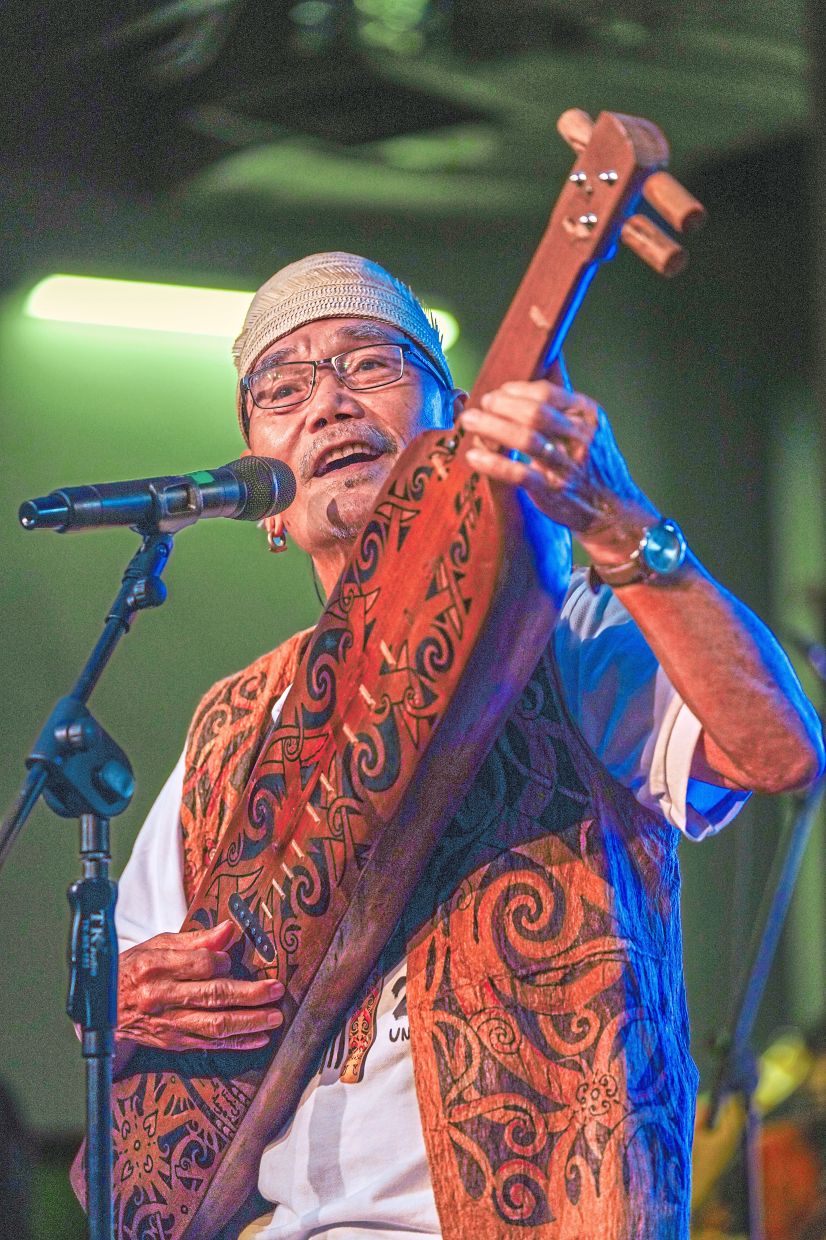
THE soft, lilting notes of the sape float through the air as Mathew Ngau Jau’s fingers dance across the strings, bringing a traditional Orang Ulu melody to life.
For this master musician, each tune carries the heart of his longhouse upbringing – and the promise of sharing it with the world.
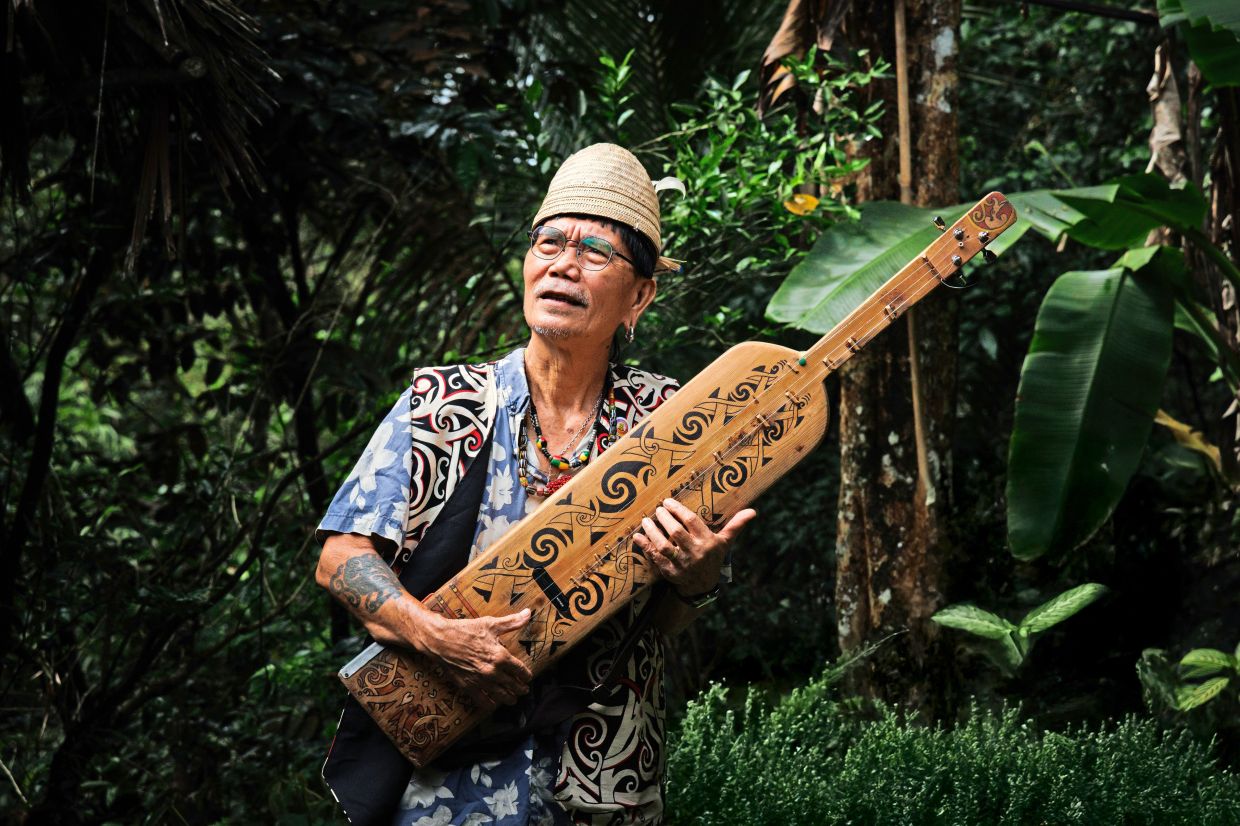
The sape is the traditional lute instrument of the Orang Ulu of Sarawak, which includes the Kenyah, Kayan, Kelabit and Lun Bawang.
The two-stringed instrument was originally used for healing rites and celebrations. Thanks to the efforts of performers like Mathew, it is now known as a musical showpiece in its own right.
For Mathew, a Kenyah, playing the sape is not just about preserving cultural heritage but extending the instrument’s appeal and relevance to a wider audience.
Now 72, he remains actively involved in this pursuit – performing locally and abroad, teaching sape classes and making the instruments for customers.
“Recently I spent a week in Miri, supporting and motivating young sape players.
“There was a competition and I was one of the judges,” he said in an interview at his workshop in Singai, near Kuching.
When Mathew started on his sape journey decades ago, he could not have imagined the instrument’s popularity today.
He learnt to play the sape as a child growing up in Long Semiyang, a remote Kenyah longhouse in Ulu Baram.
“The only music we had in the longhouse in the olden days was the sape. As children, we heard the sape every day and it registered in our minds.
“Unlike other music, there is no written notation for the sape, so I learnt to play it by ear,” he recalled.
When he came to Kuching to work, he discovered that city folk were interested to hear sape music.
Then Tourism Malaysia began looking for sape players to promote the country’s people and their culture.
“They wanted sape music to travel the world, so they invited me to perform. That gave me more motivation as a sape musician,” he said.
Since then, Mathew has dedicated himself to performing and teaching the sape.
Over the years, he has seen it evolve towards contemporary styles and modern tunes as more musicians picked it up.
At first he felt this would “spoil” the sape, but he eventually recognised that it was vital to attract a new generation of young players.
“I have to open it to the young ones who prefer the contemporary style of playing. In fact, they also influenced me to play modern songs,” he said.
However, Mathew insists on teaching his students the traditional music and customs of the sape.
“I don’t teach them the modern style. It’s important for them to know the roots, the traditional songs. From there they can develop their own style.”
To him, this shows that the sape is a versatile instrument, capable of preserving the tunes of the past and performing contemporary music.
“You can play traditional songs, then you switch to modern ones. You can create your own tunes or play in a band. I’ve heard Malay, English, even Chinese songs played on the sape.”
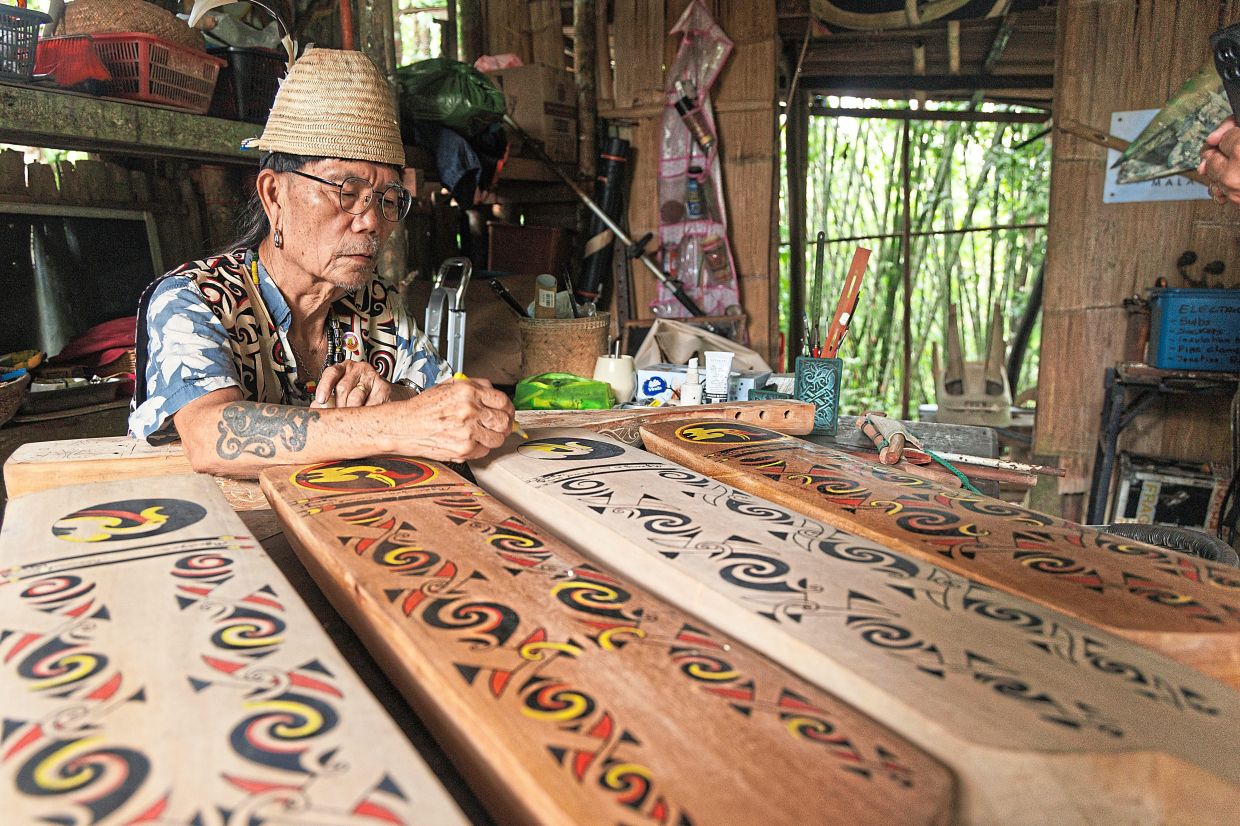
Besides playing the sape, Mathew also makes the instrument at his workshop, selling according to demand.
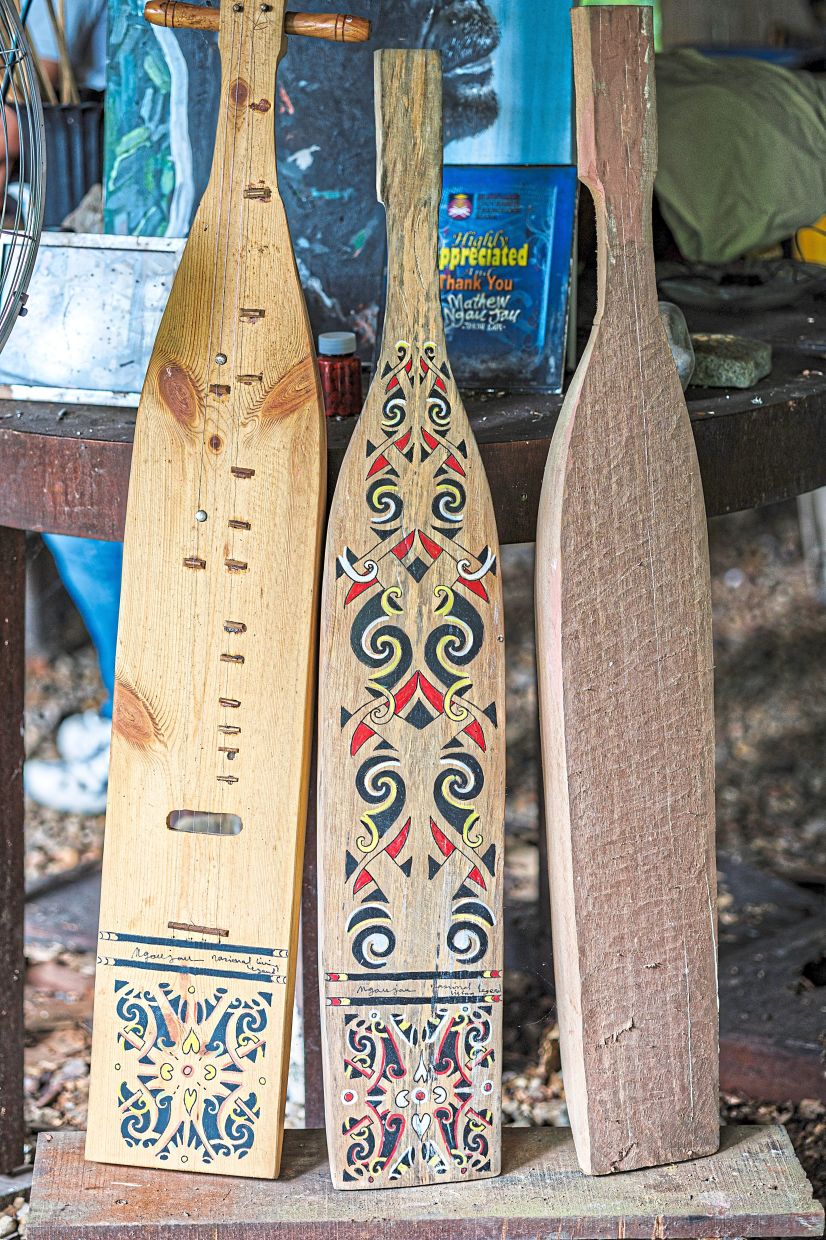
Each sape is made from a single piece of wood that is hollowed out and carved into its distinctive boat-like lute shape.
“I make as many sape as I want. It’s not for custom orders only. So when people ask for a sape, they are welcome to come to my workshop.”
It takes Mathew about two weeks to make a sape, from collecting the wood from the jungle behind the workshop to fixing the strings and decorating it with traditional Orang Ulu motifs.
A guitar pickup is usually added to the finished sape so that it can be plugged into an amplifer.
“It’s all handmade. Of course, nowadays I make use of modern electrical tools,” Mathew said.
The sape is traditionally made from a type of wood called adau, but as this is not readily available in Kuching, he uses engkabang and even wood from fruit trees like nangka and durian.
Traditional sapes have two or three strings but modern versions can have four to six strings.
Mathew prefers to play the traditional three-stringed sape, but he is pleased to see its widespread appeal, even among those not from the Orang Ulu community.
Over the last few years, he observed, more young people are taking up the sape, which he finds encouraging.
“To me, I see that sape was introduced to the public and then they began to play it in new ways, in contemporary styles.
“So I’m happy that sape is growing very fast, not only in Sarawak but all over the world. When I play overseas, people know that the sape is from Sarawak,” he said.
Mathew may be getting on in years but he intends to continue promoting his cherished instrument and passing on its legacy to the next generation.
“I’m still teaching and still playing. As long as I can move and people invite me, I will go.”