
Washington, United States (AFP): Nearly 12 years after Malaysia Airlines flight MH370 vanished with 239 people on board, the search for answers to one of aviation's most haunting riddles resumed Tuesday (Dec 30) in the remote southern Indian Ocean.
Armed with cutting-edge deep-sea robots and smarter data, US investigators are scouring the seabed for clues that have eluded governments, experts and grieving families for more than a decade.
MH370 took off from Kuala Lumpur just after midnight on March 8, 2014, bound for Beijing on what should have been an uneventful six-hour flight.
Less than an hour later, its transponder went dark, wiping the Boeing 777 from civilian radar. Military screens later showed the aircraft veering sharply west, crossing back over Malaysia before heading south over the vast Indian Ocean.
What followed was the most ambitious and costly search in aviation history, as multinational teams combed more than 46,000 square miles (120,000 square kilometres) of seabed off Western Australia with ships, aircraft and sonar.
They found nothing.
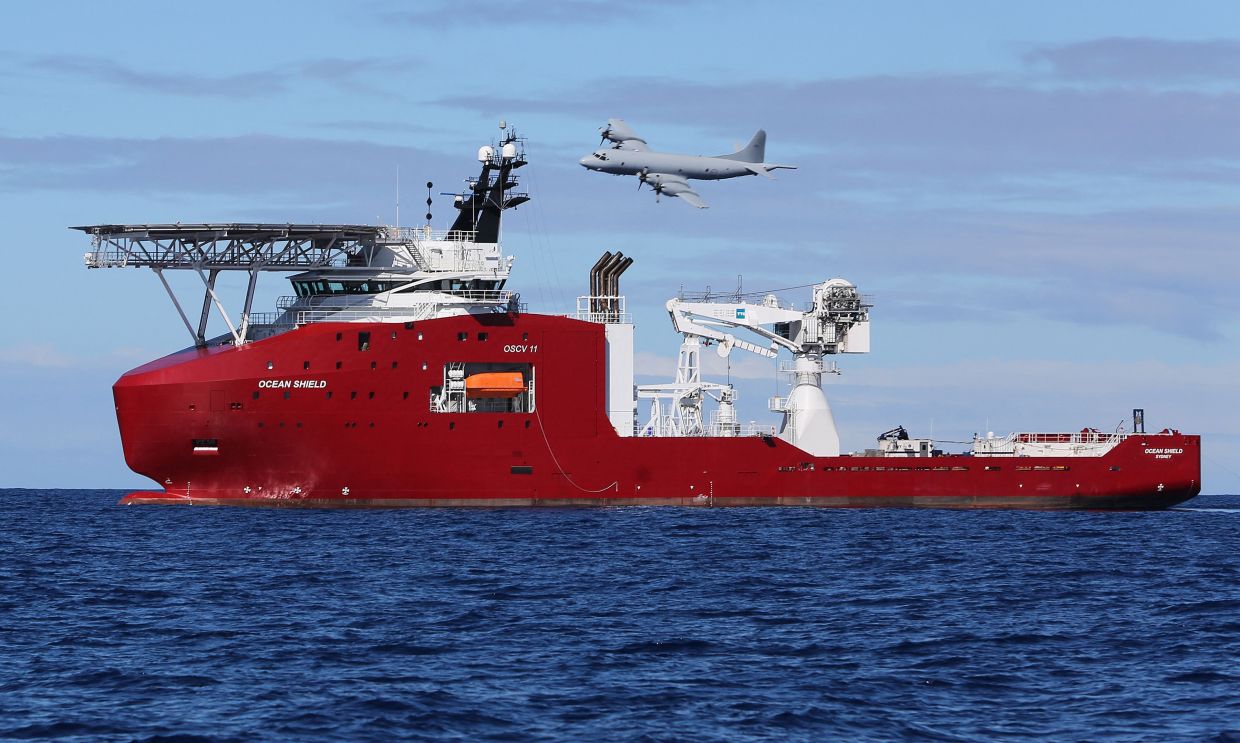
The hunt was called off in 2017, leaving families with heartbreak and a mystery that spawned theories ranging from hijacking to deliberate pilot action.
Now, the Malaysian Government has given the green light for a fresh attempt led by Texas-based marine robotics firm Ocean Infinity under a "no find, no fee" contract, according to a statement from Malaysia's Transport Ministry.
"The latest development underscores the government of Malaysia's commitment to providing closure to the families affected by this tragedy," it said.
The company will pocket $70mil only if it locates the wreck, reports said.
This new phase, expected to last up to 55 days, targets a tighter search zone of about 5,800 square miles -- far smaller than earlier efforts and pinpointed using updated satellite data, drift modelling and expert analysis.
Keeping the hunt alive
Ocean Infinity is unleashing autonomous underwater vehicles that can dive nearly 19,700 feet (6,000 metres) and stay submerged for days at a time.
The drones use high-resolution side-scan sonar, ultrasound imaging and magnetometers to map the seabed in 3D, detect buried debris and pick up traces of metal. If something promising appears, remotely operated vehicles can descend for close inspection.
Ocean Infinity, which also has a control centre in Britain, led an unsuccessful hunt in 2018, before agreeing to launch a new search this year. AFP reached out to the company for comment, but there was no immediate response.
Only fragments of MH370 have ever been recovered. Since 2015, fewer than 30 pieces believed to be from the aircraft -- bits of wing, landing gear and fuselage -- have washed ashore thousands of kilometres apart, from Reunion to Mozambique.
No bodies have ever been found.
Malaysia's official probe concluded in 2018 that the plane was likely deliberately diverted from its course, but stopped short of assigning responsibility.
Relatives from China, Australia, Europe and beyond have fought for years to keep the hunt alive, arguing that closure matters not only for the dead but for global aviation safety.
Governments in Beijing and Canberra have welcomed Malaysia's decision, pledging support for any practical effort to crack the case.
Chinese national Jiang Hui, who lost his 72-year-old mother Jiang Cuiyun in the disaster, told AFP in an interview at his home in Beijing earlier this month that he remains set on finding answers, despite frustration with the authorities.

"Finding the plane, finding my loved one, and finding the truth -- I believe this is something I must do in my life," he said.- AFP