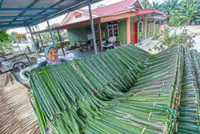
KUALA LUMPUR: As the number of traditional roof makers dwindles and the craft steadily fades into obscurity, a young entrepreneur from Sungai Rambai, Melaka, is working to revive the production of roofing made from nipah and rumbia palm leaves.
Ahmad Firdaus Shahidin, 33, embarked on the venture in 2018 after leaving his job in the manufacturing sector in Johor Baru, choosing to pursue a field that is rarely explored but rich in cultural heritage.
He said although the traditional roofing business is seen as outdated, it continues to serve a niche market and remains in demand, particularly for decorative applications such as gazebos, garden huts and landscape features.
“My uncle in Selangor, who is involved in the traditional roofing business, told me that supplies were declining even though demand still existed.
“That was when I saw the opportunity to go into this business,” he told Bernama recently.
“In my own village (in Sungai Rambai), traditional roof-making had long ceased, although there were still a few individuals skilled in producing nipah and rumbia roofing. I took the opportunity to resume production.”
Following that, Ahmad Firdaus engaged the services of elderly couple Saniah Arun, 61, and Mohd Nor Salam, 65, who had previously been involved in producing traditional roofs in the village.
The experienced duo now form the backbone of the small-scale nipah and rumbia roof-making process, with Saniah focusing on pinning the nipah or rumbia leaves, while Mohd Nor prepares the bamboo and other supporting materials for the roofing.
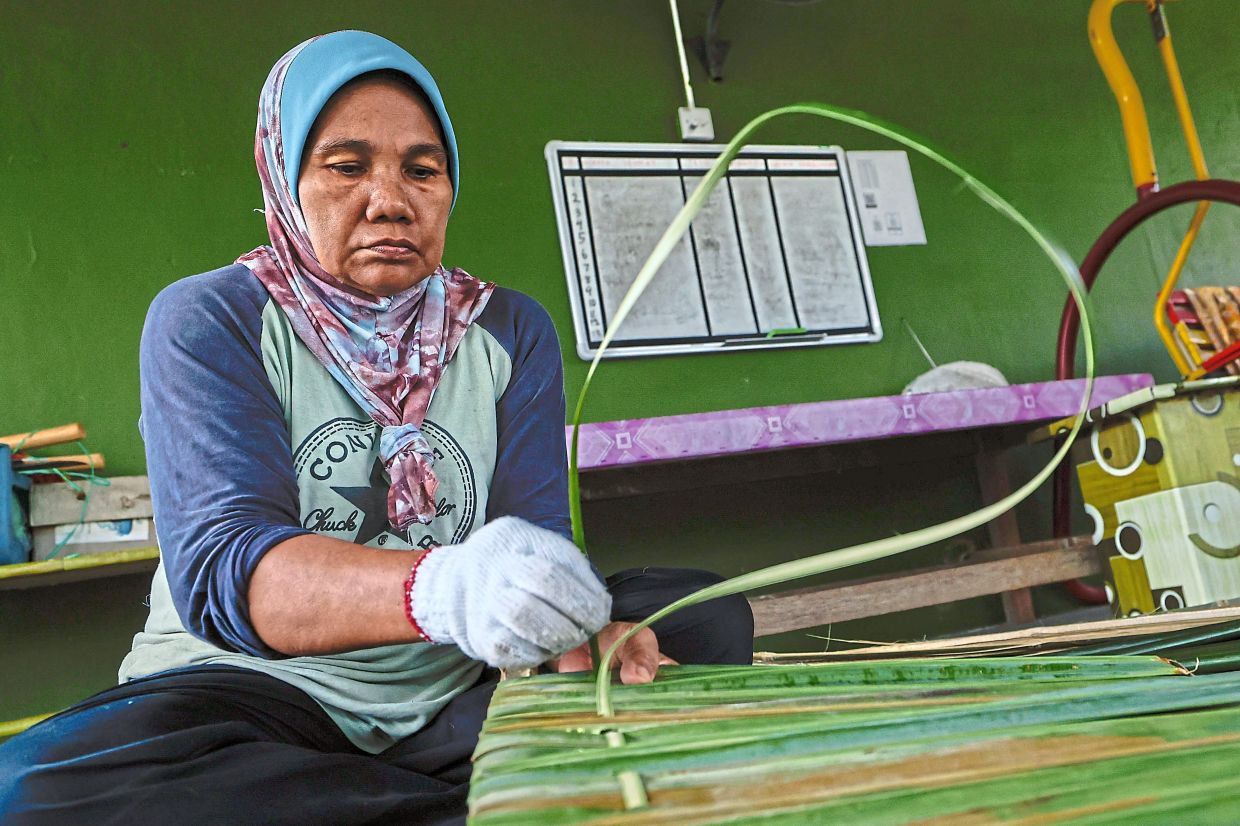
To ensure a steady supply of raw materials, Ahmad Firdaus, who holds a bachelor’s degree in engineering business management, sources nipah and rumbia leaves from two regular suppliers in Muar and Batu Pahat.
“The biggest challenge is sourcing truly high-quality nipah leaves. From my experience and research, the leaves need to be at least three fingers wide to ensure the roofs are strong and durable,” he noted.
Acknowledging that some still look down on traditional roof-making and question current price increases, Ahmad Firdaus said the cost of raw materials and the quality of leaves are no longer what they used to be.
“We also cannot store stock for too long because the leaves deteriorate easily, so most orders are produced on demand,” he said.
In addition to overseeing production, he manages online marketing and sales, including securing new customers and ensuring each order meets quality standards.
He said Saniah can produce about six roofing pieces per hour, depending on size, while large-scale orders of more than 400 pieces are typically completed in under two weeks.
“Over the past eight years, we have produced more than 70,000 traditional roofing pieces for over 1,200 customers in Peninsular Malaysia and Singapore. Demand usually peaks during Ramadan and the festive season,” he added.
Recognising the potential and cultural value of the craft, Ahmad Firdaus hopes more young people will take an interest in learning traditional roof-making skills so they are not lost to time.
To enhance productivity without sacrificing craftsmanship and tradition, he also plans to explore the use of automation in the future, subject to cost viability.