
PUTRAJAYA: The Malaysian Border Control and Protection Agency (AKPS) requires a 50% increase in manpower to effectively safeguard the country’s borders against intrusion, smuggling and other cross-border crimes, says Comm Datuk Seri Mohd Shuhaily Mohd Zain.
The AKPS director-general said the agency currently has 6,226 officers and personnel, but based on studies conducted by the AKPS Nucleus Team, at least 13,721 positions are needed to comprehensively monitor all gazetted entry points nationwide, including land, sea and air borders.
“At present, AKPS has just over 6,000 personnel. We need more than 50% additional strength to make this agency solid and capable to prevent border intrusions, human trafficking, drug smuggling, firearms and contraband,” he said during a special media session recently.
Comm Mohd Shuhaily said strengthening manpower will be a key agenda for AKPS next year, with planning already underway this year, and expressed hope that the government will prioritise the agency’s needs.
“Without these additional manpower, it will be difficult for AKPS to fully realise the government’s aspiration of ensuring border and entry point security for the safety of Malaysians,” he added.
Another major challenge faced by the agency is that many of its officers are seconded from six core agencies – the Customs Department, Immigration Department, Road Transport Department, Wildlife and National Parks Department (Perhilitan), Health Ministry, and the Malaysian Quarantine and Inspection Services (Maqis), Comm Mohd Shuhaily said.
“These officers still have to carry out their original core duties. For example, Immigration officers stationed at AKPS must continue immigration checks while also performing AKPS responsibilities.
“As a result, what AKPS effectively receives is about 50% of their operational capacity, as the other half is spent on their original duties.
“In future, AKPS is expected to function as a single enforcement agency, where all these roles will be fully consolidated,” he said.
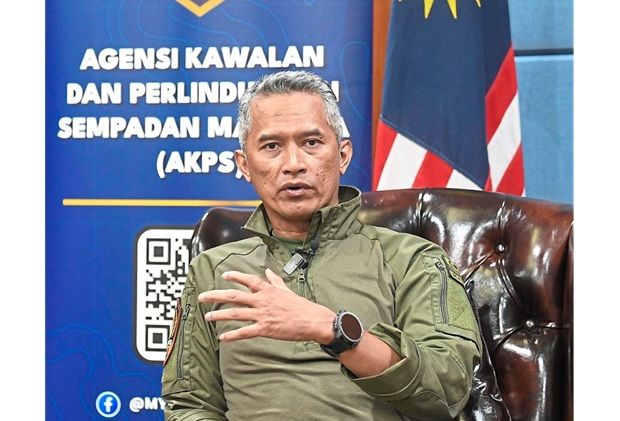
Comm Mohd Shuhaily added that the use of modern technology, including scanning machines, has helped to ease operational burdens, although manpower shortages remain a key concern.
“Even with a 50% shortfall in manpower, we must continue carrying out our responsibilities. New recruitment can only take place once the AKPS service scheme is established, and we hope the government will expedite this,” he said.
In a related development, the former Bukit Aman Criminal Investigation Department (CID) director emphasised the importance of intelligence-led enforcement, particularly through profiling individuals and companies linked to smuggling and contraband activities.
“At AKPS, we will establishe a profiling team that focuses on smuggling crimes, targeting individuals and companies with prior records,” he said.
Comm Mohd Shuhaily explained that conducting full inspections on all cargo containers will severely disrupt port operations and economic activities, making intelligence-based enforcement a more effective approach.
“For example, we cannot perform 100% checks on containers, so it is important to establish strong intelligence through the profiling of smuggling patterns.
“Intelligence networks and cooperation with foreign enforcement agencies are crucial in combating smuggling, especially involving drugs and contraband,” he added.
The profiling team will be tasked with compiling and analysing data on individuals and companies involved in smuggling activities locally and internationally, enhancing AKPS’ enforcement capabilities and strengthening national border security.