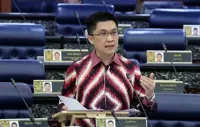
SPLKPM axed under education reforms
BUKIT MERTAJAM: The Education Ministry’s training management system (SPLKPM) has been abolished as an ongoing measure to reduce teachers’ workload, says Fadhlina Sidek.
The Education Minister said the decision followed the ministry’s ongoing assessment of teachers’ workload and feedback from educators who felt the system affected their focus on core duties.
She added that the ministry implemented various interventions, including improving the student discipline system to address teacher workload issues.
“The SPLKPM has been abolished because it directly affects the welfare of teachers and their workload.
“Every step taken is part of the ministry’s ongoing commitment to reducing teachers’ workload,” she said during a press conference at the SMK Agama Sheikh Tahir Jalaluddin school project handover ceremony here yesterday, reported Bernama.
Fadhlina said SPLKPM was often a topic of discussion among teachers, who did not want to be bound by the requirements of the system as they did not want their focus on teaching in the classroom to be disrupted.
According to her, the abolition of the system was intended to give teachers space to focus fully in the classroom, especially ahead of the implementation of the new curriculum and education development plan that will be introduced next year.
She stressed that the ministry would continue to examine any steps that could be taken to consistently reduce teachers’ workload in order to strengthen the quality of national education.
Meanwhile, Fadhlina said that school construction projects using the Industrialised Building System (IBS), which began in May this year, are acting as a catalyst for change in addressing the issue of overcrowded schools and classrooms nationwide.
According to Fadhlina, the initiative, implemented by the ministry in collaboration with the Public Works Department, was mostly completed within a few months.
“This initiative is among the ministry’s key reforms in the development of national education infrastructure,” she said.
Fadhlina added that constructing IBS schools directly impacts the ministry’s ability to address school overcrowding faster and more effectively.
She said the project involved 127 construction sites nationwide, 70 located in Selangor, the state facing the most acute issue of school overcrowding.
According to her, the short construction period demonstrated that the approach is both practical and effective, making it suitable for wider implementation.
Fadhlina said the ministry also plans to implement the project on a larger scale next year, ensuring that the completed facilities and classrooms are fully utilised, beginning with the new school session.
At the same time, Fadhlina said her ministry recorded several major achievements in implementing education reforms.
This includes enforcing compulsory secondary education, efforts to reduce educators’ workload, and constructing and rehabilitating schools nationwide.
She said among her ministry’s most significant achievements was the approval of the Education (Amendment) Bill 2025 in Parliament, which made secondary education compulsory up to Form Five.
She said the ministry also succeeded in recruiting 52,948 new teachers, achieving a filling rate of 98% – the highest in almost a decade – ensuring that nearly all classes nationwide are staffed with adequate teaching personnel.
In terms of school safety, Fadhlina said the ministry is simultaneously implementing 11 safe schools initiatives nationwide. These include allocating RM5mil for CCTV installation, appointing 10,096 new teachers and counsellors, and hiring 600 assistant dormitory wardens.
Commenting on post-pandemic recovery, she said that the national school calendar will resume its January start beginning with the 2026 academic session, following four years of disrupted schedules.
She added that the literacy and numeracy intervention programme has also shown positive results with 398,496 students successfully mastering basic reading, writing and arithmetic skills, an increase from 326,051 students before its implementation.
Fadhlina said efforts to expand early childhood education have also been strengthened by extending ministry preschools to national secondary schools, vocational colleges and Institutes of Teacher Education.
This has increased access to early education in urban, rural and remote areas, she added.
Commenting on initiatives to address school dropouts in remote areas, she said the expansion of K9 and K11 schools succeeded in achieving a zero dropout rate, keeping students in school until they complete secondary education.