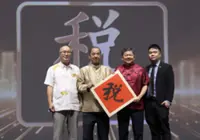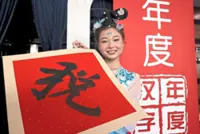
SHAH ALAM: The Chinese character “shui”, meaning tax, has been voted Malaysia’s Character of the Year, underscoring growing public concern over tax policies and their far-reaching impact on daily life.
Han Culture Centre Malaysia president Datuk Goh Hin San said the character was chosen because tax issues affect every level of society, from households and businesses to the government and the country at large.
He said “shui” reflects everyday realities, as many people are still feeling the impact of tax measures on their livelihoods.
The character appeared in the top 10 Chinese characters for six consecutive years from 2014 to 2019, following the introduction of the Goods and Services Tax (GST).
After GST was abolished in 2018, “shui” faded from the list from 2020 onwards. It has returned strongly this year, driven by new tax policies and renewed public debate over taxation.
Goh said voters cited several reasons for selecting “shui” as the Character of the Year, including the replacement of policies introduced by the previous government with new measures that continue to affect the public.
"Concerns were also raised over delays in tax refunds, despite efficient tax collection, as well as calls for the federal government to address Sabah’s claim for a 40% share of tax revenue under the Malaysia Agreement 1963," he said during the announcement of the Chinese Character of the Year ceremony on Sunday (Dec 14).
He added that the character secured 29.69% of the votes, well ahead of the second-placed character at 18.51%, marking a decisive win after seven appearances in the top 10 list.
The full list of Malaysia’s top 10 Chinese characters for 2025 includes “shui” (tax), “jiu” (liquor), “yuan” (aid), “you” (petrol), “zha” (fraud), “xiao” (school), “ba” (bully), “qi” (flag), “meng” (Asean) and “zhen” (quake).
Jury member Datuk Koong Lin Loong said “shui” had remained a constant topic, even after GST was repealed.
Since 2020, he said, the government has introduced more than 15 tax-related reforms, underscoring the continuing importance of taxation in national policy.
He said the character’s return was influenced by developments such as the impact of US tariff policies on Malaysia’s exports, higher sales tax rates and the expansion of the service tax scope.
Other factors included Sabah’s tax revenue claims ahead of the state election, adjustments to the e-invoicing threshold to RM1mil following pressure from small and medium enterprises, faster tax refund processing with an additional RM4bil allocation, and public attention on stamp duty for employment contracts.
Koong said the selection reflected public hopes that the government would consult more widely before introducing tax reforms, to avoid policy reversals and ensure taxation supports national development.
Meanwhile, Hua Zong president Datuk Lim Kah Chuan said the Chinese Character of the Year initiative was not confined to the Chinese community but reflected national sentiment.
He said the tradition began in Japan in 1999 before spreading to China, South Korea, Taiwan, Singapore and Malaysia, which marked its 15th year of participation since the programme was introduced in 2011.
“Chinese characters are not just artistic symbols. They record the times we live in, the debates we have and the expectations people carry,” he said.
Also present at the ceremony were Tian Ma Memorial Group founder Lee Aik Chong and T7 Global Bhd special officer to the executive deputy chairman Lee Chern Yang.