KUALA LUMPUR: Students must have a voice in policies that shape their lives rather than leaving such decisions solely to adults, says Tan Sri Chan Kong Choy.
The Tunku Abdul Rahman University of Management and Technology (TAR UMT) Board of Governors chairman said listening directly to students would strengthen the relevance, credibility and long-term sustainability of any national framework aimed at improving school safety and student wellbeing.
“By placing student voices at the centre of policy discussions, we ensure that what we design truly reflects the challenges they face today,” he said.
Chan said concerns over student wellbeing have intensified in recent years, with academic pressure, emotional stress, digital exposure, cyber risks and mental health challenges becoming increasingly systemic rather than isolated.
“As a result, the concept of school safety can no longer be limited to physical protection alone.
“It must also encompass psychological safety, emotional resilience and a supportive ecosystem that allows students to learn and grow with confidence and dignity.
“These evolving realities prompted the development of the Safe School 2.0 initiative, a research-driven and policy-oriented effort to strengthen Malaysia’s school safety framework through a more holistic and evidence-based approach,” he told an audience at a youth programme at TAR UMT yesterday.
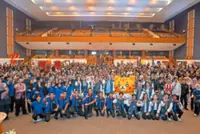
The event, titled “From Their Eyes: Student Voice Matters”, was held to brainstorm and gather insights for the Safe School 2.0 initiative to address psychological well-being and safety issues in Malaysian schools.
Chan said the initiative reflects the role of universities not only as centres of knowledge generation but also as contributors to public policy and national development.
The Safe School 2.0 research committee comprises multidisciplinary academics from TAR UMT, Universiti Malaya, Universiti Tunku Abdul Rahman, Universiti Sains Islam Malaysia and HELP University, alongside professionals from practice-based fields such as law, accounting and clinical medicine.
The forum, organised by TAR UMT, featured two sessions – a youth dialogue and an expert panel discussion.
Chan said the cross-institutional collaboration demonstrated how academic research could be translated into practical insights to support evidence-based decision-making and long-term education reform.