PETALING JAYA: Tooth decay is starting early in Malaysia, even affecting children as young as five years old.
Six out of every 10 five-year-olds have started to get cavities.
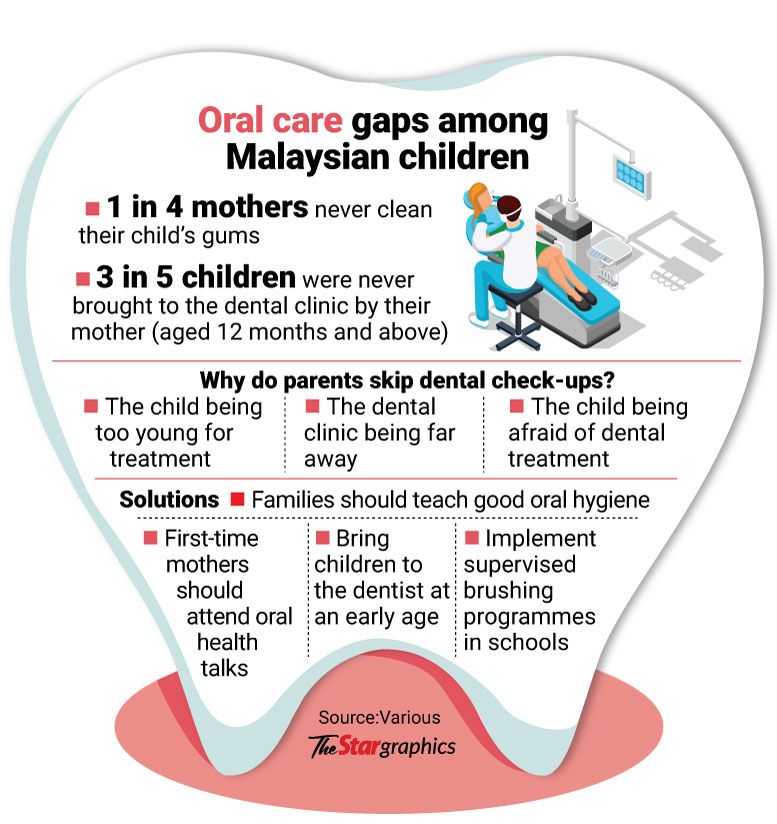
What’s worse is that these children have never been treated at a dental clinic, while one in every four mothers have never cleaned their child’s gums.
ALSO READ:
With 60.8% of Malaysian children under the age of five not having been examined or treated at a dental clinic, experts are worried as oral health is a precursor to other health issues in adulthood.
These facts are derived from the Health Ministry’s National Health and Morbidity Survey: Maternal and Child Health 2022, which concluded that early childhood caries impacted children’s overall health and quality of life.
Among the reasons for children’s poor dental health, cited by 8,315 mothers who participated in the survey, was their child being too young for treatment and also being afraid of treatment.
Some even blamed the location of the dental clinic, while others said dental treatment for milk teeth was not important.
Universiti Teknologi MARA’s Faculty of Dentistry dean Assoc Prof Dr Mas Suryalis Ahmad said despite growing awareness of dental hygiene, it has not translated into better oral health outcomes among children.
“Many children and young adults still lack consistent oral hygiene habits, often due to limited parental guidance or lack of access to dental care services,” she said.
Family dynamics play a crucial role in shaping a child’s oral health, from dietary habits to daily routines, she said, adding that children often mirror what they see at home.
Touching on the dangers of frequently snacking on sweet food and drinks, especially those high in refined carbohydrates, she noted that this increases the risk of tooth decay.
“In many households, traditional or convenience-based diets may be high in sugar or acidic food without awareness of its dental impact,” said Prof Mas Suryalis, who is also a consultant in special care dentistry.
She said children are more likely to brush and floss their teeth regularly if they see their parents doing the same.
“Conversely, if oral care is neglected at home, children may grow up viewing it as optional or unimportant,” she said, adding that parental influence extended beyond brushing and diet.
“It also includes lifestyle habits that children observe and may eventually adopt.
“Unhealthy practices such as smoking, vaping, chewing betel nut and alcohol consumption do not just impact an adult’s health, but also sets a harmful precedent for a child.”
Prof Mas Suryalis added that poor oral health could also contribute to systemic conditions such as diabetes, cardiovascular diseases and even adverse pregnancy outcomes.
“Poor oral hygiene does not just lead to tooth decay or gum disease. It can contribute to a range of broader health problems.
“For example, chronic gum inflammation has been associated with heart disease and diabetes,” she said, adding that in children, untreated dental infections can affect nutrition, speech development and school performance.
“So, maintaining good oral hygiene is not merely a dental concern. It is a fundamental part of overall health and well-being.”
She said it is vital not to overlook the needs of children, adolescents and even adults with disabilities, both physical and developmental.
These individuals often face greater challenges in maintaining oral hygiene and accessing dental care, which puts them at higher risk of dental diseases.
“Including oral healthcare in preventive medicine not only improves quality of life but also reduces healthcare costs in the long term. Preventive dental care should be part of routine paediatric and family medicine visits,” she noted.
She also said children should be introduced to dental care early and familiarised with routine check-ups.
“Clinics should also be equipped to accommodate children with special needs, both in terms of physical access and behavioural support,” Dr Mas Suryalis said.
Dr Ong Lei Hun, a dentist with 21 years of experience, said many parents are unaware that baby teeth required proper care.
“When baby teeth are neglected, permanent molars may need to be removed or undergo root canal treatment.
“Some children will have to live with a missing tooth throughout their life,” she said, adding that she has handled many such cases in her clinic.
Dr Ong, who runs a clinic in Taman Megah here, advised parents to monitor how their young children brush their teeth until at least the ages of seven to eight.
“Children often brush outside but not in the molars,” she added.
Another dentist, Dr Gavin Quek, who is based in Tasmania, Australia, called for supervised brushing to be conducted in schools, with teachers monitoring how pupils brush their teeth.
“In some states in Australia, a supervised brushing programme is done where teachers spend two minutes daily to ensure the children brush their teeth properly.
“When you foster the habit or practise with them at a young age, they will continue doing so when they get older no matter how tired they are, thus lowering the risk of complex dental issues,” he said, suggesting that the programme be introduced at the pre-school level here.
Dr Quek, who chairs the Australian Dental Association’s National Oral Health Committee, said cutting down on sugar and using fluoride toothpaste is also important for good oral health.
“The maximum sugar intake for children should be 24gm a day (six teaspoons),” he added.