
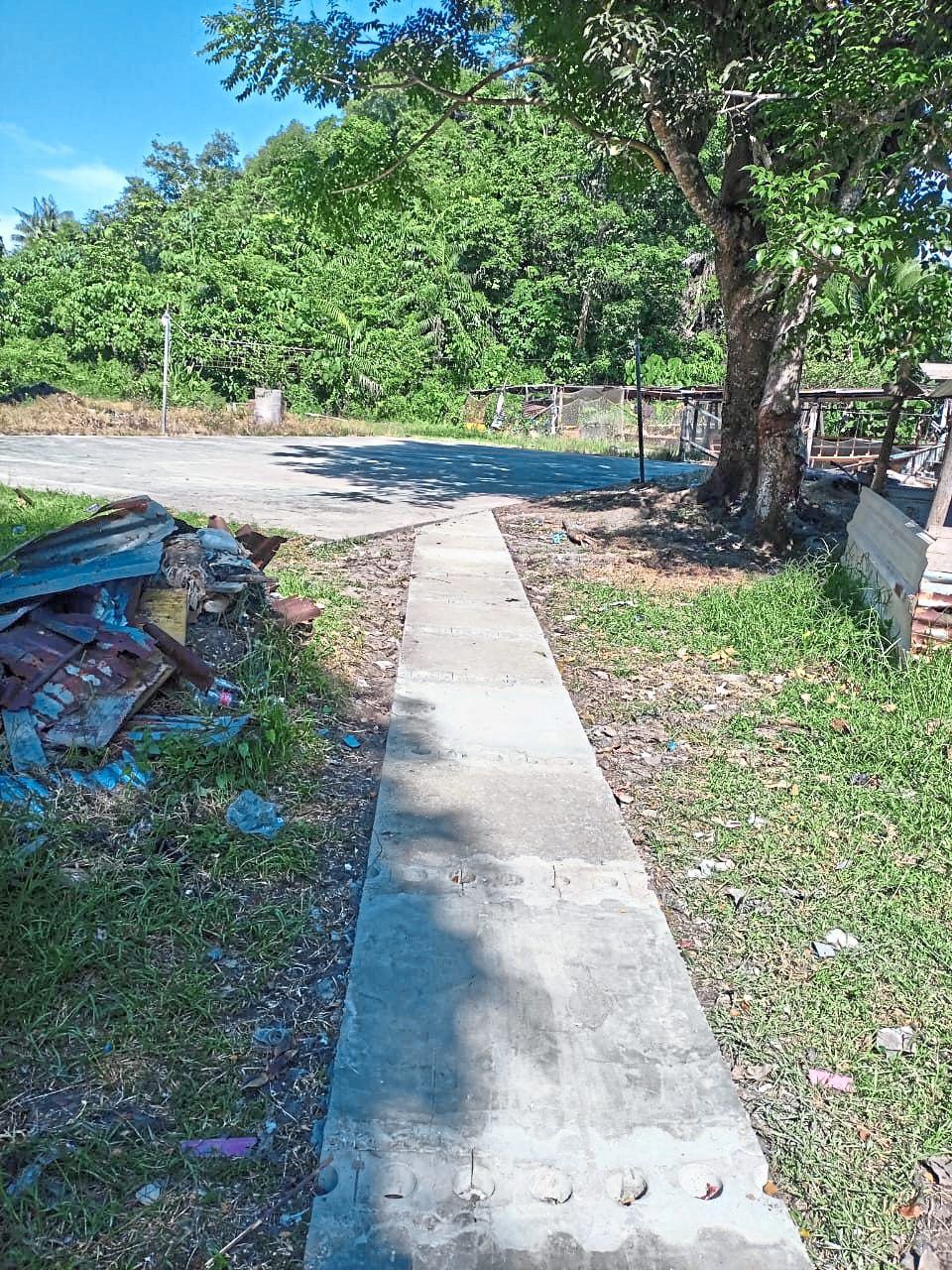
KOTA KINABALU: Pulau Gaya features Malaysia’s first ocean debris pathway, constructed using marine litter and island-waste plastics.
The 130m pedestrian walkway in Kampung Lobong was built with 813kg of plastic waste, equivalent to tens of thousands of bottles.
Michelle de la Harpe, president of the Meraki Daat Initiative, announced that this project concludes a pilot under the United Nations Development Programme’s (UNDP) Malaysia Island Waste Innovation Challenge.
“We’ve successfully prevented this waste from entering the ocean or being burned,” she said.
Completed on Oct 30, the pathway links the village’s timber bridge to the local sports court.
Unlike mainland industrial plastic roads, this project was executed entirely on-site, effectively closing the loop on island waste, said Michelle.
The project involved a multi-pronged cleanup effort, including a collaboration with the Marine Research Foundation to collect floating debris, while local villagers picked up bottles during the “Cabaran Kampungku Bersih” (My Clean Village Challenge), which ran in August and September.
Launched in January, the project faced significant infrastructure challenges, such as the lack of three-phase electricity and logistical delays.
The technical team, led by project manager Adora Shariman, developed a hybrid construction method using eco-pavers and concrete slabs, leveraging rainwater harvesting and local beach sand to minimise carbon footprint.
Michelle said this pilot marks the start of a larger vision.
The team is now conducting stress tests and certification processes to commercialise eco-paver technology.
Unlike other projects using industrial waste, she said this initiative uniquely addresses island logistics by using upcycled marine debris.
“While plastic-modified asphalt roads have recently been tested in Peninsular Malaysia and Sarawak using industrial waste, the Meraki Daat Initiative’s project stands apart.
“Our vision is to tackle Sabah’s most persistent challenges, the poor condition of rural roads and the escalating plastic waste crisis, with a single solution,” she said.
The non-governmental organisation is calling on the Sabah government to support similar projects to address the critical shortage of durable rural infrastructure in the state.
“Partner with us to adopt this eco-paver technology for rural development projects. By integrating this solution into state policy, we can simultaneously fix Sabah’s rural roads and clean our coastlines,” she added.