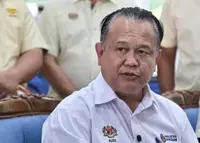
JOHOR BARU: Up to 75% of delays in Works Ministry projects can be attributed to contractors, says Deputy Minister Datuk Seri Dr Ahmad Maslan.
He added that poor project management and weak financial planning were the two main reasons behind contractor-related delays, contributing to the majority of "sick" projects under the ministry.
"Only about 5% of our overall projects are categorised as 'sick', but even that (figure) is something we don't want," he told a press conference here on Thursday (Dec 11).
Earlier, he presented letters of acceptance for two federal projects in Johor in conjunction with National Technical Professionals Day held at the Persada International Convention Centre.
Ahmad, who is also the Pontian MP, said some contractors mishandled their finances, wrongly assuming that the first advance payment was profit.
ALSO READ: Take firmer action against tardy contractors, says PM Anwar
"That is incorrect. Profit comes only after a project is completed, not when the first payment is received," he said, citing this as an example of poor financial management.
On project management failures, he said issues often stemmed from improper planning of building materials, labour shortages, and poor monitoring of progress timelines.
Ahmad added that the remaining 25% of delays were caused by issues such as land acquisition and utility relocation.
He also stressed that Prime Minister Datuk Seri Anwar Ibrahim made it clear during a visit to the ministry on Monday (Dec 8) that projects must not be delayed.
"Contractors must take their responsibilities seriously. They must be genuinely committed and manage their projects properly," Ahmad said.
As for enforcement, he said repeated warnings were issued before termination was considered.
"We send warning letters once, twice, even up to three times. Our officers also advise contractors during weekly and monthly site meetings," he said.
Contractors who still fail to complete a project on schedule after repeated warnings and advice would be terminated, he added.
"Once terminated, they will be barred from obtaining government projects for two years. They may also face liquidated damages, including cost differences if a new tender is required.
"It causes them many complications, which is why the ministry always reminds them to complete projects on schedule or, even better, ahead of time," he said.