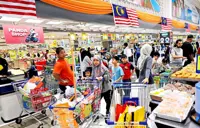
KUALA LUMPUR: Sumbangan Asas Rahmah (Sara) and Penghargaan Sara recipients may redeem their balance at any point until Dec 31, even in a single transaction, says the Finance Ministry.
Responding to concerns raised in The Star on the Sara programmes, the ministry said the redemption window for Sara and Penghargaan Sara credit is more flexible than thought.
ALSO READ: Aid scheme framework doesn’t reflect B40 realities, say groups
"Key criticism highlighted what is perceived as a limited window to utilise the Sara credit," the ministry said in a statement on Tuesday (Dec 9).
"The article quoted the Federation of Malaysian Consumers Associations (Fomca) as proposing a three-month redemption period, describing it as 'feasible and balanced' and suggesting it would allow recipients to plan their purchases comfortably.
"As stated in our press release on Aug 21, the RM100 Penghargaan Sara credit remains valid until Dec 31.
"The monthly Sara credit does not expire each month, and unused monthly credit is automatically carried forward and accumulated throughout the year."
It was reported that recipients are seeking a longer redemption time frame and a broader range of essential goods allowed under February's coming disbursement to strengthen its impact.
The ministry said the concerns could stem from a lack of understanding of the programmes.
It clarified that Penghargaan Sara and Sara are two separate programmes with similar mechanisms.
ALSO READ: Sara 2.0 will see upgrades
"Under Penghargaan Sara, all Malaysians aged 18 and above will receive a one-off RM100 (redeemable) from Aug 31 to Dec 31 this year.
"Sara is an extension of the Sumbangan Tunai Rahmah (STR) programme, which is a targeted assistance programme for people affected by the rise in cost of living.
"STR 2025 recipients who have been verified in the eKasih database and are eligible for Sara 2025 will get RM50 to RM200 per month for a period of 12 months (January to December 2025).
"All STR 2025 recipients in the 'household' and 'senior citizens without a partner' categories receive RM100/RM50 per month for a period of nine months (April to December)," it said.
Touching on The Star’s article where some non-governmental organisations said the aid scheme framework did not reflect B40 realities, the ministry said some of their recommendations have already been implemented.
"Many of these recommendations are in place.
"Personal hygiene products, including for toddlers, are one of the 14 approved categories under Sara.
"This category covers toothpaste, sanitary pads, soaps and shower gel, as well as disposable diapers.
"Baby formula is included under the beverage category," it said.
The ministry said participating retailers have complied with its request to clearly display the Sara logo on shelves to identify approved products.
ALSO READ: Calls for longer redemption period and more items
"Since Sara’s launch in 2023, the government has consistently expanded its reach, from 210,000 people at launch to 5.4 million this year, as well as the scale of allocations, the breadth of eligible stock-keeping units, and the network of participating merchants.
"The number of registered retailers has grown from 424 outlets in 2023 to over 8,000 as of Dec 7, including standalone sundry shops and mini markets," it said.
The ministry said nationwide outreach tours have been conducted to ensure that rural communities can access participating brands without travelling long distances.
"The monthly Sara programme complements the STR cash assistance.
"For essential goods not included under the Sara categories, recipients may utilise their STR cash aid at their discretion, ensuring that no household is restricted in meeting broader daily needs," it said.
It was reported that Fomca urged the government to expand the list of items eligible for purchase under Sara and Penghargaan Sara to better reflect real household necessities, particularly among families with children.
It also proposed adding essential fresh produce, personal care items and baby products, as well as expanding participation to smaller retailers and cooperatives in rural and semi-urban areas.