
Keningau’s Oath Stone is a lasting testament to Sabah’s rights, customs and identity within Malaysia.
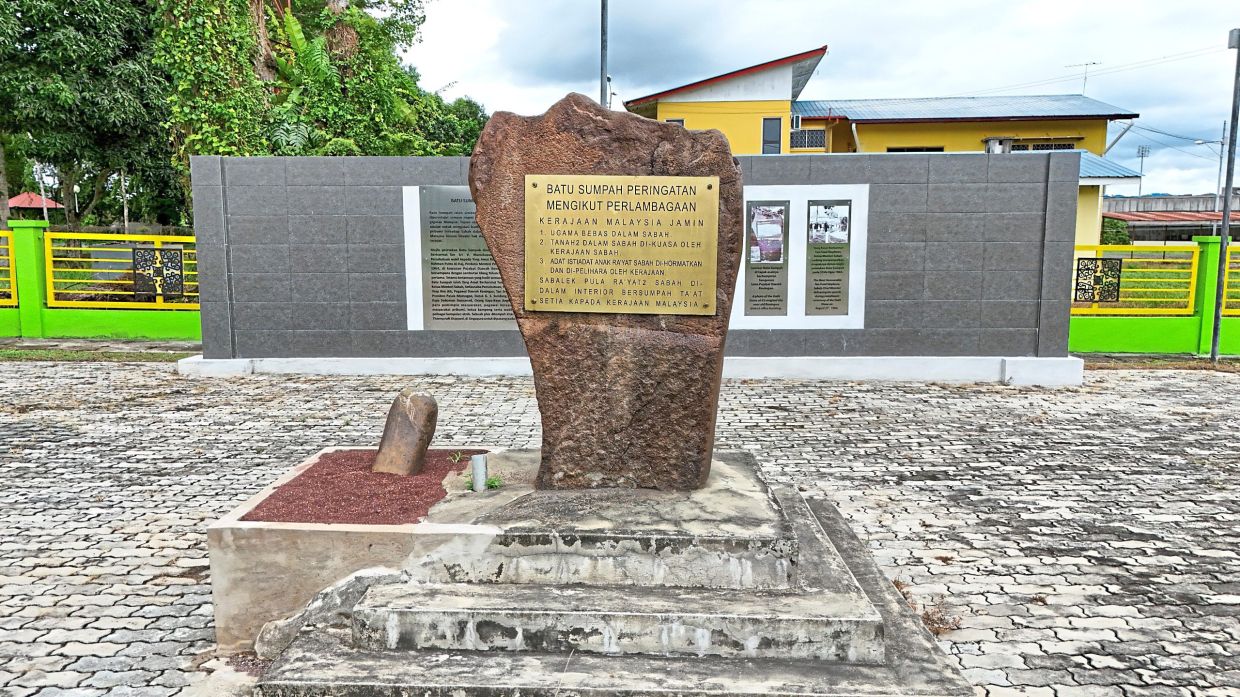
IN the heart of Keningau, at the district’s heritage museum, stands a monolith that has come to define one of Sabah’s most important chapters – the Keningau Oath Stone.
Carved in 1964, it serves as a physical reminder of the promises made to interior communities when Malaysia was formed.
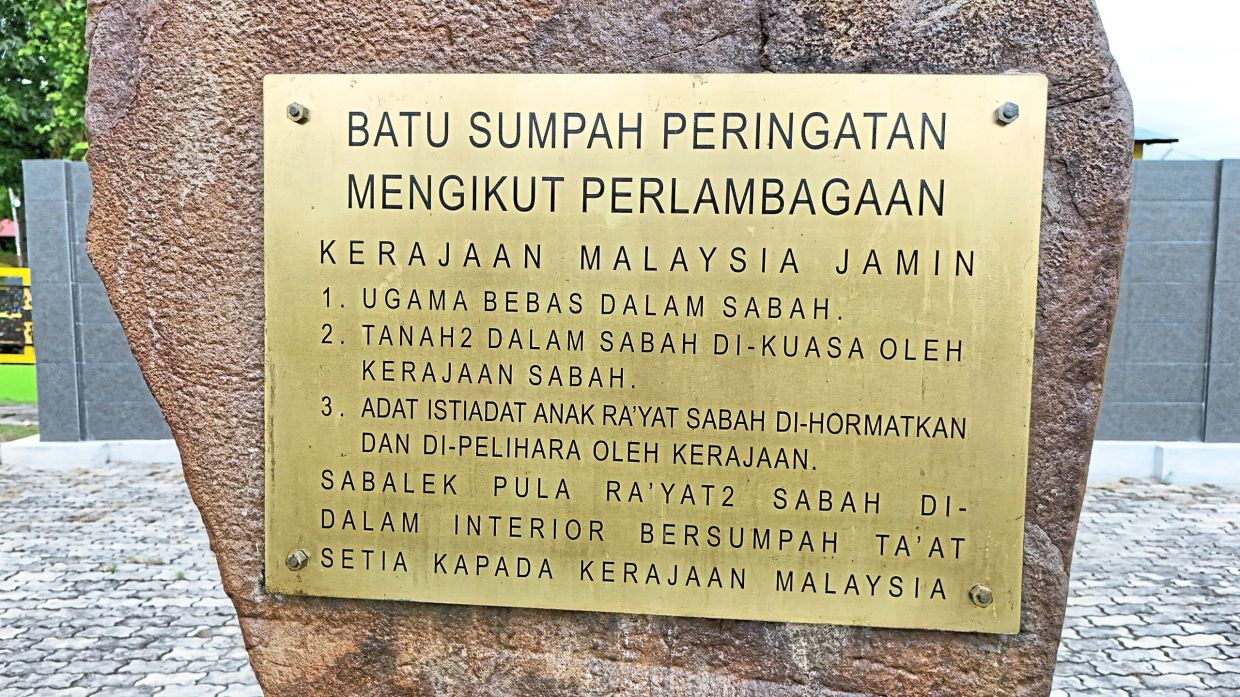
For decades, this weathered stone has symbolised three core guarantees pledged by the leaders of the day: freedom of religion in Sabah, protection of native land under state authority, and respect for the customs and traditions of interior communities.
In return, the people pledged loyalty to the Federation of Malaysia.
Long before Malaysia came into being in 1963, many leaders from the Kadazan, Dusun and Murut communities feared their rights would be sidelined.
Concerns over land, culture and spiritual practices weighed heavily during early negotiations.
It was through lengthy discussions – led by figures such as GS Sundang, Tun Fuad Stephens and Tun Abdul Razak – that confidence was restored, eventually shaping the tiga perkara (three items) now etched onto the Oath Stone.
Chosen with purpose
Malaysia Agreement 1963 (MA63) historian and activist Remy Majangkim said the Oath Stone’s story began even before its inscription was carved.
The stone was handpicked from Sungai Keningau by the then district officer, the late Tan Sri Richard Lind, who searched for the exact shape requested by Sundang – a form resembling a clenched fist, symbolising unity and resolve.
“It was chosen because it resembles solidarity,” Remy said.
“Everyone is one in this.”
Sealed by tradition
The Oath Stone was unveiled on Aug 31, 1964, in a ceremony blending governance with native ritual.
Community elders performed maningolig, and an animal sacrifice known as mogkorot was carried out to seal the oath according to local belief systems, marking the agreement as sacred and unbreakable.
For many interior families, the ritual is remembered not as a spectacle but as a binding community covenant.
Among them is Dusun native Penny Sopiah Jimi, 63, who grew up listening to elders recount how solemn the oath ceremony had been.
“To us, mogkorot is a serious and sacred oath,” she said.
“It is a commitment you cannot break.
“Our elders believed there would be consequences if the agreement was violated. Everyone understood that this was not just politics – it was our adat (custom).”
The three guarantees
Remy said the clauses reflected the most pressing concerns of the time.
Freedom of religion topped the list, as interior families often spanned multiple faiths.
Harmony depended on the ability to choose one’s beliefs freely.
Land rights formed the second pillar, rooted in the understanding that land meant food, security and identity.
“To the native people, land is more valuable than money,” Remy said. “If you have land, you have food.”
Adat, or customs, were included because they governed community identity and social order long before modern law.
The Native Code evolved as a system of mediation rather than punishment.
“These were what the people viewed as most important,” he said. “They define who you are.”
For those who could not read
Sundang also insisted that the oath be engraved in stone because many villagers were not literate and may not have had access to important documents.
The Oath Stone was meant to be a permanent, accessible reminder of the promises made.
“In the eyes of villagers, it is binding,” Remy said.
“If anyone asked, ‘What is that?’ – the stone answered for them.”
A monument that still shapes identity
Beyond symbolism, efforts are underway to have the Keningau Oath Stone formally gazetted as a protected heritage site.
Advocates say such recognition would safeguard the monument legally and preserve its significance for future generations.
For Penny, gazettement would not only offer protection, but it would also affirm a part of her community’s identity.
“This is our history,” she said.
“If the Oath Stone disappears or is altered, part of our identity disappears with it.”
Hard questions
More than 60 years on, the Oath Stone continues to spark discussions about promises kept and forgotten, as Sabahans revisit its meaning in contemporary debates on rights, autonomy and identity.
But for those who grew up in its shadow – people like Remy, Penny and the interior elders who once stood before it – the stone remains unambiguous.
It is the foundation of Sabah’s place in Malaysia, built not only on legal documents, but on moral and cultural commitments meant to be honoured for generations.