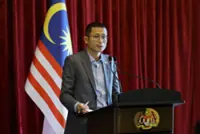
PUTRAJAYA: A total of 19 items under the Malaysia Agreement 1963 (MA63) have been resolved to date, says Deputy Prime Minister Datuk Seri Fadillah Yusof.
Fadillah, who also chairs the MA63 Implementation Action Council, said these include the handover of Sabah Electricity Sdn Bhd to the state government through the Energy Commission of Sabah.
“Although the entity has been handed over, the Federal Government continues to provide support to Sabah with an allocation of RM3.54bil in electricity subsidies until 2030,” he said.
He said this at a public dialogue held in conjunction with the closing ceremony of the “Rancakkan Madani Bersama Malaysiaku” programme here yesterday.
Fadillah noted, however, that several remaining items have yet to be finalised due to differing legal interpretations, including issues related to the Federal Constitution and state laws that require further examination.
“Because this is a legal matter, views at the state level may differ from those at the federal level. Therefore, resolving these issues is not easy for us. There are still a few issues pending, but the majority have already been settled,” he said, Bernama reported.
Fadillah, who is also Energy Transition and Water Transformation Minister, added that Malaysia has made the development of the Asean Power Grid (APG) a key priority during its Asean chairmanship.
The initiative aims to strengthen regional energy cooperation and ensure a more stable, sustainable and competitive electricity supply across South-East Asia.
He said the APG is crucial for creating a regional grid network that allows Asean member states to exchange electricity across borders, assisting any country that may be facing supply shortages.
“For example, if Thailand faces an energy shortage, other countries can supply electricity. This system creates flexibility and strengthens regional energy security,” Fadillah said.
He added that the initial phase of the project has begun through the Laos-Thailand-Malaysia-Singapore Energy Integration Project, which serves as a foundation for future Asean energy integration.
The next step, he said, is to connect Borneo, which has the region’s highest renewable energy potential, to Peninsular Malaysia and subsequently to Singapore via an undersea cable.
“We aim to connect Borneo because it holds the largest renewable energy resources. This includes linking Borneo by undersea cable to the peninsula, then to Singapore, and ultimately extending from Borneo to the Philippines,” he said.
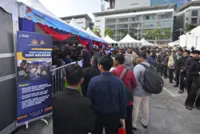
The Rancakkan Madani programme, which ended yesterday, featured more than 300 people-friendly services, career fairs, interactive exhibitions, family entertainment activities and various special offers for the public.