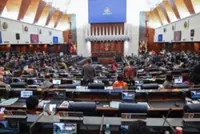
PETALING JAYA: Chronic absenteeism by MPs in the Dewan Rakyat reflects “weak commitment” to public duty and should be addressed with stricter rules to strengthen accountability and uphold the integrity of the democratic process, say analysts.
Such patterns, they added, have raised concerns about whether some MPs are fulfilling even the most basic expectations of their mandate.
They noted that in countries such as India, Ghana and Nigeria, elected representatives have faced public criticism for their absenteeism, with some even being removed from office for attending fewer than half of their Parliament’s sittings.
Civil society groups in these countries argue that legislating in half-empty chambers weakens parliamentary legitimacy and represents a “quiet crisis” for democracy.
Prof Datuk Dr Sivamurugan Pandian of Universiti Sains Malaysia said absenteeism, when it is persistent, sends a troubling message about how seriously elected representatives take their responsibilities.
“When MPs are absent, their constituencies lose their voice during debates and decisions. Representation suffers, and voters end up shortchanged.”
While ministers have heavier workloads, he said attendance in the House should remain a priority.
“If the Prime Minister can attend over 100 days of sittings, it raises questions when ministers clock far fewer.”
Sivamurugan added that absenteeism among MPs without government posts is even more difficult to justify.
“Parliament is the core of our democracy, and skipping Dewan sittings signals weak commitment to the mandate voters entrusted to them,” he said, adding that improving attendance is essential to strengthening public trust.
A new analysis by Calmic’s Malaysian MP Dashboard shows several MPs recording the lowest attendance in the Dewan Rakyat, with Marang MP Tan Sri Abdul Hadi Awang topping the list at just 29.8% (67 days).
Deputy Prime Minister Datuk Seri Dr Ahmad Zahid Hamidi and Sembrong MP Datuk Seri Hishammuddin Hussein followed closely with 68 and 82 days, respectively, while most others on the low-attendance list were Cabinet ministers or state leaders juggling dual roles.
Notably, even Prime Minister Datuk Seri Anwar Ibrahim – with a modest 47.6% attendance – still logged more days in the House than many on the low-attendance list, clocking in at 107 days.
In contrast, 14 MPs maintained perfect attendance, although lawmakers collectively received over RM322mil in salaries and allowances since their swearing-in.
Dr Abdolreza Alami of Universiti Teknologi Mara said the absenteeism patterns point to a deeper structural issue in Malaysia’s parliamentary culture, where some senior leaders no longer view Parliament as the primary arena of political engagement.
He said PAS president Abdul Hadi defended his low attendance by arguing that “attending Parliament is not like going to school”, framing his absence as a space for younger MPs to gain exposure.
“Although his physical attendance is low, he remains active through written questions, indicating ongoing bureaucratic engagement, even if his voice is not heard in debates,” Abdolreza said.
He added that Hishammuddin’s prolonged party suspension has placed him in political isolation, contributing to one of the lowest attendance records.
Abdolreza said both Hishammuddin and Abdul Hadi still maintain strong local support networks, although their absence weakens the quality of representation.
Sivamurugan suggested imposing penalties such as warnings, loss of allowance or mandatory explanations.
Abdolreza said Ghana automatically vacates a seat after 15 absences, and Iran publicly announces MPs who skip sittings.
“Improving attendance is not just a procedural matter. It is central to restoring public trust and strengthening Malaysia’s parliamentary democracy,” he said.